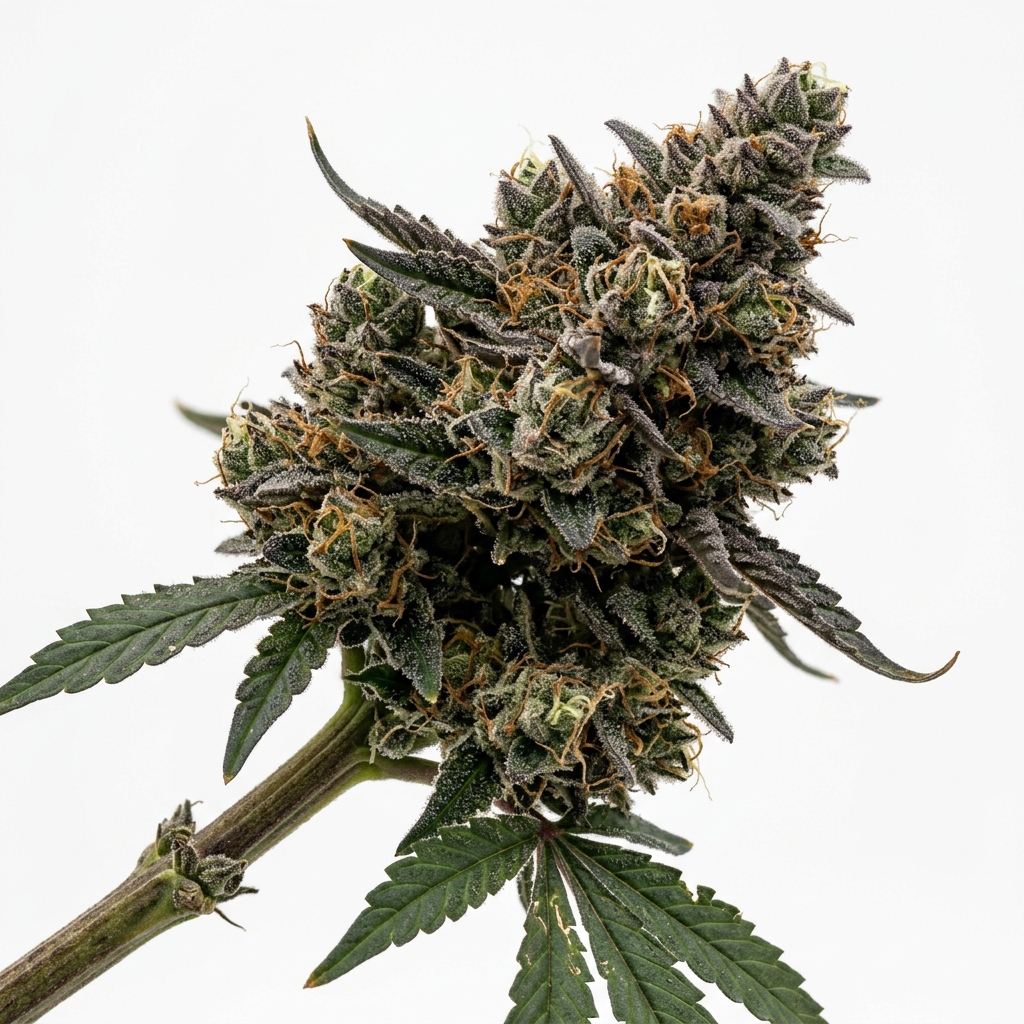
Scoops of Chem (Cannabis Strain)
Scoops of Chem is an indica-dominant hybrid cultivar developed by crossing Scoops with Chem D (Chemdawg). Documented in contemporary boutique circles and craft seed programs, the strain typically tests between 22% and 28% flower THC. It unites the sweet, creamy dough profile of modern dessert genetics with the sharp, industrial fuel and skunk funk of classic Chem lines. The cultivar is prized by extractors and flower connoisseurs alike for its greasy resin coverage, bulbous trichome heads, and strong canopy vigor.
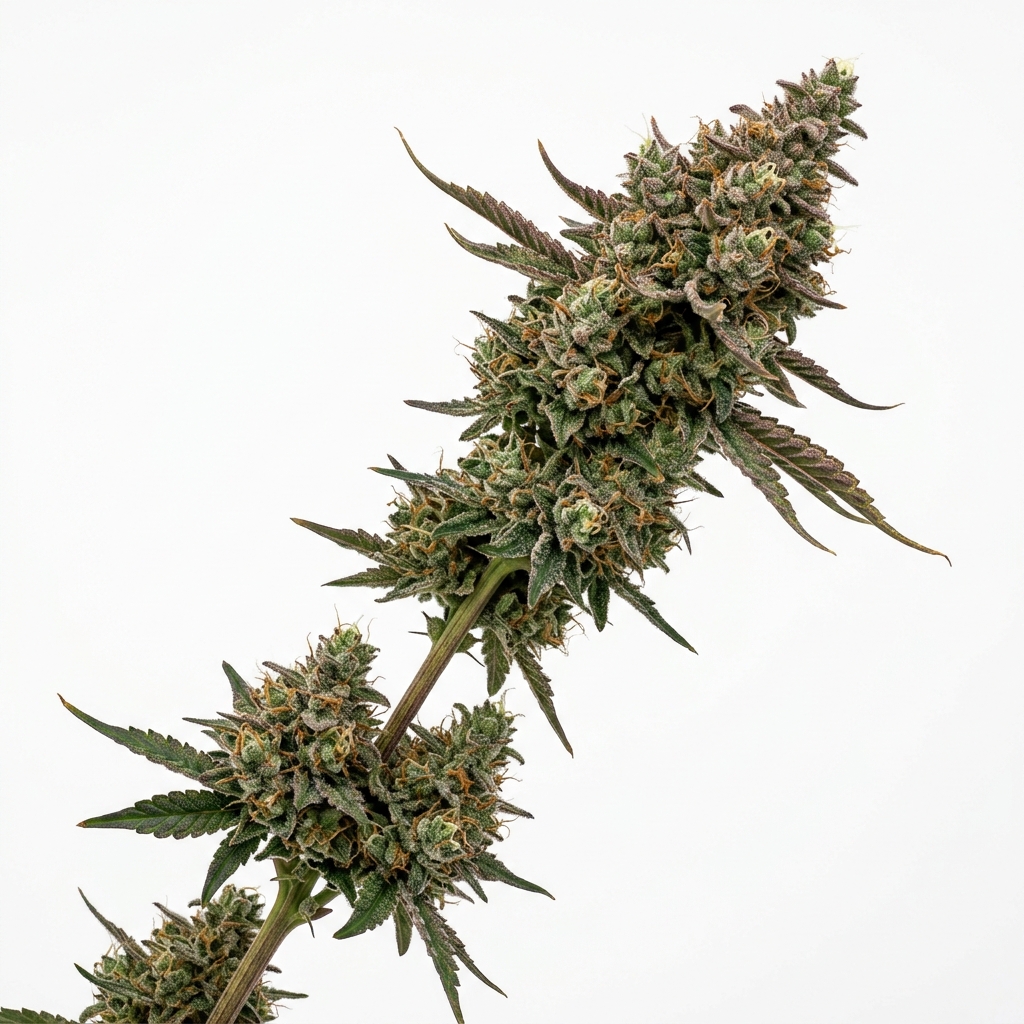
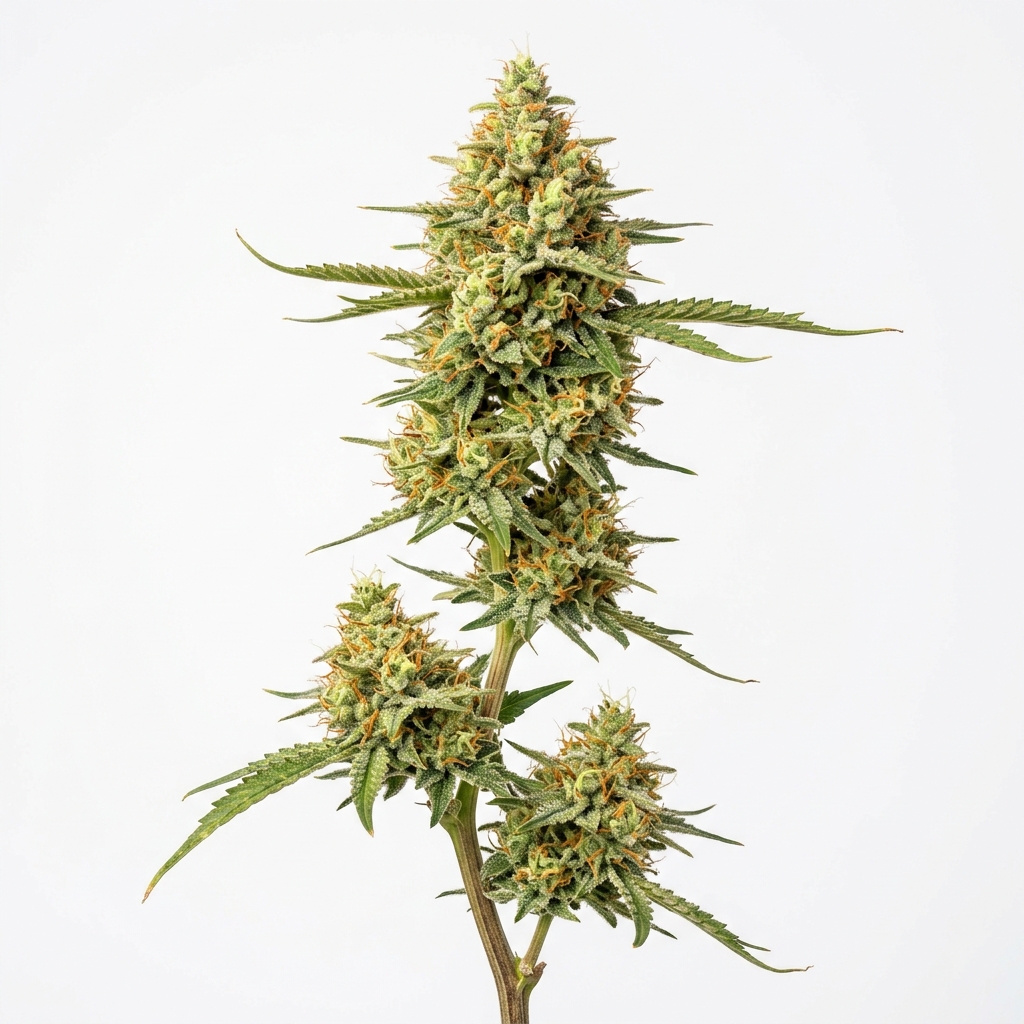
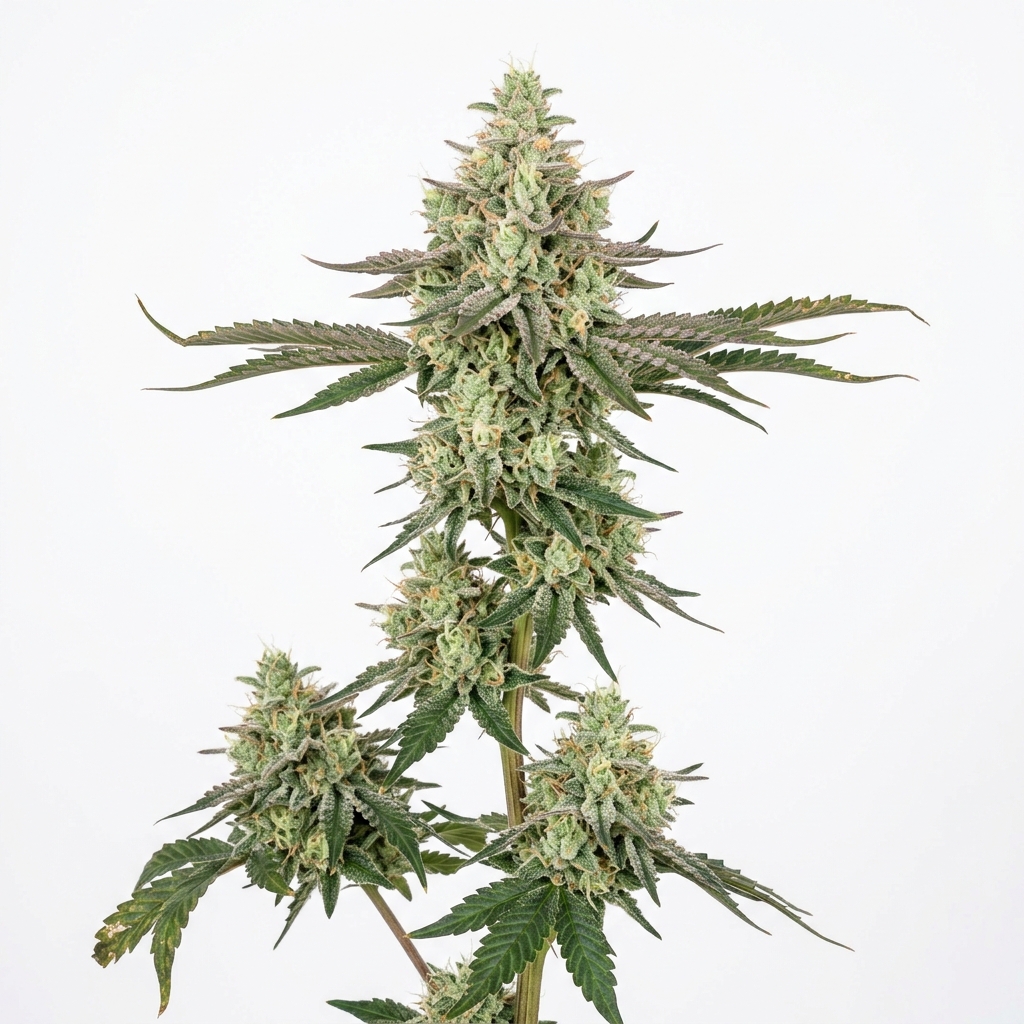
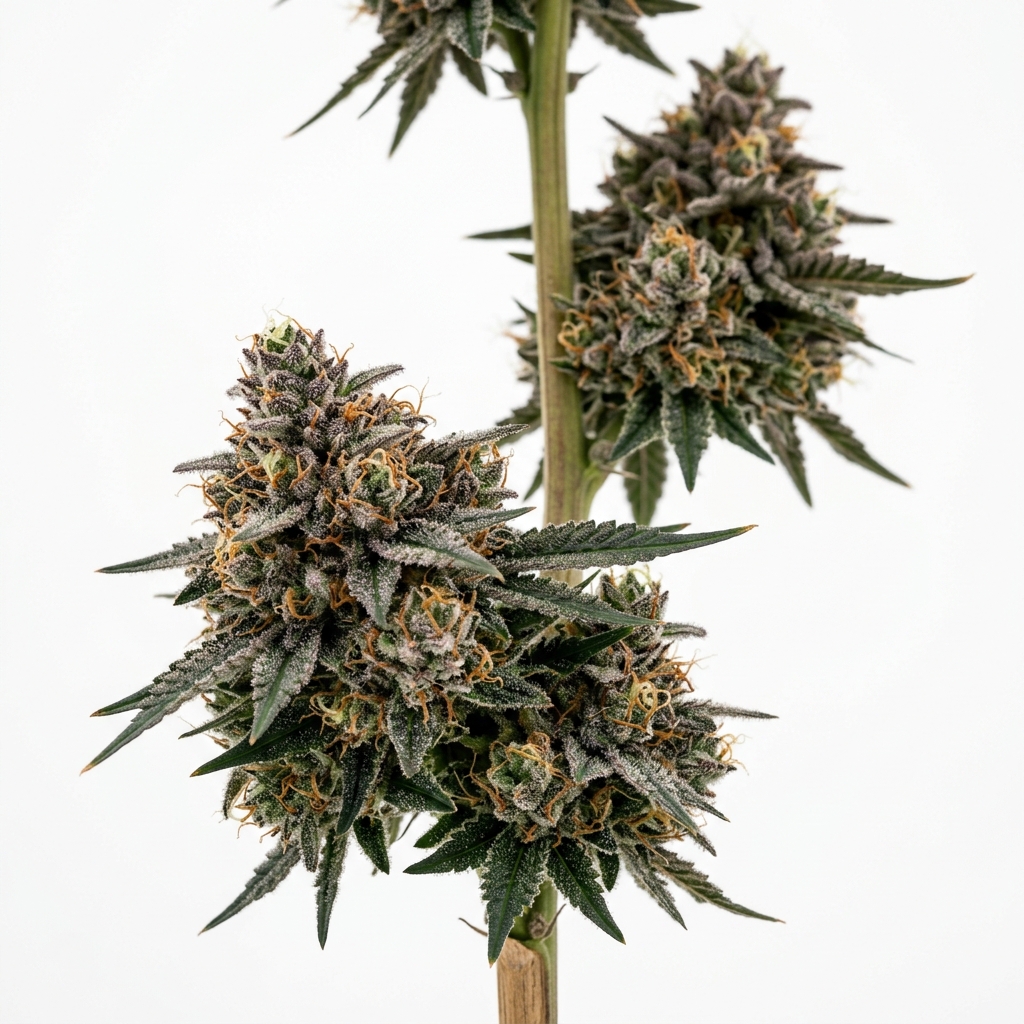
The plant produces dense, golf-ball-to-spear colas displaying deep olive and violet bracts under a heavy layer of glandular trichomes. Drawing structural strength from its Chem ancestry and compact node spacing from the Scoops side, it performs well under high-intensity indoor setups. Consumers typically report a fast-onset cerebral buzz that settles into profound physical ease, making it a staple evening selection.
Quick Facts
| Field | Details |
|---|---|
| Breeder | Craft boutique selections (various breeders) |
| Genetics | Scoops (Gelato × Cookies & Cream × Tina) × Chem D |
| Variety | Indica-dominant hybrid (approx. 70/30) |
| THC Range | 22% – 28% |
| Flowering Time | 9 – 10 weeks (63 – 70 days) |
| Yield Potential | Moderate to high (450 – 550 g/m² indoor) |
| Plant Height | Medium (controlled stretch of 1.5× – 2×) |
| Climate Preference | Temperate to warm indoor environments; dry late bloom |
| Difficulty | Moderate |
Scientific & Botanical Overview
Scoops of Chem develops broad fan leaves with deep serration and sturdy lateral branches capable of supporting dense terminal colas. The floral clusters consist of tightly packed, swollen calyxes layered in capitate-stalked glandular trichomes. As senescence approaches, anthocyanin accumulation often creates dark purple and slate accents beneath the blanket of resin.
The cultivar shows balanced apical dominance with moderate internodal spacing. Unlike pure Chem selections that can develop floppy branches, the infusion of Scoops lineage shortens node gaps and thickens primary stems. This vegetative framework allows for efficient light penetration across trained canopies.
Secondary metabolite synthesis is heavily skewed toward sharp monoterpenes and dense sesquiterpenes. The presence of high concentrations of caryophyllene, myrcene, and limonene provides both chemical complexity and environmental resilience against common foliar pests during early bloom stages.
Effects & Use-Cases (Reported)
Commonly reported effects: Initial sensations typically include a warm cranial pressure accompanied by mental clarity and mood elevation. Within thirty to forty-five minutes, these cerebral qualities give way to heavy physical relaxation, limb heaviness, and deep muscle decompression. High-tolerance consumers report potent, long-lasting effects that remain grounding without inducing excessive mental fog.
Use-case context: The strain is predominantly chosen for late afternoon and evening sessions, post-workout recovery, or winding down before sleep. Its heavy physical signature makes it less suited for tasks requiring active movement or sharp tactical focus.
Note: Individual response to specific cannabinoid and terpene ratios varies depending on tolerance, individual physiology, and consumption method.
Aroma & Flavors
Aroma: Breaking apart the dried flowers releases an immediate wave of pungent kerosene, raw garlic, and sharp chemical cleaner, backed by an underlying sweetness resembling vanilla cream and burnt sugar. The curing process rounds out the sharp fuel edges with an earthy, doughy base.
Flavor: The smoke or vapor delivers a rich contrast between sweet vanilla pastry on the inhale and biting sour gas, pine, and skunk on the exhale. A peppery chem bite lingers on the palate long after consumption.
Terpene associations: The aromatic profile is dominated by beta-caryophyllene, beta-myrcene, and d-limonene, with supporting traces of humulene and linalool contributing to the earthy, floral finish.
Tested Cannabinoid & Terpene Ranges
| Compound | Typical Flower Range |
|---|---|
| Δ9-THC | 0.3% – 1.0% |
| THCA | 24.0% – 30.5% |
| Total THC | 22.0% – 28.0% |
| CBGA | 0.5% – 1.5% |
| Total CBD | < 0.2% |
| Total Terpenes | 1.8% – 3.2% |
| Primary Terpenes | β-Caryophyllene, β-Myrcene, D-Limonene, α-Humulene |
Range note: Cannabinoid and terpene metrics represent composite laboratory testing of cured flower material. Environmental variables, lighting type, cultivation practices, and specific cut selection will influence individual batch metrics.
Cultivation Notes
- Humidity management: Maintain relative humidity between 55% and 60% during early flowering, tapering down to 40% – 45% during the final three weeks to protect the dense calyx clusters from botrytis.
- Nutrient requirements: Plants handle moderate to heavy nitrogen inputs in veg, transitioning to elevated phosphorus, potassium, and magnesium ratios during mid-bloom to support flower density and trichome head maturation.
- Canopy training: Responds well to early topping and low-stress training (LST). A single layer of trellis netting helps spread the secondary tops into an even, light-receptive canopy.
- Defoliation: Perform targeted leaf removal around day 21 and day 42 of flowering to clear large water leaves blocking internal airflow and lower bud sites.
- Harvest window: Optimal trichome development typically occurs between day 63 and day 70, when resin heads transition from cloudy white to roughly 10% – 15% amber.
Grower Notes (Week-by-Week Snapshot)
- Weeks 1–3 (Transition & Stretch): Expect a steady vertical stretch of roughly 1.5× to 2×. Internodes set up rapidly; gentle branch training and lower-third lollipoping should be completed by the end of week three.
- Weeks 4–6 (Bud Formation & Resin Production): Calyxes stack tightly along the branches as trichome coverage accelerates. Fuel aromas begin to intensify noticeably inside the grow space.
- Weeks 7–9 (Bulking & Maturation): Buds swell significantly and bracts firm up. Anthocyanin expression may emerge if night temperatures are lowered by 3°C – 5°C. Monitor trichome clarity closely.
- Post-Harvest (Drying & Curing): Dry slowly at 15°C – 18°C (59°F – 64°F) and 58% – 62% relative humidity for 12 to 14 days to preserve volatile monoterpenes before jarring.
Genetic Lineage
The maternal parent, Scoops (bred by Cannarado Genetics), is a multi-way hybrid combining Gelato, Cookies & Cream, and Tina. It provides the cross with short internodes, heavy resin production, dark pigmentation, and a dessert-forward vanilla pastry aroma.
The pollen donor or counterpart, Chem D, is one of the foundational clones of modern cannabis history. Renowned for its raw vigor, pungent skunk-and-petrol nose, and high potency, Chem D infuses the hybrid with aggressive chemical notes and a robust somatic punch.
Research Insights
Cannabis research indicates that the synergy between high concentrations of beta-caryophyllene and d-limonene can modulate the overall experiential profile of high-THC cultivars. Caryophyllene is unique among terpenes for its documented ability to bind directly to peripheral CB2 cannabinoid receptors, while limonene is frequently studied for its uplifting, alertness-modulating properties.
Cultivars exhibiting heavy resin coverage and large trichome gland diameters are increasingly examined in post-harvest processing research. Glandular trichome stability and cuticle thickness play key roles in preserving volatile aromatic fractions during standard drying and solventless mechanical separation.
Frequently Asked Questions
Who bred Scoops of Chem?
The cultivar emerged from modern craft breeding circles crossing Cannarado’s Scoops line with select Chem D cuts. It is propagated primarily through clone selections and specialty boutique seed drops.
Is Scoops of Chem an indica or sativa?
Scoops of Chem is an indica-dominant hybrid, typically displaying around a 70% indica to 30% sativa balance in both growth structure and physical effect profile.
What does Scoops of Chem smell and taste like?
It blends sweet vanilla cream and baked dough notes from the Scoops parent with aggressive kerosene, garlic, and sour chemical funk derived from Chem D.
What is the flowering time for Scoops of Chem?
Indoor flowering typically takes between 9 and 10 weeks (63 to 70 days) for complete calyx swelling and optimal trichome ambering.
Educational Disclaimer
This content is for educational and informational purposes only. Cannabis laws and regulations vary by jurisdiction. Always consult with a qualified professional before beginning any cultivation project or consuming cannabis products.
Rate and review this strain
Ratings and reviews are accepted only from signed-in Google accounts.
Sign in with Google to leave a rating and written review.
Latest Reviews
0 reviewsNo reviews yet. Be the first Google user to rate and review this strain.
Follow New Cultivar Records
Get newly documented genetics, breeder history, research highlights, and important Strainpedia discoveries by email.