
White Buffalo (Cannabis Strain)
White Buffalo is a prized, high-potency sativa-dominant hybrid cultivar (approximately 80% sativa / 20% indica) originally created by the breeders at Tahoe Seeds. Engineered by crossing the legendary pine-heavy staple Romulan with an elite pairing of Blackberry Kush × Bay 11, White Buffalo is celebrated for its crystalline trichome density, functional daytime onset, and tested cannabinoid concentrations ranging between 20% and 26% Δ9-THC.
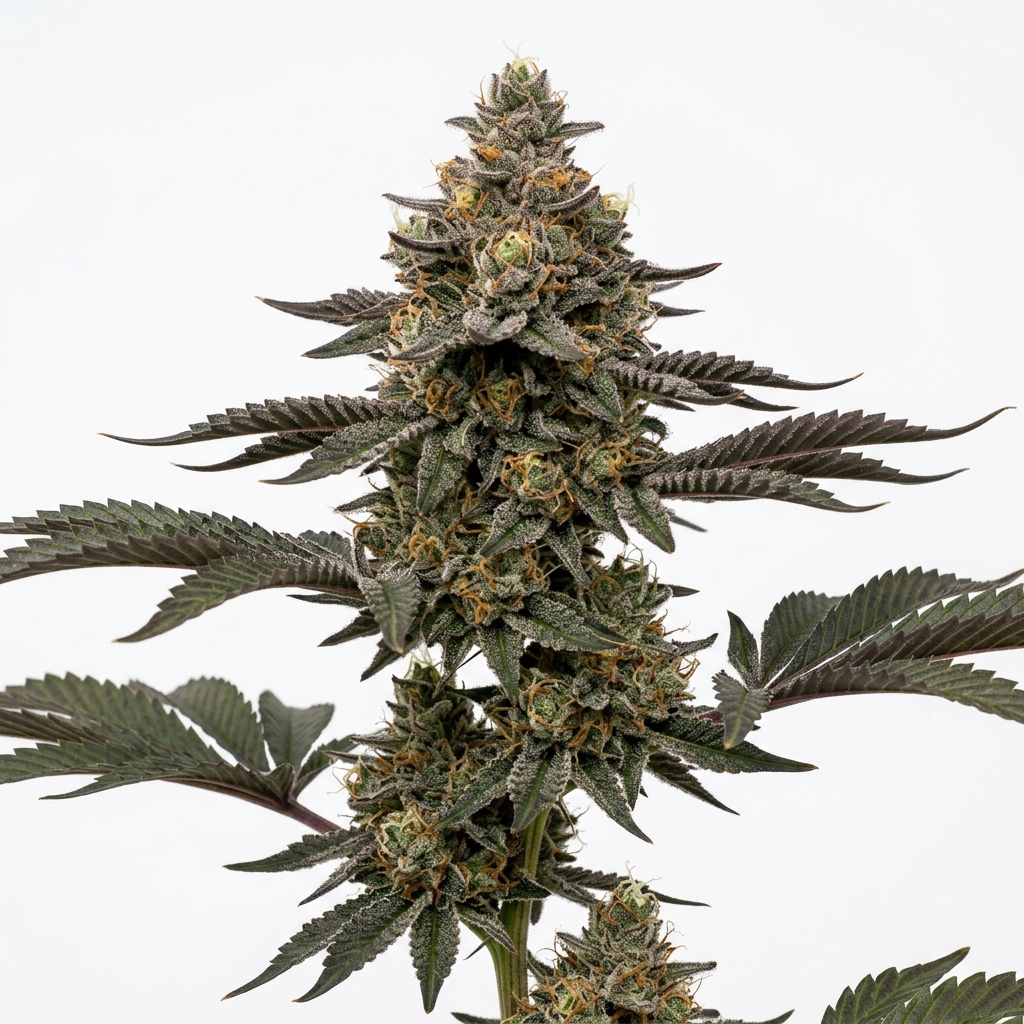
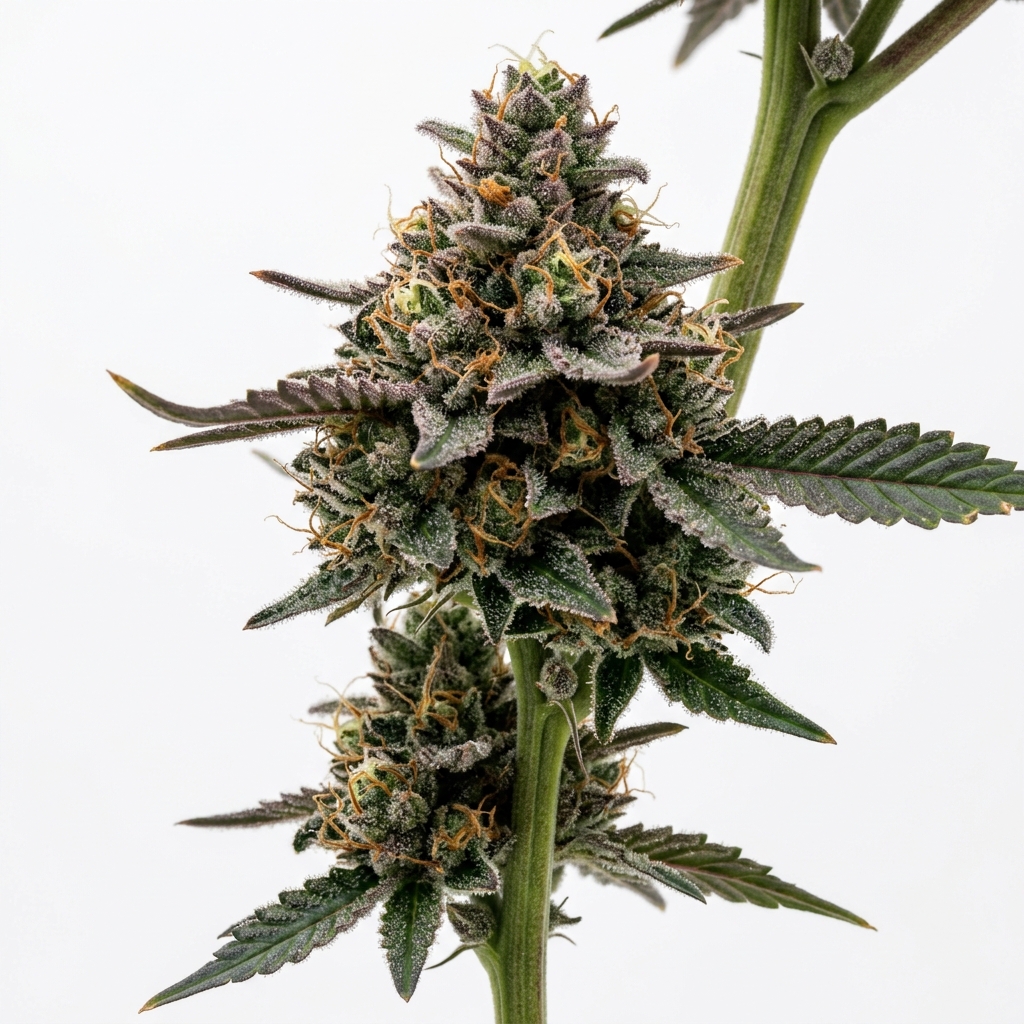
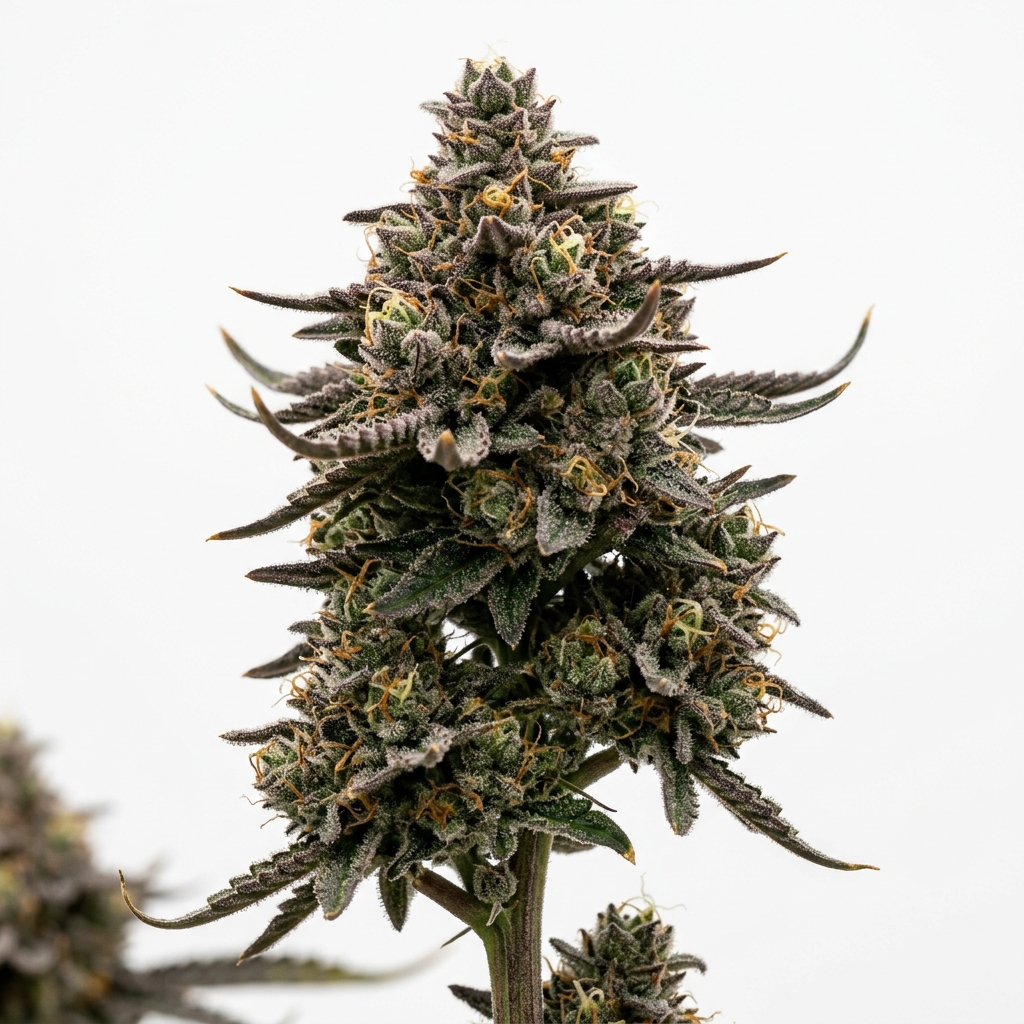
Visually living up to its name, White Buffalo produces elongated, snowy colas blanketed in a thick, shimmering coat of silver-white capitate-stalked trichomes that almost completely conceal the lime-green and faint purple floral bracts beneath. Vibrant reddish-copper pistils weave through the frosty calyxes, creating top-tier bag appeal. The aromatic footprint presents a complex bouquet of sweet tart berries, fresh forest pine, pungent diesel fuel, and herbal earth. The information below is provided strictly for scientific and botanical reference.
Quick Facts
| Trait | Details |
|---|---|
| Genetics & Breeder Roots | Romulan × (Blackberry Kush × Bay 11) (Bred by Tahoe Seeds) |
| Variety | Sativa-dominant Hybrid (approx. 80% Sativa / 20% Indica) |
| THC Range | 20.0% – 26.0% Δ9-THC |
| Flowering Time | 8 – 9 Weeks (56 – 65 Days indoor photoperiod) |
| Yield Potential | 450 – 550 g/m² indoor / up to 650 g/plant outdoor |
| Plant Height | Medium to Tall (120–160 cm; 1.8x–2.2x vertical stretch post-flip) |
| Climate Preference | Warm, semi-arid, Mediterranean (Late Bloom VPD: 1.2–1.5 kPa) |
| Difficulty | Moderate (Requires active canopy height management and trellising) |
Scientific & Botanical Overview
Botanically, White Buffalo exhibits predominantly narrow-leaf drug morphology with slender lateral branching, wide internodal spacing, and elongated fan leaves. When transitioned into the 12/12 photoperiod flowering cycle, the cultivar stretches vigorously (1.8x to 2.2x), requiring proactive canopy management to maintain an even light footprint across all primary flowering sites.
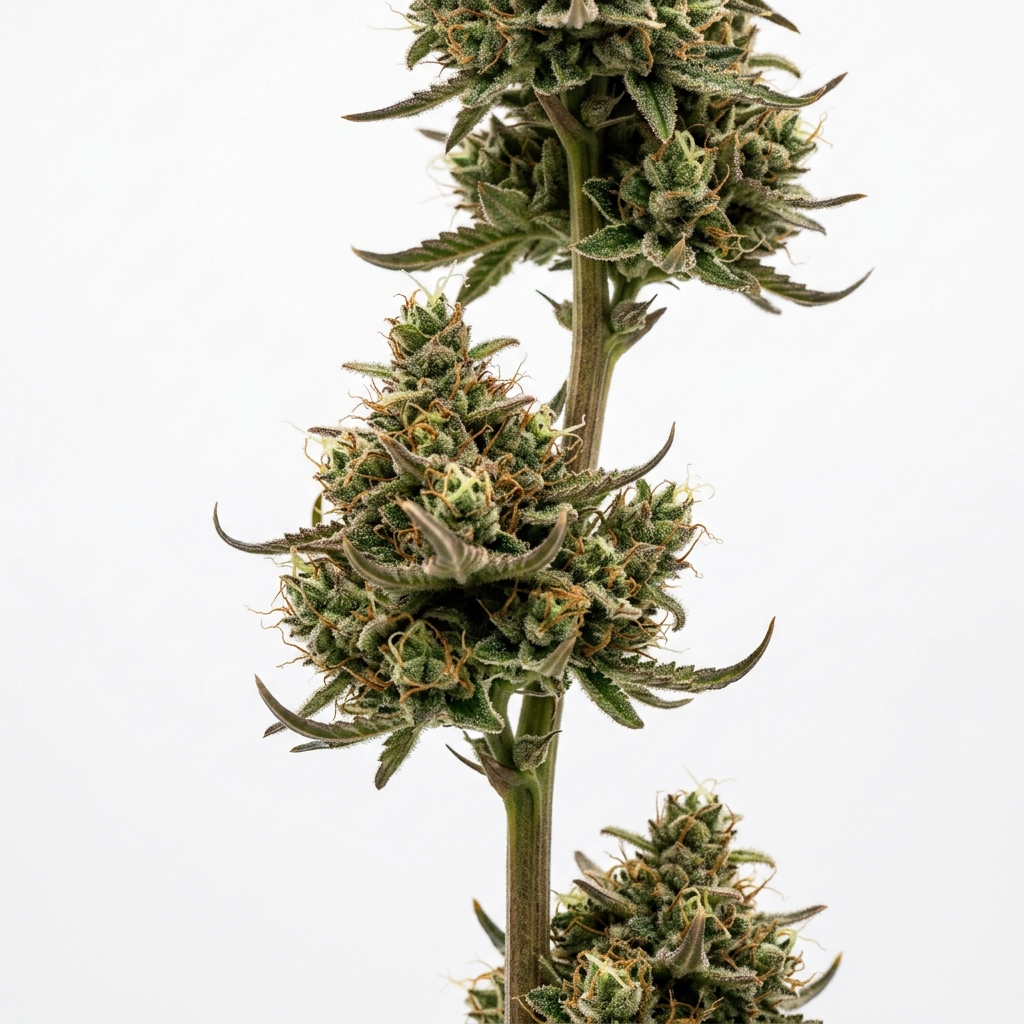
The buds develop into long, spear-shaped colas that swell along the branches rather than forming tight, rounded golf balls. This open floral architecture naturally fosters continuous air circulation throughout the inner canopy, offering enhanced resistance to fungal pathogens like powdery mildew and botrytis. As flowering finishes, the lime-green calyxes are heavily coated in milky resin glands with occasional plum-shaded foliage highlights.
Resin glands are densely packed with long-stalked capitate trichomes possessing heads predominantly sized within the 73µ–120µ range. The resin retains a greasy, monoterpene-rich quality, providing high extraction viability for hydrocarbon live resin runs and whole-plant fresh frozen (WPFF) ice water hash washing.
Effects & Use-Cases (Reported)
Commonly reported effects: Fast-acting cerebral onset, bright cognitive focus, creative energy, and elevated daytime mood, concluding with a light, non-sedating physical tranquility.
Use-case context: Ideal for morning to mid-afternoon consumption, productive workflows, artistic hobbies, social gatherings, and daytime recreation where alertness and clarity are necessary.
Please note: Due to its fast-acting, limonene- and pinene-driven cerebral stimulation, individuals sensitive to potent sativa cultivars should start with moderate doses.
Aroma & Flavors
Aroma: Freshly cut mountain pine, tart blackberries, and sour plum layered over a pungent chemical fuel undertone, damp earth, and peppery spice.
Flavor: The smoke delivers sweet berry nectar and crisp pine needles on the front of the palate, finishing with a tart diesel, sour citrus, and herbal hash aftertaste on the exhale.
Terpene associations: The chemotype is driven by high concentrations of alpha-pinene, beta-caryophyllene, and d-limonene, with supporting levels of myrcene and terpinolene.
Tested Cannabinoid & Terpene Ranges
| Compound | Typical Range |
|---|---|
| Δ9-THC | 20.0% – 26.0% |
| CBD | < 0.2% |
| CBG | 0.6% – 1.3% |
| Alpha-Pinene | 0.4% – 0.8% |
| Beta-Caryophyllene | 0.3% – 0.7% |
| d-Limonene | 0.3% – 0.6% |
Note: Cannabinoid and terpene profiles are highly variable and depend heavily on specific phenotype selection, cultivation techniques, and curing conditions.
Cultivation Notes
- Topping and Training: Top at the 4th or 5th node during late vegetative growth. Implement a dual-tier trellis screen (SCROG) to guide and support the fast-growing secondary shoots throughout the 2x stretch window.
- Humidity and VPD Control: Target a vegetative VPD of 0.8–1.1 kPa (60%–65% RH). In late flower (weeks 6–9), lower RH to 45%–50% (VPD 1.2–1.5 kPa) to encourage dense glandular resin head production.
- Nutrient Regimen: Moderate feeder. Run vegetative EC at 1.4–1.7 mS/cm and bloom EC at 1.8–2.2 mS/cm. Taper nitrogen gradually after Day 21 of flower while maintaining steady phosphorus and potassium inputs.
- Harvest Timing: Harvest when trichome heads show 90%–95% milky cloudiness with under 5% amber to preserve the strain’s crisp, functional, and uplifting mental clarity.
- Drying and Curing: Hang full branches in a dark room at 60°F (15.5°C) and 55%–60% RH for 12 to 14 days to protect delicate pinene and limonene terpenes from rapid volatilization.
Grower Notes (Week-by-Week Snapshot)
- Weeks 1–3 (The Stretch): Vigorous vertical expansion. Direct main stems through the trellis netting horizontally and perform a lower-canopy lollipop around Day 21.
- Weeks 4–6 (Flower Development): Spear-shaped floral clusters develop along branches with rapid trichome formation. Aromas of pine, sour fruit, and gas become increasingly potent.
- Weeks 7–9+ (Swelling and Ripening): Colas swell into snowy, resin-sheathed spears. Maintain canopy temperatures between 76°F–80°F (24°C–27°C) and begin the final substrate flush.
Genetic Lineage
White Buffalo unites three powerhouse ancestral lines in an intricate sativa-leaning cross:
Romulan provides structural branch rigidity, heavy resin gland production, sharp pine aromatics, and deep therapeutic qualities.
Blackberry Kush (Afghani × Blackberry) contributes rich berry-sweet terpene depth, subtle purple calyx pigmentation, and somatic physical balance.
Bay 11 (Appalachia × Ken’s Kush) supplies explosive sativa vigor, soaring cerebral euphoria, and elongated spear cola architecture.
Research Insights
White Buffalo displays a distinct pharmacological synergy driven by the co-dominance of alpha-pinene, beta-caryophyllene, and d-limonene alongside high Δ9-THC levels (20%–26%). Alpha-pinene acts as a natural acetylcholinesterase inhibitor, which helps promote mental alertness and clarity while countering short-term memory lapses often associated with high THC consumption.
The secondary presence of CBG (0.6%–1.3%) supports total active cannabinoid (TAC) profiles, providing a smooth, daytime-appropriate experience free of heavy sedative qualities.
Frequently Asked Questions
Is White Buffalo a sativa or indica?
White Buffalo is a sativa-dominant hybrid (approx. 80% sativa / 20% indica), known for its energetic cerebral focus and clear daytime functional effects.
How long does White Buffalo take to flower?
The indoor flowering cycle typically finishes in 8 to 9 weeks (56 to 65 days) under a 12/12 photoperiod.
What does White Buffalo smell like?
It carries a prominent aroma of fresh mountain pine needles and tart blackberries layered over sour chemical diesel and earthy spice.
Is White Buffalo difficult to grow?
It is rated moderate; while hardy and mold-resistant due to its open flower structure, its significant vertical stretch requires trellising and active canopy training.
Educational Disclaimer
This article is for educational and informational purposes only. Cannabis laws and regulations vary by jurisdiction. Cultivation and consumption should only be undertaken in compliance with local laws.
Rate and review this strain
Ratings and reviews are accepted only from signed-in Google accounts.
Sign in with Google to leave a rating and written review.
Latest Reviews
0 reviewsNo reviews yet. Be the first Google user to rate and review this strain.
Follow New Cultivar Records
Get newly documented genetics, breeder history, research highlights, and important Strainpedia discoveries by email.