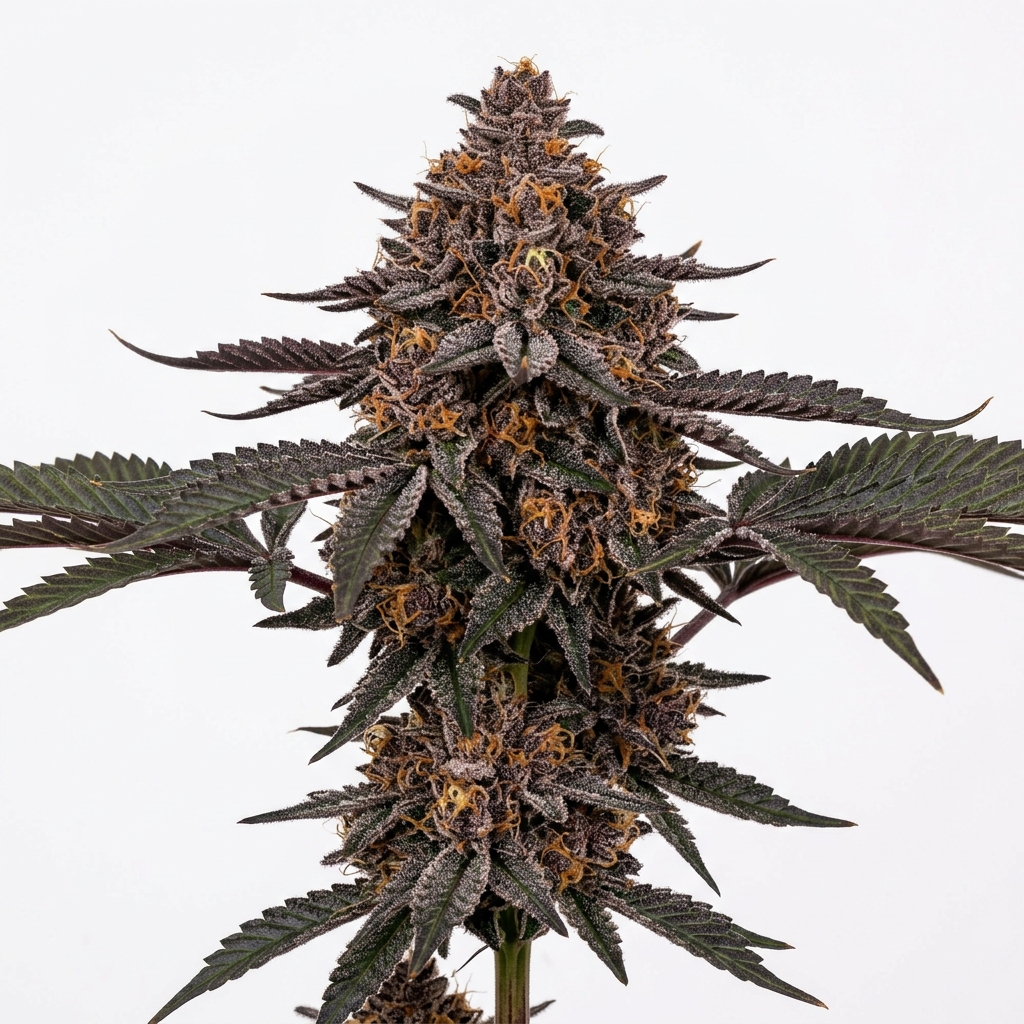
Black Velvet (Cannabis Strain)
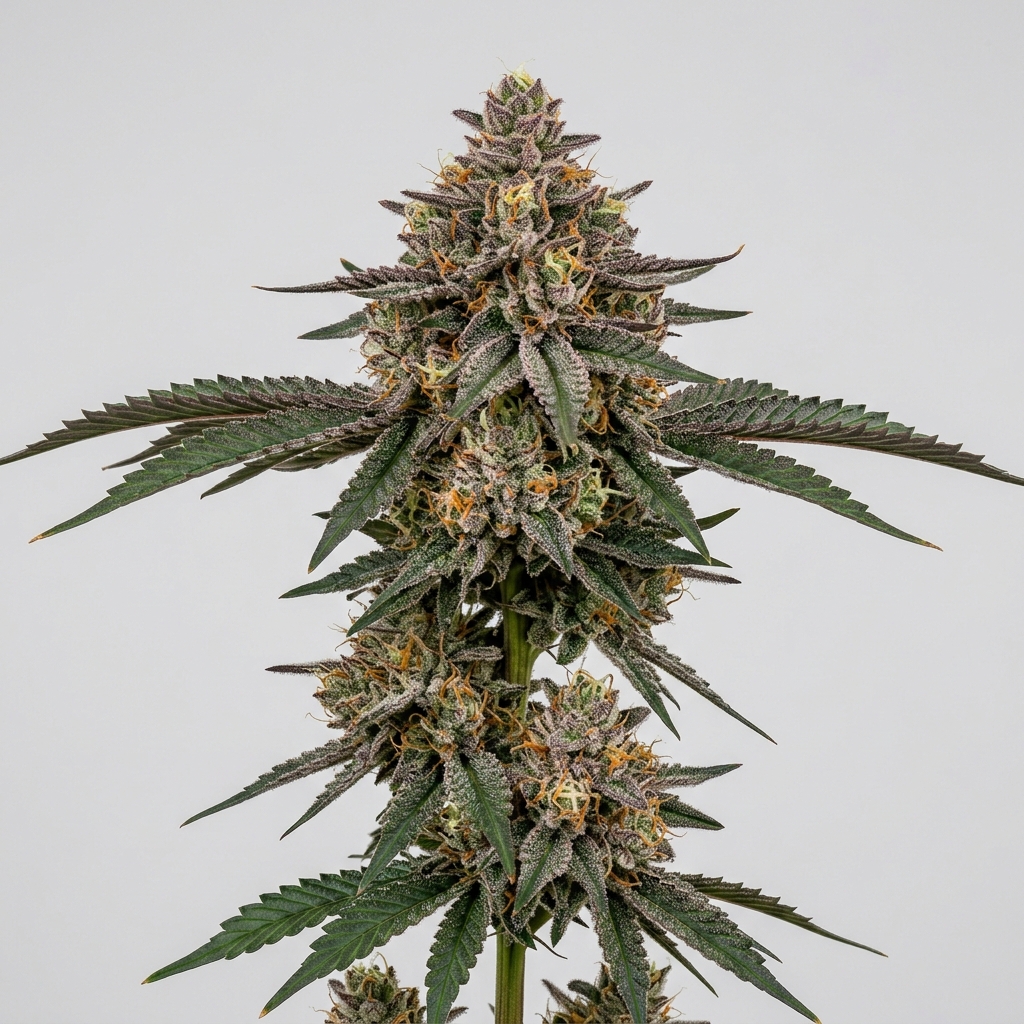
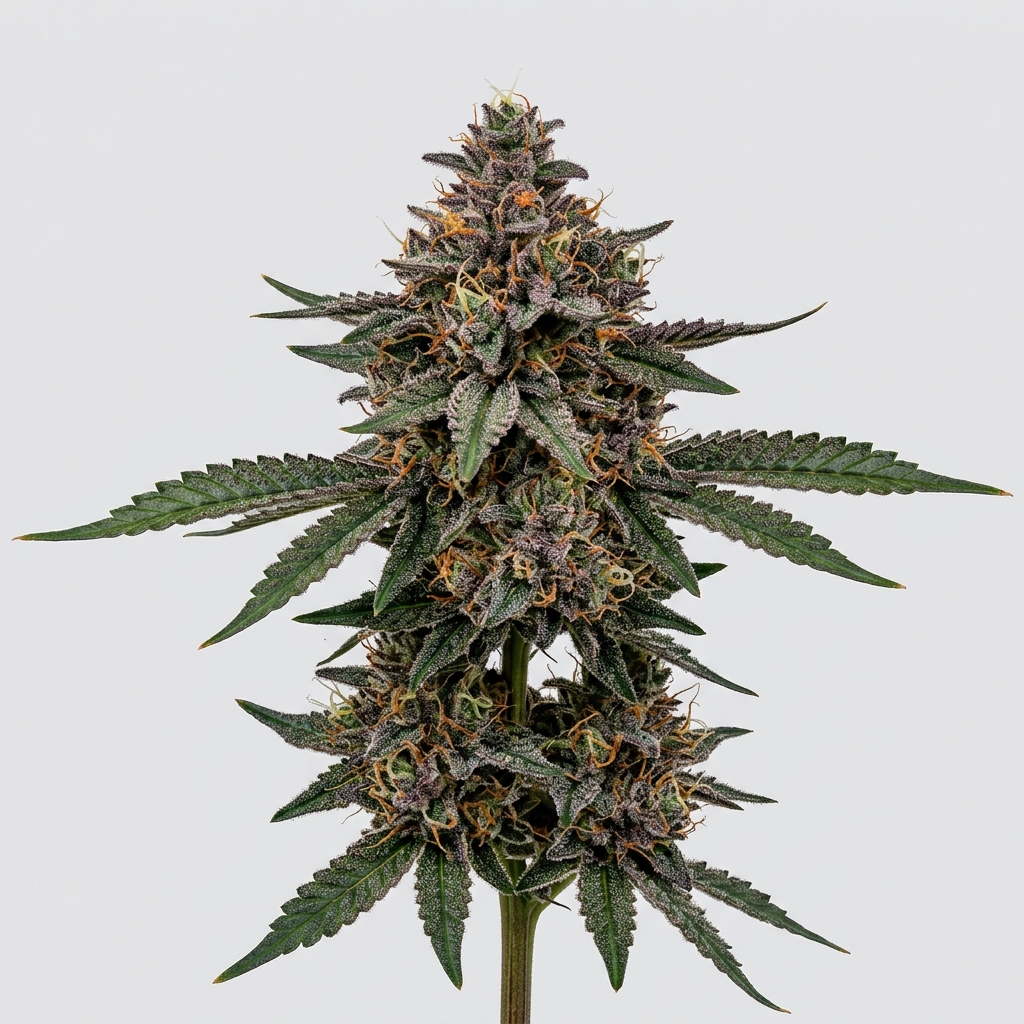
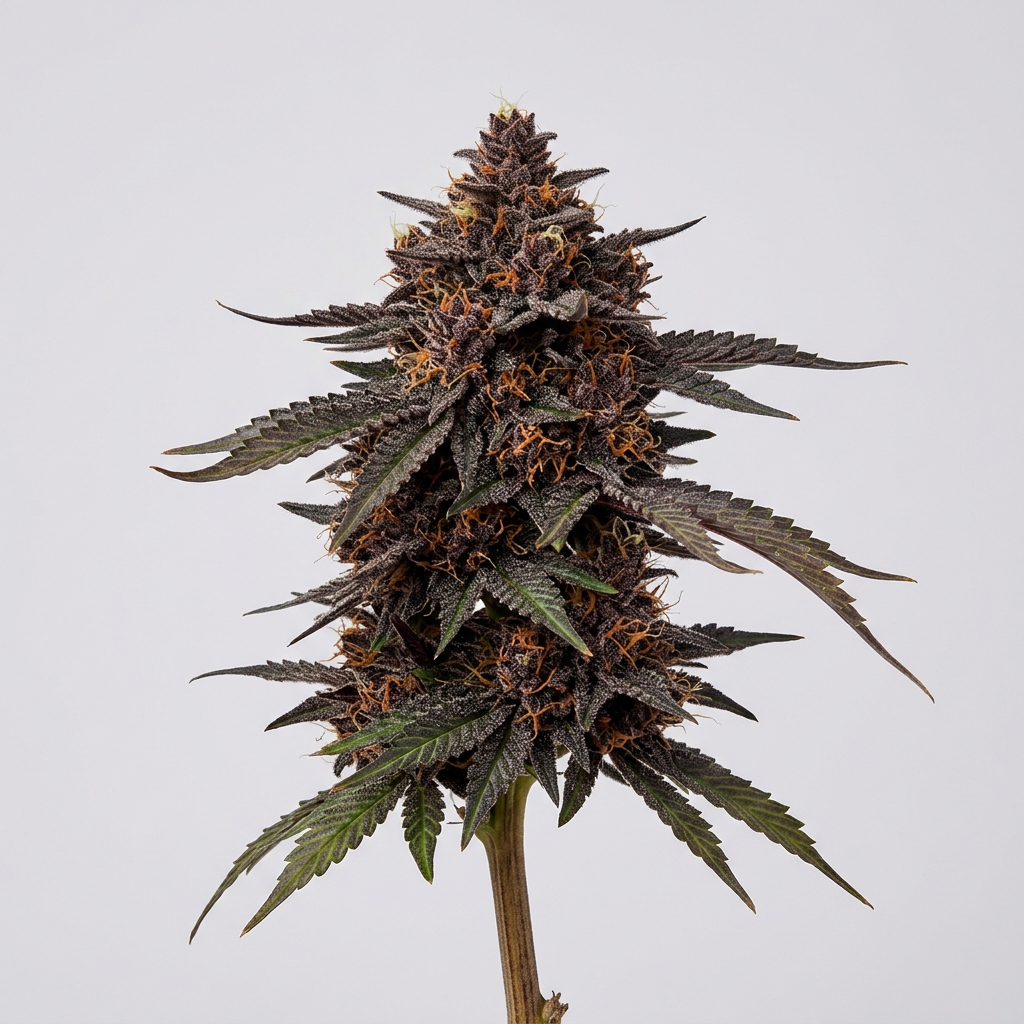
Black Velvet is a highly resinous, indica-dominant hybrid typically testing between 22% and 28% THC, created by crossing the celebrated Jealousy and Oreoz lineages. This cultivar is distinguished by its striking near-black foliage, dense bracts coated in wet frost, and a complex aromatic profile that balances a dark berry edge with creamy, fuel-like undertones. Indoors, it shows a controlled stretch and produces stocky, heavy-yielding spear colas that demand careful humidity management during late flower.
Breeders and extractors favor this selection for its outstanding trichome density and greasy resin quality. The finished flowers dry to a deep purple, almost charcoal hue, offering a striking shelf appeal that has made it a staple in modern boutique collections.
Quick Facts
| Attribute | Details |
|---|---|
| Genetics | Jealousy × Oreoz (commonly reported) |
| Variety | Indica-dominant hybrid |
| THC Range | 22% – 28% |
| Flowering Time | 8 – 9 weeks |
| Yield Potential | Moderate to High |
| Plant Height | Medium, stocky |
| Climate Preference | Temperate, low late-flower humidity |
| Difficulty | Moderate |
Scientific & Botanical Overview
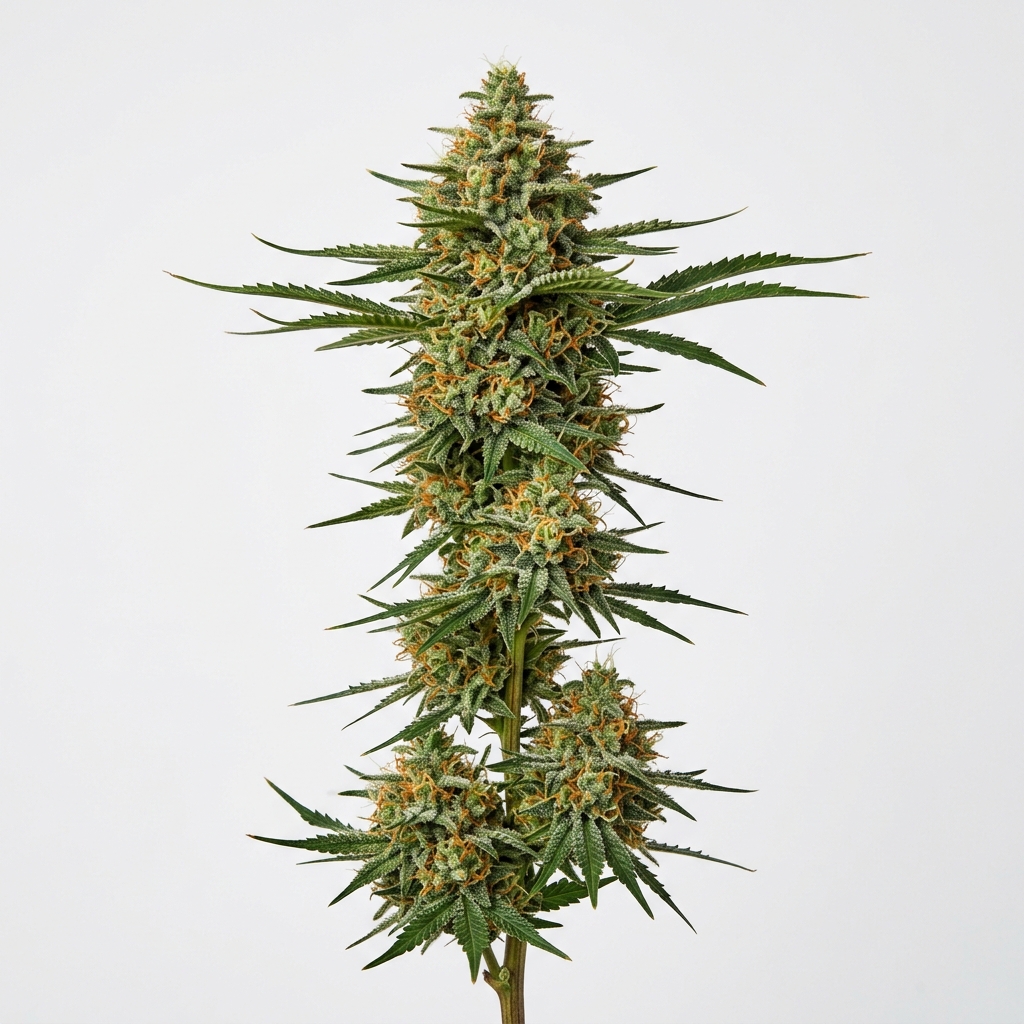
Anatomically, Black Velvet displays classic broad-leaf indica traits, characterized by wide fan leaves and tight internodal spacing. The plant develops a rigid lateral branching structure that supports its dense, heavy upper colas without requiring excessive support, though trellis netting is recommended to maximize light penetration.
The striking coloration of this cultivar is driven by high concentrations of anthocyanins, which emerge prominently when night temperatures drop during the mid-to-late bloom cycle. These pigments turn the fan leaves and calyxes from a deep forest green to shades of royal purple and charcoal black.
Its resin glands are predominantly capitate-stalked trichomes with large, glassy heads that remain highly stable during the drying and curing process. This dense concentration of resin creates a protective barrier that seals in volatile terpenes, preserving the flower’s aromatic clarity over time.
Effects & Use-Cases (Reported)
Commonly reported effects: Users often describe a heavy, grounding physical relaxation paired with a calm, meditative mental state. The onset is typically slow but persistent, settling into a deep body buzz that makes physical activity less appealing.
Use-case context: Due to its sedative nature, this cultivar is best suited for evening or late-night use. It is frequently selected by those looking to wind down after physical exertion or to assist in transitioning into restful sleep.
Note: Individual experiences may vary depending on dosage, tolerance, and phenotype-specific cannabinoid ratios.
Aroma & Flavors
Aroma: A pungent blend of sour blackberry, earthy kush, and a sharp gas finish that intensifies when the glassy buds are broken apart.
Flavor: Creamy and doughy on the inhale, leaving a lingering taste of dark fruit, cocoa, and a subtle mint finish on the palate.
Terpene associations:
Caryophyllene, Limonene, and Myrcene drive the primary aromatic profile, supported by minor traces of Linalool.
Tested Cannabinoid & Terpene Ranges
| Compound | Typical Range (%) |
|---|---|
| Δ9-THC | 22.0% – 28.0% |
| CBD | < 0.1% |
| CBG | 0.5% – 1.2% |
| Beta-Caryophyllene | 0.6% – 1.1% |
| Limonene | 0.4% – 0.8% |
| Myrcene | 0.3% – 0.7% |
Note: Cannabinoid and terpene levels are highly variable and depend heavily on cultivation practices, curing protocols, and specific phenotype selections.
Cultivation Notes
- Humidity Management: Keep late-flower humidity below 45% to prevent moisture retention inside the dense, swollen calyxes.
- Defoliation: Perform a thorough strip of the lower third of the canopy before transitioning to flower to improve airflow.
- Temperature Control: Drop night temperatures by 10 to 15 degrees Fahrenheit during the final two weeks of bloom to encourage deep purple coloration.
- Nutrient Requirements: This cultivar responds well to moderate nitrogen in vegetative growth and higher phosphorus and potassium during peak flowering.
- Harvest Window: Look for milky trichomes with roughly 10% to 15% amber heads to achieve the optimal balance of potency and flavor.
Grower Notes (Week-by-Week Snapshot)
- Weeks 1–3 (Transition & Stretch): The plant shows a controlled stretch, usually doubling in height. Establish a double trellis to organize the canopy early.
- Weeks 4–6 (Mid-Flower): Flower clusters begin to stack rapidly, showing early signs of greasy resin on the surrounding sugar leaves. Maintain steady nutrient inputs.
- Weeks 7–9 (Late-Flower & Ripening): Introduce cooler night temperatures. Monitor the heavy spear colas daily for airflow and reduce watering slightly as the plant finishes.
- Post-Harvest (Slow Dry): Hang-dry the whole plant at 60°F and 60% relative humidity for 10 to 14 days to preserve the delicate terpene clarity.
Genetic Lineage
The lineage of Black Velvet is most widely recognized as a cross between Jealousy (Gelato 41 × Sherbanger) and Oreoz (Cookies and Cream × Secret Weapon). This pairing combines the creamy, fuel-forward terpene profile of Jealousy with the resin-heavy, dark aesthetic of Oreoz, resulting in highly uniform offspring.
Some alternative regional cuts under the same name are reported to stem from older crosses, such as The Black and Burmese Kush. However, the contemporary boutique market almost exclusively recognizes the modern Jealousy and Oreoz selection for its distinct purple-black coloration and cookie-gas profile.
Research Insights
Analytical testing of the Jealousy × Oreoz progeny reveals a high concentration of sesquiterpenes, particularly beta-caryophyllene, which interacts directly with peripheral receptors. This chemical profile supports the deeply physical, relaxing qualities reported by consumers.
The intense purple coloration of the mature bracts points to a robust synthesis of anthocyanin pigments under thermal stress. Researchers note that these compounds, while not psychoactive, often correlate with higher overall terpene retention by shielding delicate trichomes from light degradation.
Frequently Asked Questions
Is Black Velvet hard to grow?
It is moderately difficult. While it has a manageable, controlled stretch, its dense bud structure requires strict environmental controls to prevent mold in late flower.
What gives Black Velvet its dark color?
The strain is rich in anthocyanins, natural plant pigments that react to cooler night temperatures in late bloom, turning the foliage and buds dark purple or near-black.
What does Black Velvet smell like?
It features a complex aroma of sour blackberry and earthy kush, rounded out by a sharp gas and cream finish.
Is Black Velvet suitable for extraction?
Yes. The cultivar is highly regarded for extraction due to its high concentration of greasy, capitate-stalked trichomes that separate easily during processing.
Educational Disclaimer
This content is for educational and informational purposes only. Cannabis laws and regulations vary by jurisdiction. Always consult with a qualified horticulturalist or professional before undertaking cultivation.
Rate and review this strain
Ratings and reviews are accepted only from signed-in Google accounts.
Sign in with Google to leave a rating and written review.
Latest Reviews
0 reviewsNo reviews yet. Be the first Google user to rate and review this strain.