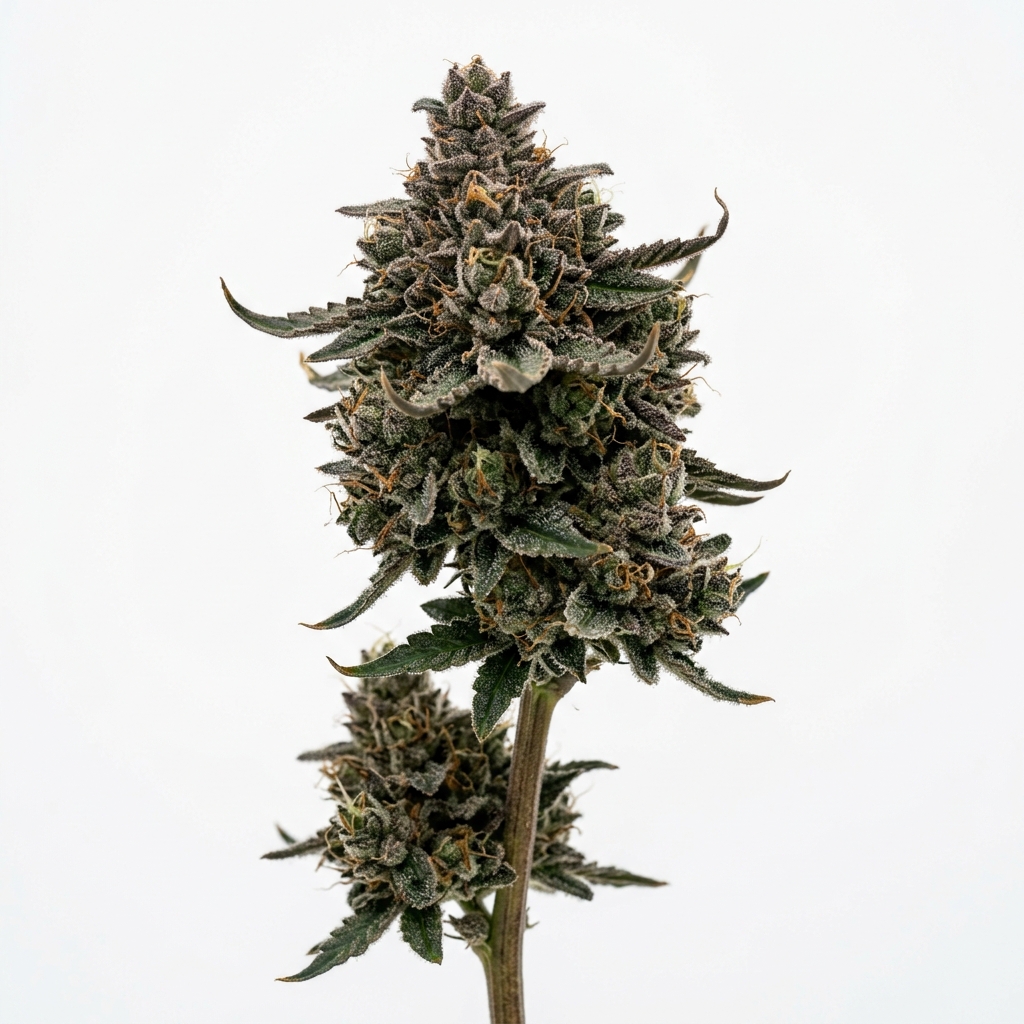
Galaxy Gas (Cannabis Strain)
Galaxy Gas is an indica-dominant hybrid known for its sharp fuel profile and dense, frost-laden structure, typically testing between 21% and THC not consistently reported in dried uninfused flower. The cultivar is commonly cited as a cross between Alien OG and Gas Mask, though the original breeder is not consistently documented across public commercial records. It builds substantial shelf appeal with heavy, greasy resin production, tightly grouped calyxes, and an unmistakable aroma of tart gas, pine needle, and skunky undertones.
The cross pulls dense floral geometry and deep resin coverage from its Alien lineage, while the Gas Mask side reinforces the pungent, fuel-heavy finish. In the grow room, plants exhibit stout lateral branches and moderate internodal spacing, handling low-stress training cleanly. Consumers commonly report a fast-settling body relaxation accompanied by a hazy, calm headspace suited for late afternoons and unhurried evenings.
Quick Facts
| Field | Detail |
|---|---|
| Breeder | Not consistently documented |
| Genetics | Alien OG × Gas Mask |
| Variety | Indica-dominant hybrid (approx. 70% indica / 30% sativa) |
| THC Range | 21% – 26% |
| Flowering Time | 8 – 9 weeks (56 – 63 days) |
| Yield Potential | Moderate to high (400 – 500 g/m² indoor) |
| Plant Height | Medium (approx. 90 – 140 cm indoor) |
| Climate Preference | Temperate to Mediterranean with low late-flower humidity |
| Difficulty | Intermediate |
Scientific & Botanical Overview
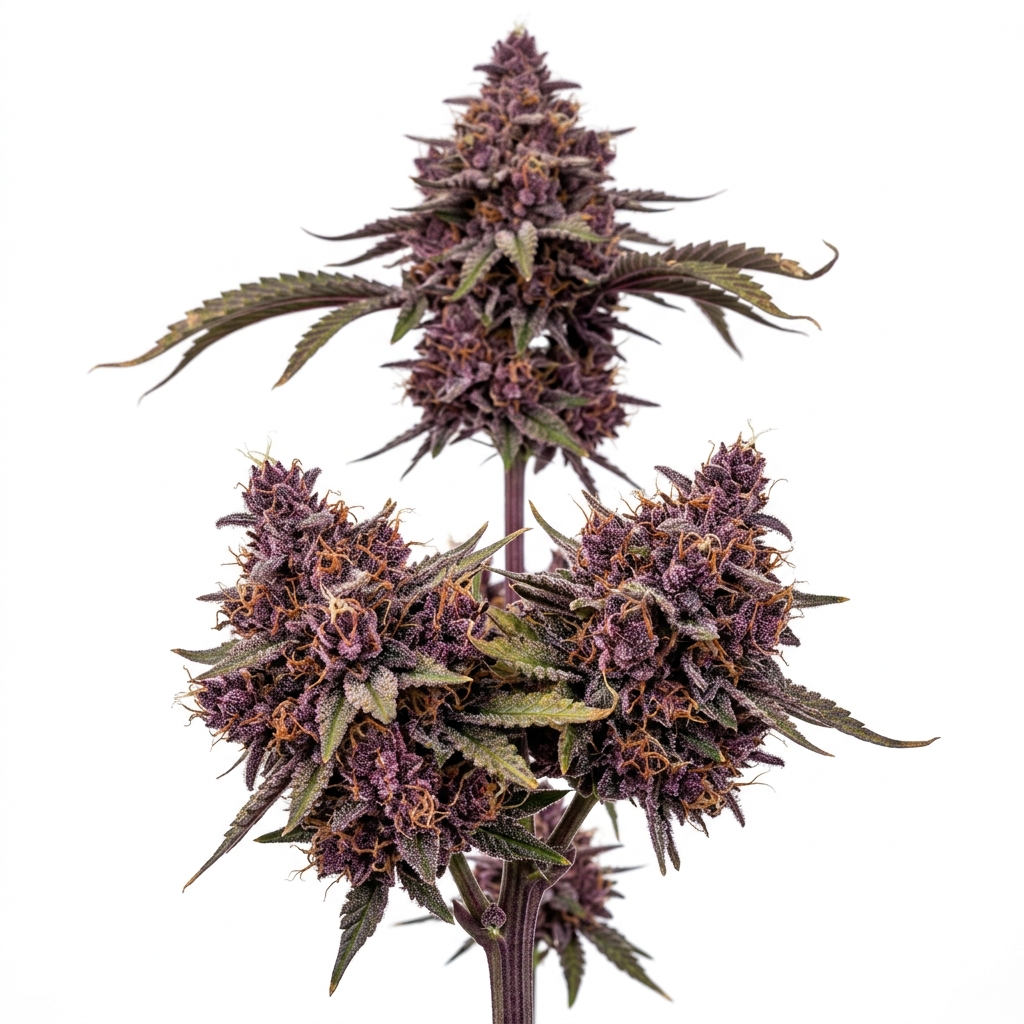
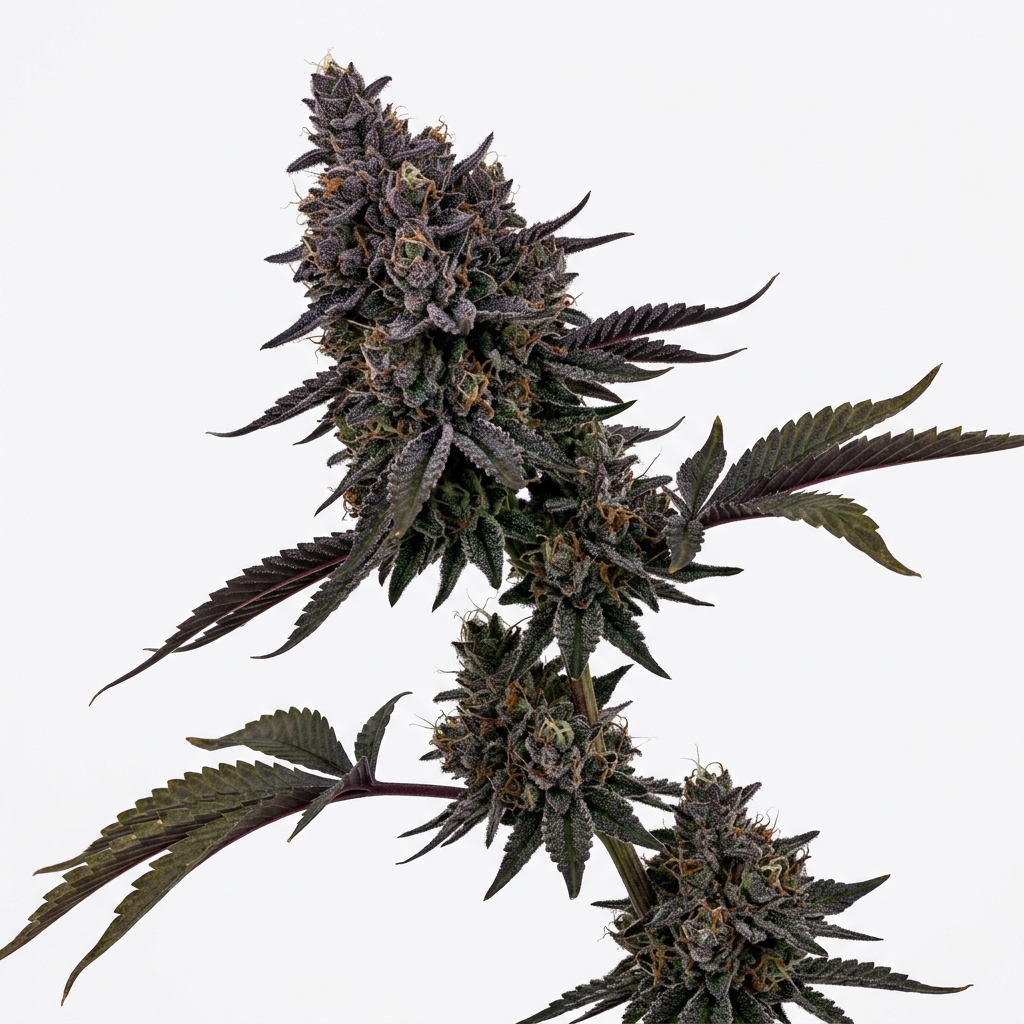
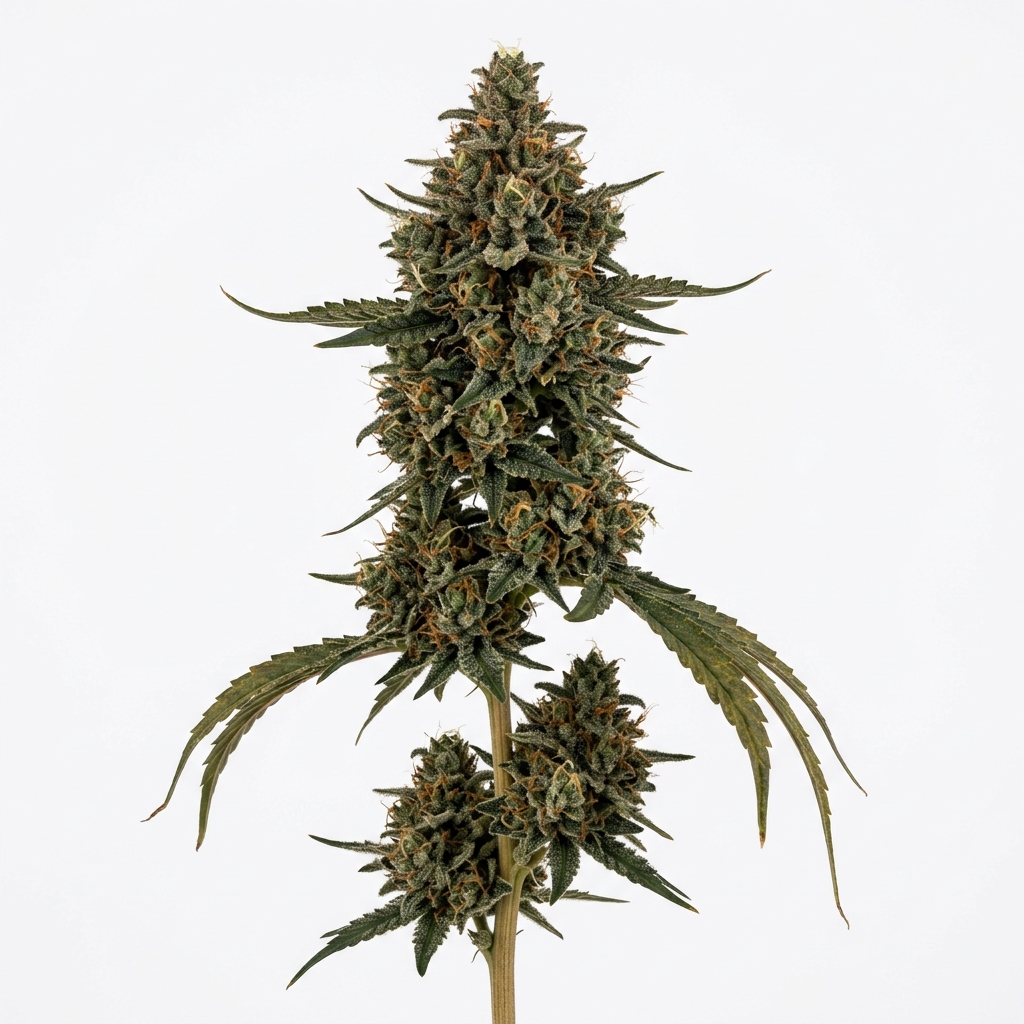
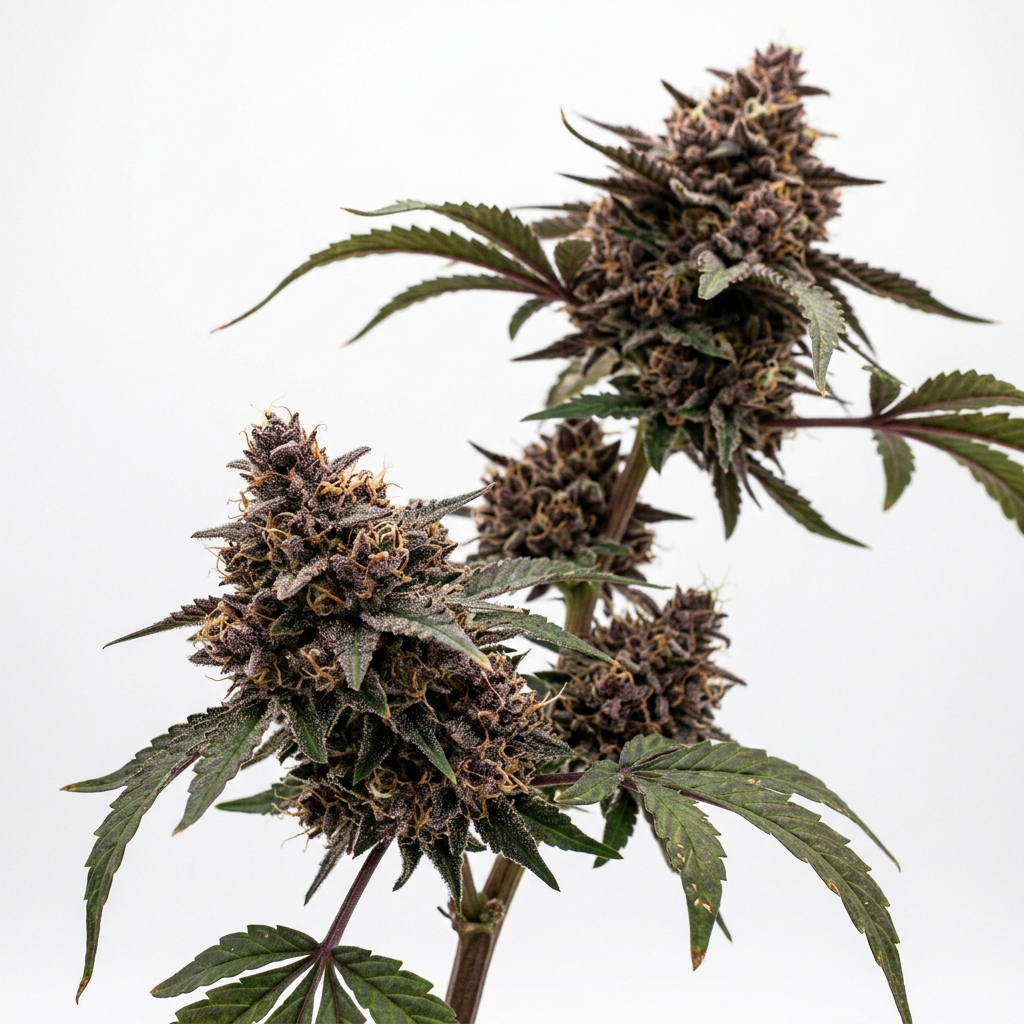
Galaxy Gas produces medium-sized, tightly clustered flowers characterized by swollen calyxes and broad, dark green sugar leaves. Phenotypes frequently express deep plum to charcoal hues near the finish when night temperatures dip during the final weeks. The glandular trichomes are dense and sticky, forming a thick layer of wet frost across both bracts and secondary sugar foliage.
Vegetative growth shows strong indica traits, including thick main stalks, broad fan leaves, and steady root development. The plant typically stretches roughly 1.5× after the flip, staying relatively compact without excessive vertical runaway. Stems remain sturdy enough to support developing spear colas, though minor trellis support prevents top-heavy leaning in mid-to-late bloom.
The resin head morphology leans toward well-developed capitate-stalked trichomes, making the cured flower aromatic and yielding for solventless separation. Secondary metabolites are dominated by heavy monoterpenes alongside sharp sesquiterpenes, which give the plant its characteristic chemical bite.
Effects & Use-Cases (Reported)
Commonly reported effects: Consumers typically describe an initial cerebral buzz that softens rapidly into a heavy, grounding physical calm. The body feel is smooth and weighted without immediate couchlock at moderate intake, though higher doses tend to encourage restfulness and sedation. A gentle mood lift and mental ease often accompany the physical descent.
Use-case context: The cultivar is commonly chosen for late evening unwinding, low-stimulus movie sessions, or quiet post-work recovery. Because the physical weight accumulates over the session, experienced consumers generally avoid using it during active daytime tasks requiring high focus.
Individual experiences vary based on tolerance, dosage, and personal endocannabinoid tone. Potent cannabis flower can provoke grogginess or mild transient dry mouth.
Aroma & Flavors
Aroma: Breaking apart a cured bud releases an aggressive wave of sour diesel, industrial solvent, and damp forest floor. Secondary notes carry crushed pine needle, peppery spice, and a faint lemon-rind brightness that lifts the heavier base notes.
Flavor: The smoke is rich and expansive, delivering strong kerosene and earthy kush on the inhale. The exhale shifts toward a tart, peppery bite with a lingering pine and chemical gas aftertaste that remains noticeable on the palate.
Terpene associations: The aromatic profile is typically led by beta-caryophyllene, myrcene, and limonene, with minor contributions of humulene and pinene supporting the spicy, woody sharpness.
Tested Cannabinoid & Terpene Ranges
| Compound | Typical Flower Range |
|---|---|
| Δ9-THC / Total THC | 21.0% – 26.0% |
| CBD / Total CBD | < 0.5% (Trace) |
| CBG | 0.4% – 1.2% |
| Total Terpenes | 1.8% – 3.2% |
| Dominant Terpenes | Beta-Caryophyllene, Myrcene, Limonene, Humulene |
Range note: Cannabinoid and terpene metrics reflect dried, uninfused flower samples tested across commercial laboratories. Actual percentages vary according to specific phenotype, lighting environment, nutrient balance, and post-harvest drying and curing conditions.
Cultivation Notes
- Humidity management: Keep relative humidity around 55% during early bloom, reducing to 40%–45% during the final three weeks to protect the dense colas from botrytis.
- Nutrient requirements: Plants feed moderately through vegetative growth and appreciate steady calcium and magnesium inputs once heavy bud formation begins in week 4.
- Canopy training: Responds well to topping once or twice followed by a single layer of trellis netting to spread outward bud sites evenly under direct lighting.
- Defoliation: Perform a targeted strip of lower fan leaves around day 21 of flower to ensure clear airflow through the interior canopy without stressing the plant.
- Harvest window: Look for mostly cloudy trichome heads with approximately 10% to 15% amber maturity between days 56 and 63 for the ideal balance of pungent fuel aroma and full-bodied effect.
Grower Notes (Week-by-Week Snapshot)
- Weeks 1–3 (Transition & Stretch): Modest vertical stretch of roughly 40% to 60%. Internodes remain tight, and initial pistil clusters form rapidly across terminal shoots by day 18.
- Weeks 4–6 (Bulk & Resin): Calyxes swell and trichome coverage becomes clearly visible across upper fan stems. Aroma transitions quickly from grassy greenery to sharp, greasy diesel.
- Weeks 7–9 (Ripening & Color): Flower clusters harden into firm, dense spears. Lowering night temperatures by 3–5°C encourages purple striping across upper bracts as pistils turn amber and curl inward.
- Post-Harvest (Dry & Cure): Hang whole plants for 11–14 days at 15–18°C (59–64°F) and 58%–62% RH. A gentle two-week glass cure locks in the pungent, solvent-like terpene profile.
Genetic Lineage
Galaxy Gas inherits its structural backbone from Alien OG (Tahoe OG × Alien Kush), a classic West Coast cultivar recognized for its resin density, sharp pine-citrus undertones, and potent cerebral-to-physical transition. Alien genetics generally contribute tight calyx stacking, strong trichome stalk stability, and pronounced resin production.
The second reported parent, Gas Mask (Cherry Pie × Alien Kush F2), reinforces the skunky, fuel-forward aromatic blueprint. This combination consolidates deep fuel, sour earth, and heavy resin output into a stable, manageable plant that retains high market demand for traditional gas profiles.
Research Insights
Scientific literature on cannabis pharmacology highlights the relationship between high concentrations of THC and specific terpene configurations. Compounds like beta-caryophyllene are known to act as selective agonists at the CB2 receptor, which researchers study for physical calming properties without central psychoactive intoxication.
Additionally, the presence of myrcene and limonene alongside sesquiterpenes has been shown in observational data to influence the subjective depth and onset of perceived relaxation. While broader scientific studies explore these individual chemical interactions, specific experiential outcomes for Galaxy Gas remain phenotype-dependent and subjective to each consumer.
Frequently Asked Questions
Who is the original breeder of Galaxy Gas?
The original breeder is not consistently documented in verified public records. The cut circulated through West Coast boutique markets as a cross between Alien OG and Gas Mask before spreading into broader indoor cultivation circles.
Is Galaxy Gas an indica or sativa?
Galaxy Gas is an indica-dominant hybrid, displaying roughly 70% indica and 30% sativa characteristics in its growth habit, bud structure, and relaxing post-session effects.
What does Galaxy Gas smell and taste like?
It is predominantly fuel-forward, smelling of sour kerosene, crushed pine, and damp earth. On the palate, it delivers heavy diesel and peppery kush flavors with a lingering chemical sharpness on the exhale.
How long does Galaxy Gas take to flower?
Galaxy Gas typically finishes flowering indoors in 8 to 9 weeks (56 to 63 days). Growers monitoring resin maturity usually harvest when trichomes show cloudy heads with minor amber development.
Educational Disclaimer
This content is for educational and informational purposes only. Cannabis laws and regulations vary by jurisdiction. Always consult with a qualified professional before beginning any cultivation project or consuming cannabis products.
Rate and review this strain
Ratings and reviews are accepted only from signed-in Google accounts.
Sign in with Google to leave a rating and written review.
Latest Reviews
0 reviewsNo reviews yet. Be the first Google user to rate and review this strain.
Follow New Cultivar Records
Get newly documented genetics, breeder history, research highlights, and important Strainpedia discoveries by email.