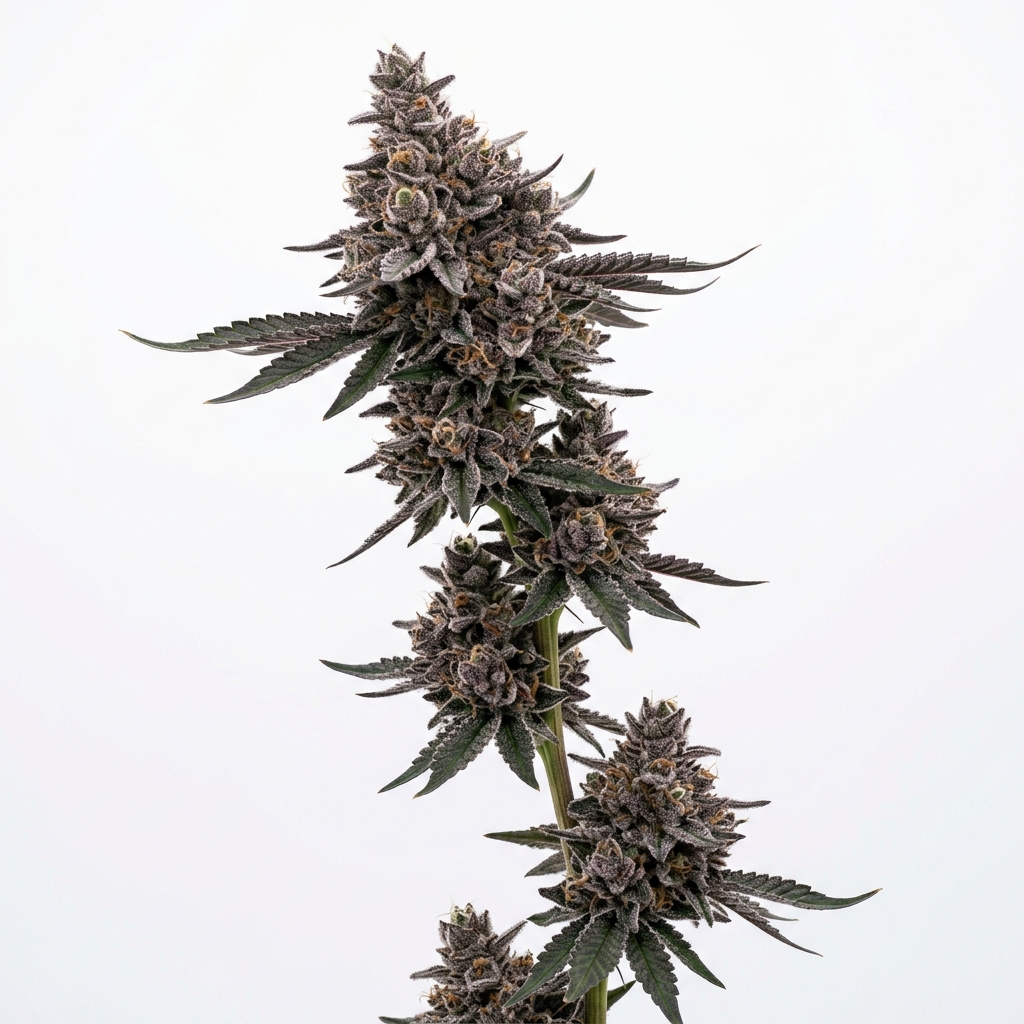
White Bacio (Cannabis Strain)
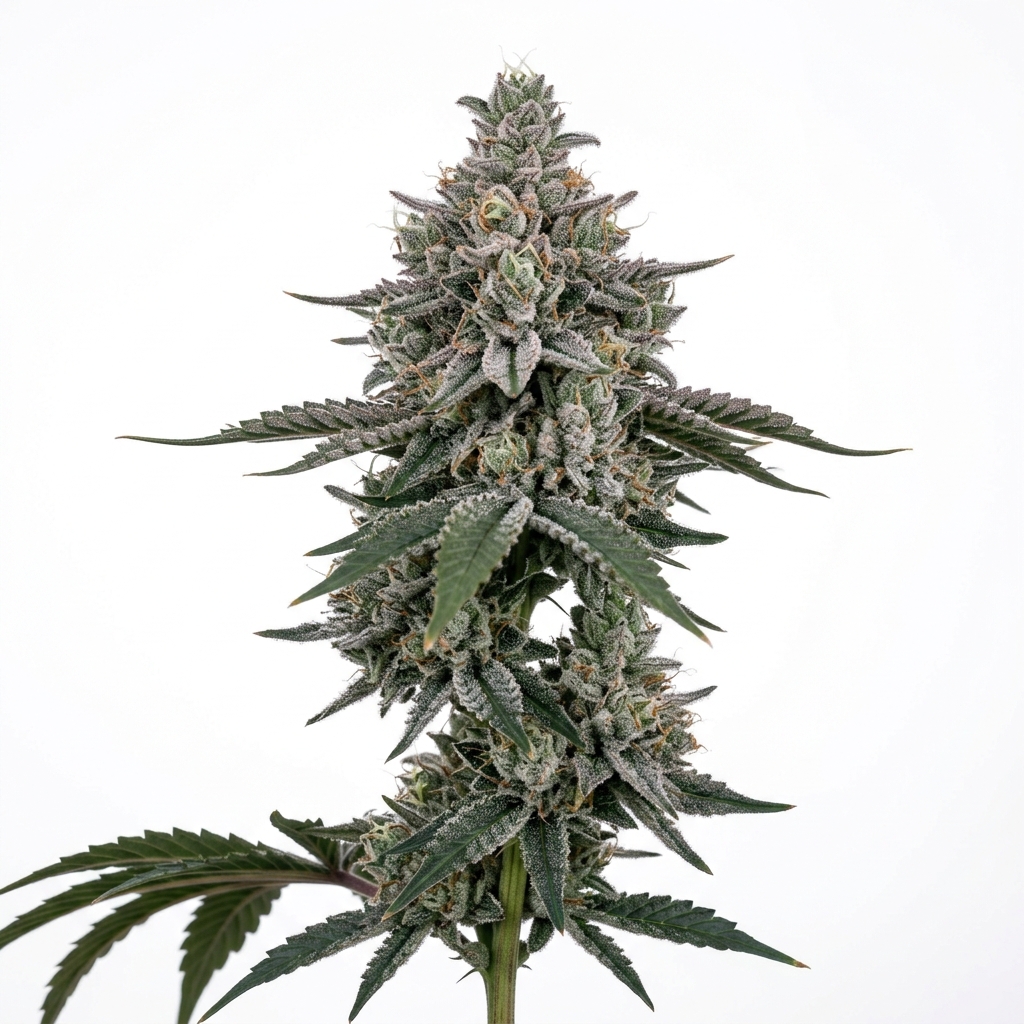
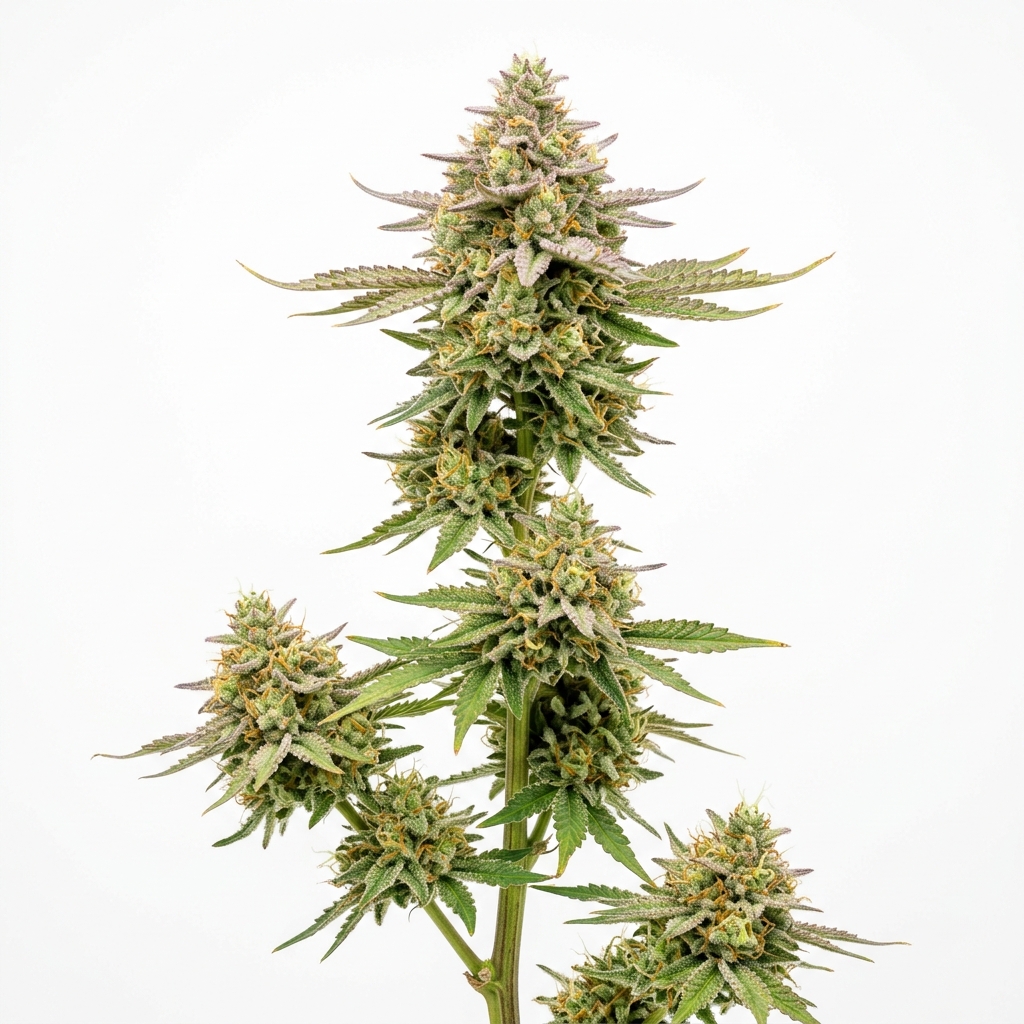
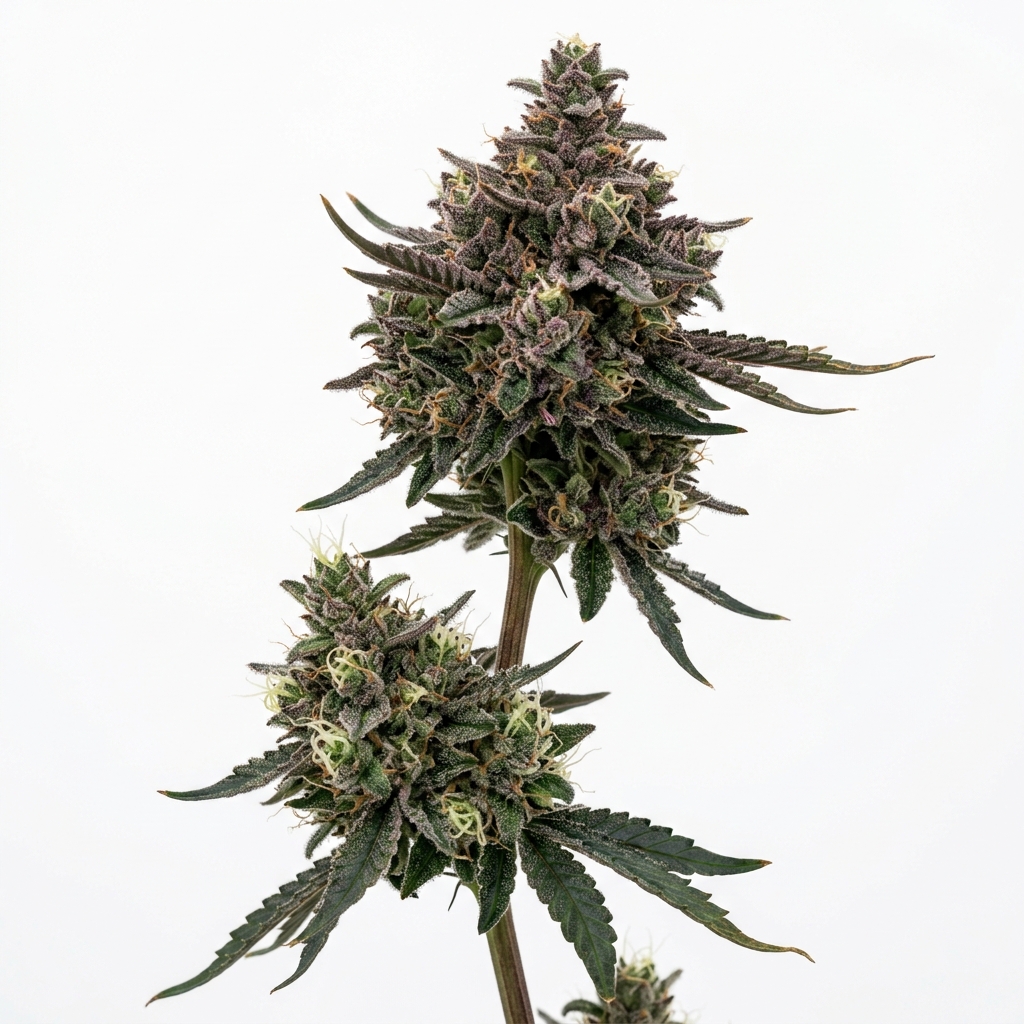
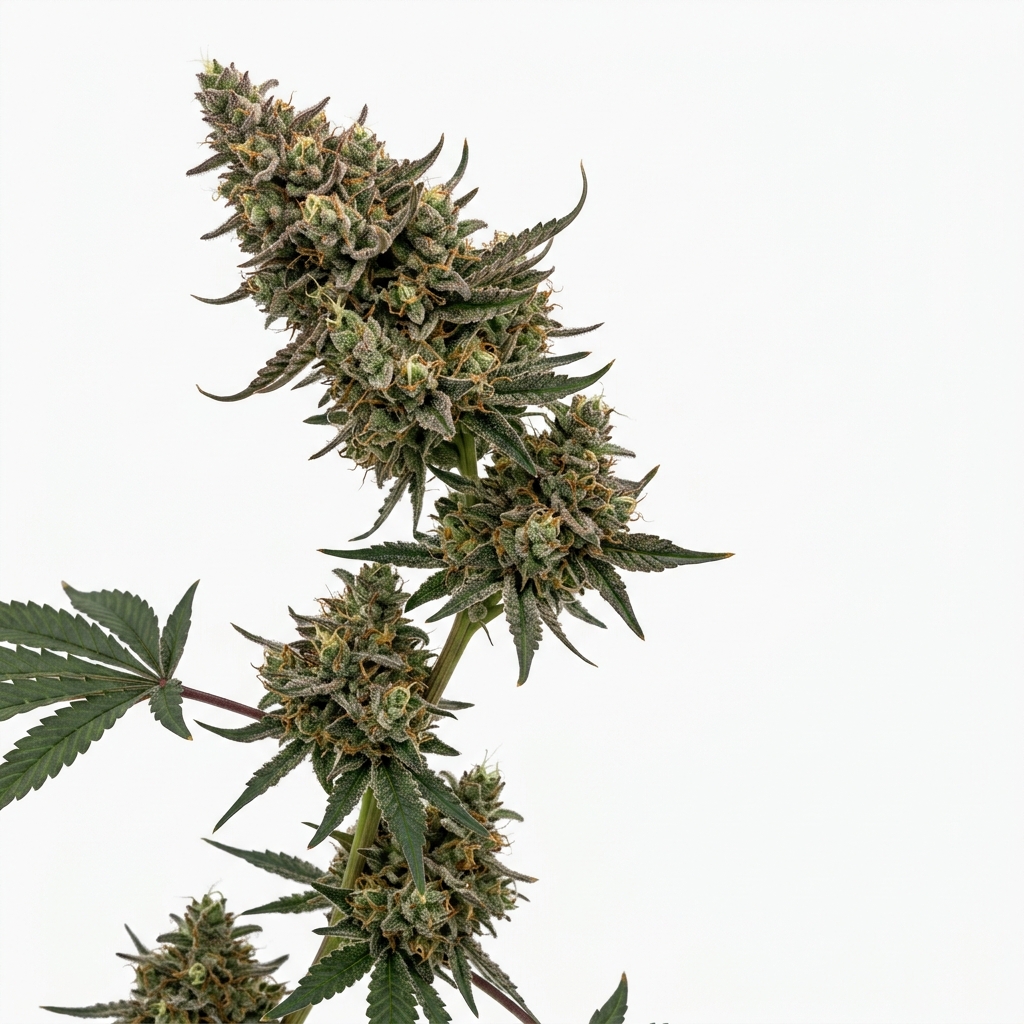
White Bacio is an indica-dominant hybrid testing consistently between 22% and THC not consistently reported, developed by crossing the resin-heavy clone-only cultivar The White with Bacio Gelato (Gelato #41). While original seed line attributions vary among West Coast boutique breeders, the cultivar is prized for pairing the thick, blanket trichome coverage of The White with the sweet cream, dark berry, and sharp fuel notes of the Gelato family. In the grow room, it produces compact, rock-hard spear colas that transition into deep violet hues under cooler night temperatures, finishing with thick gland heads suited for solventless extraction.
The cross shows balanced parental contributions, yielding plants with moderate stretch, tight nodal spacing, and broad foliage that reflects its dessert-lineage background. Consumers and cultivators typically report a fast-settling physical relaxation alongside a clear, warm mental state that avoids immediate sedation. The flower’s appeal rests heavily on its bag presence: swollen calyxes, heavy glandular frost, and an earthy gas aroma layered over vanilla pastry.
Quick Facts
| Field | Value |
|---|---|
| Breeder | Not consistently documented (Boutique West Coast origins) |
| Genetics | The White × Bacio Gelato (Gelato #41) |
| Variety | Indica-dominant hybrid |
| THC Range | 22% – 28% |
| Flowering Time | 8 – 9 weeks (56 – 63 days) |
| Yield Potential | Moderate (400 – 500 g/m² indoors) |
| Plant Height | Medium (controlled 1.5x stretch) |
| Climate Preference | Temperate to Mediterranean; prefers low late-flower humidity |
| Difficulty | Moderate |
Scientific & Botanical Overview
White Bacio develops as a medium-stature plant with strong lateral branching and thick, woody stems capable of supporting dense top colas. The canopy shows dark green, broad fan leaves characteristic of its Afghani and OG Kush ancestral roots, with a leaf-to-calyx ratio that remains manageable during harvest. Internodal spacing is relatively tight, resulting in clustered flower sites that run together along upper branches into solid spears.
The cultivar’s defining physical feature is its trichome density, inherited directly from The White. Resin glands emerge early in flowering and coat not just the bracts, but also sugar leaves and upper stems in a layer of crystalline frost. Gland heads are notably uniform and brittle when properly dried, contributing to strong retention of volatile monoterpenes throughout the curing process.
Floral anatomy leans heavily toward rounded, swollen bracts that resist excessive foxtailing unless exposed to high thermal stress late in bloom. Under standard room parameters, pistils remain short and turn a dull rust orange by harvest, sitting recessed beneath the heavy trichome coat. Anthocyanin accumulation is common during the final two weeks if ambient room temperatures are lowered by 4°C to 6°C during dark periods.
Effects & Use-Cases (Reported)
Commonly reported effects: Users describe an initial wave of physical heaviness centered around the shoulders and neck, accompanied by a calm, grounded mental clarity. The onset is relatively prompt, settling into steady bodily ease without inducing immediate lethargy at moderate doses. Over longer sessions, the experience shifts deeper into physical sedation and appetite stimulation.
Use-case context: White Bacio is typically selected for late afternoon or evening use when winding down from physical exertion or mental fatigue. The lack of racy cerebral edges makes it popular among consumers sensitive to sharp, limonene-heavy sativa profiles. Its dense resin profile also makes it a regular choice for concentrate enthusiasts seeking a full-bodied terpene expression.
Note: Individual reactions vary depending on personal tolerance, dosage, and specific batch chemistry.
Aroma & Flavors
Aroma: Broken buds release a pungent mixture of sweet cream, dough, and sour fuel, anchored by an earthy pine base. The initial jar aroma is subtly sweet and musky, but grinding exposes sharp gaseous undertones that linger in the room.
Flavor: The smoke is thick and velvet-like on the inhale, carrying notes of vanilla pastry, hazelnut, and dark berry. On the exhale, the flavor turns noticeably sharper, leaving a peppery diesel and damp earth finish on the palate.
Terpene associations: Analytical testing across related cuts typically shows a dominance of beta-caryophyllene, limonene, and myrcene, with secondary contributions from humulene and linalool providing the underlying herbal and floral complexity.
Tested Cannabinoid & Terpene Ranges
| Compound | Typical Range |
|---|---|
| Δ9-THC | 22.0% – 28.0% |
| CBD | < 0.5% (Trace) |
| CBG | 0.4% – 1.2% |
| Total Cannabinoids | 25.0% – 32.0% |
| Total Terpenes | 1.8% – 3.2% |
| Primary Terpene | beta-Caryophyllene |
| Secondary Terpenes | Limonene, Myrcene, Humulene |
Range note: Cannabinoid and terpene metrics reflect laboratory testing of cured, uninfused dried flower. Environmental inputs, light intensity, harvest timing, and post-harvest drying parameters cause natural variations across different cultivation runs.
Cultivation Notes
- Humidity management: Maintain 55% to 60% relative humidity during early vegetative stages, gradually stepping down to 40% to 45% by week 6 of bloom to protect dense, resinous colas from botrytis.
- Nutrient requirements: Plants handle moderate to heavy feeding schedules well, with a strong demand for calcium and magnesium during the initial flower stretch; reduce nitrogen early in flower to avoid excessive leaf density.
- Canopy training: Responds well to early topping at the fourth or fifth node followed by low-stress training (LST) or a single-layer Trellis net to open inner bud sites to direct light.
- Defoliation: Perform a thorough lower-canopy strip around day 21 of bloom to remove shading fan leaves and enhance airflow through the middle strata of the plant.
- Harvest window: Optimal potency and terpene clarity are generally reached between day 58 and 63 when trichome heads show roughly 10% to 15% amber and minimal clear gland heads remain.
Grower Notes (Week-by-Week Snapshot)
- Weeks 1–3 (Vegetative Transition & Stretch): Plants exhibit a manageable 1.3x to 1.5x vertical stretch. Stems thicken rapidly; set supportive trellising early and manage internodal spacing with consistent light intensity.
- Weeks 4–6 (Bud Set & Early Resin): Calyxes begin stacking tightly into distinct clusters. Glandular trichomes coat bracts and fan margins early, accompanied by a rising scent of sweet cream and damp soil.
- Weeks 7–9 (Ripening & Color Expression): Flowers swell into rock-hard nuggets. Dropping nighttime temperatures below 20°C encourages purple calyx coloration while gas and diesel aromas become dominant.
- Harvest & Cure: Whole-plant hang at 15°C to 18°C and 60% relative humidity for 12 to 14 days preserves brittle trichome heads and ensures complete conversion of chlorophyll for a clean cure.
Genetic Lineage
White Bacio brings together two heavyweights of modern breeding. The White, originally emerging from Florida before becoming a cornerstone clone-only cut in Colorado and California, contributed dense bud structure and an extraordinary volume of surface trichomes. Though The White is historically known for a relatively muted aroma compared to fuel-forward OG cuts, it provides a stable, frosty framework for terpene-heavy pollen donors.
On the other side of the cross, Bacio Gelato (Gelato #41, bred from Sunset Sherbet × Thin Mint GSC) introduces rich dessert terpenes, deep purple coloration, and high potency. Combining these lines yields a phenotype that retains the resin density and heavy bract formation of The White while infusing the pungent cream, fruit, and fuel bouquet characteristic of elite Gelato selections.
Research Insights
Academic investigations into cannabis phytochemistry consistently identify the presence of beta-caryophyllene as a distinctive marker in modern dessert and OG-derived cultivars. Caryophyllene is unique among common plant terpenes because it functions as a functional non-cannabinoid CB2 receptor agonist in laboratory receptor binding assays. When present in ratios alongside limonene and myrcene, researchers observe modulated uptake dynamics that may influence consumer-reported bodily relaxation.
While general pharmacological research provides valuable frameworks for understanding how specific terpenes interact with cannabinoid receptors, strain-specific clinical studies on White Bacio remain limited. Differences in cultivation practices, curing protocols, and phenotypic variation mean that consumer experiences are shaped by complex, individualized terpene-cannabinoid profiles rather than single chemical markers.
Frequently Asked Questions
Who is the original breeder of White Bacio?
The cross is not consistently credited to a single breeder in public registries, though it originated in California boutique growing circles pairing The White clone with select Bacio Gelato (#41) cuts.
Is White Bacio an indica or sativa?
White Bacio is an indica-dominant hybrid, displaying the compact bud morphology, broad foliage, and relaxing physical traits typical of its ancestral lineage.
What does White Bacio smell and taste like?
It carries a distinct aroma of sweet cream, vanilla dough, and tart berry, supported by a heavy base of pungent gas and earthy pine on the exhale.
How long does White Bacio take to flower?
Under indoor lighting, White Bacio typically finishes its flowering cycle in 8 to 9 weeks (56 to 63 days), depending on phenotype and grower preference for trichome maturity.
Educational Disclaimer
This content is for educational and informational purposes only. Cannabis laws and regulations vary by jurisdiction. Always consult with a qualified professional before beginning any cultivation project or consuming cannabis products.
Rate and review this strain
Ratings and reviews are accepted only from signed-in Google accounts.
Sign in with Google to leave a rating and written review.
Latest Reviews
0 reviewsNo reviews yet. Be the first Google user to rate and review this strain.
Follow New Cultivar Records
Get newly documented genetics, breeder history, research highlights, and important Strainpedia discoveries by email.