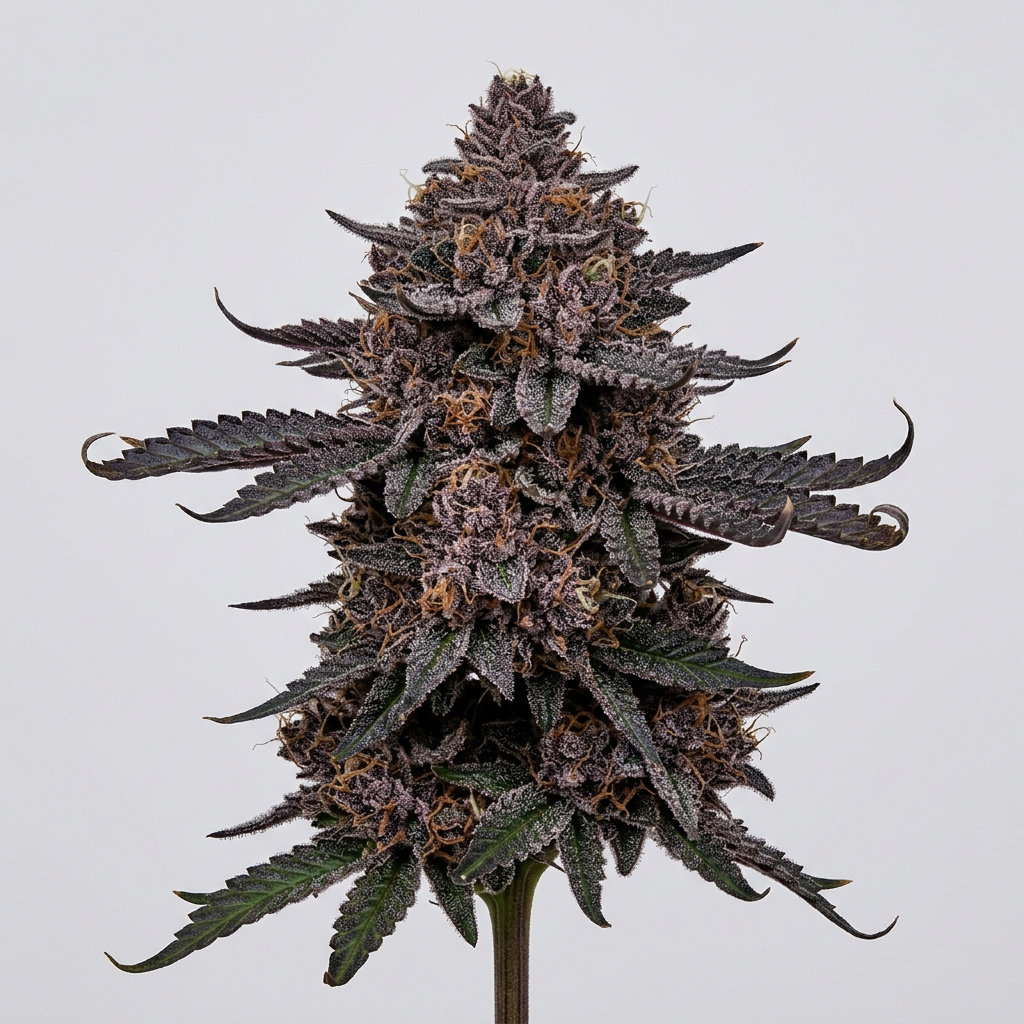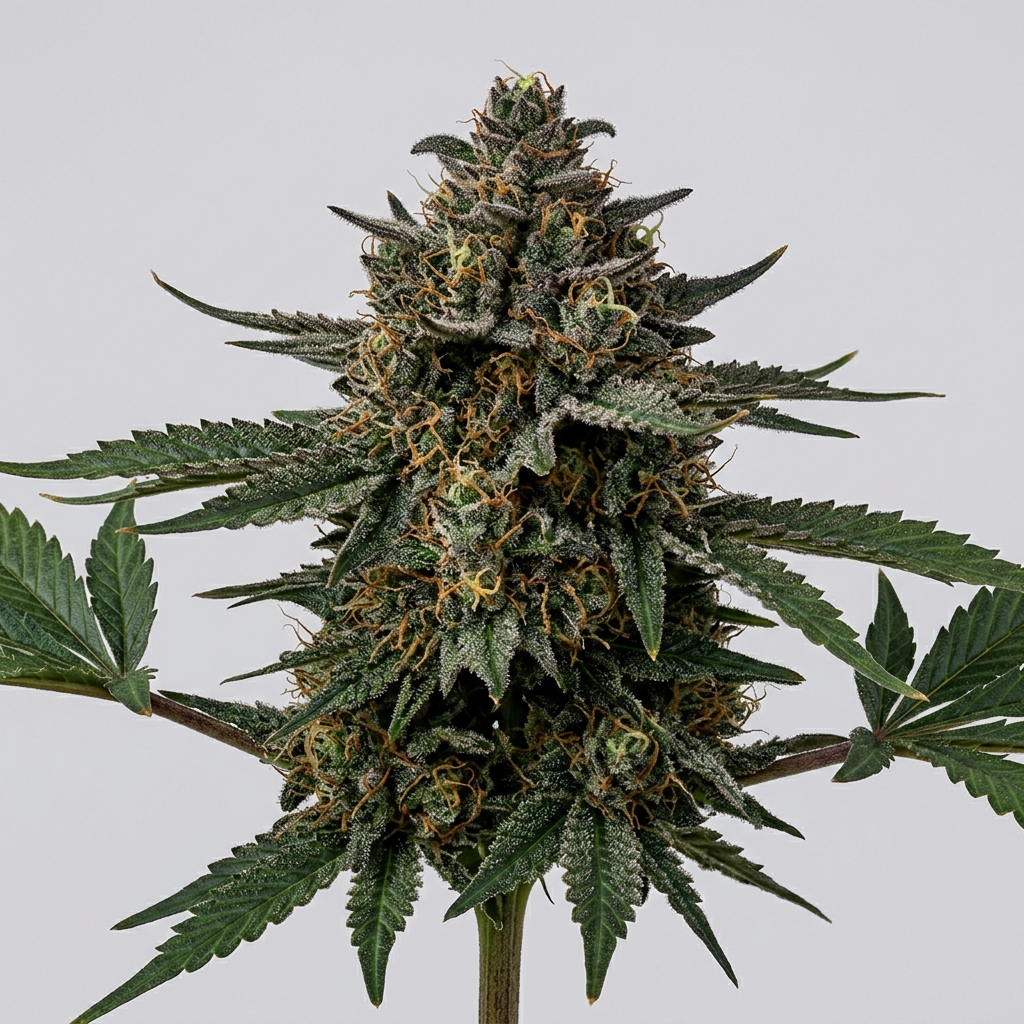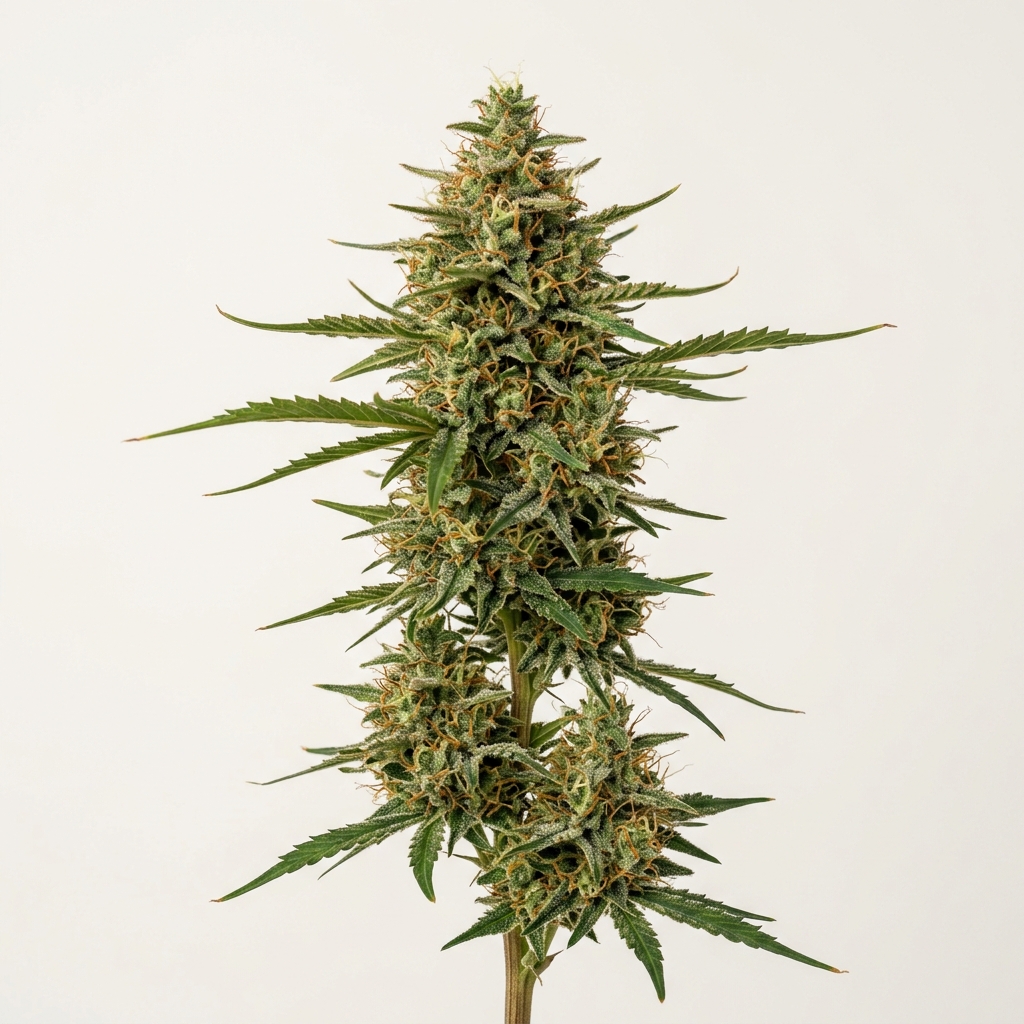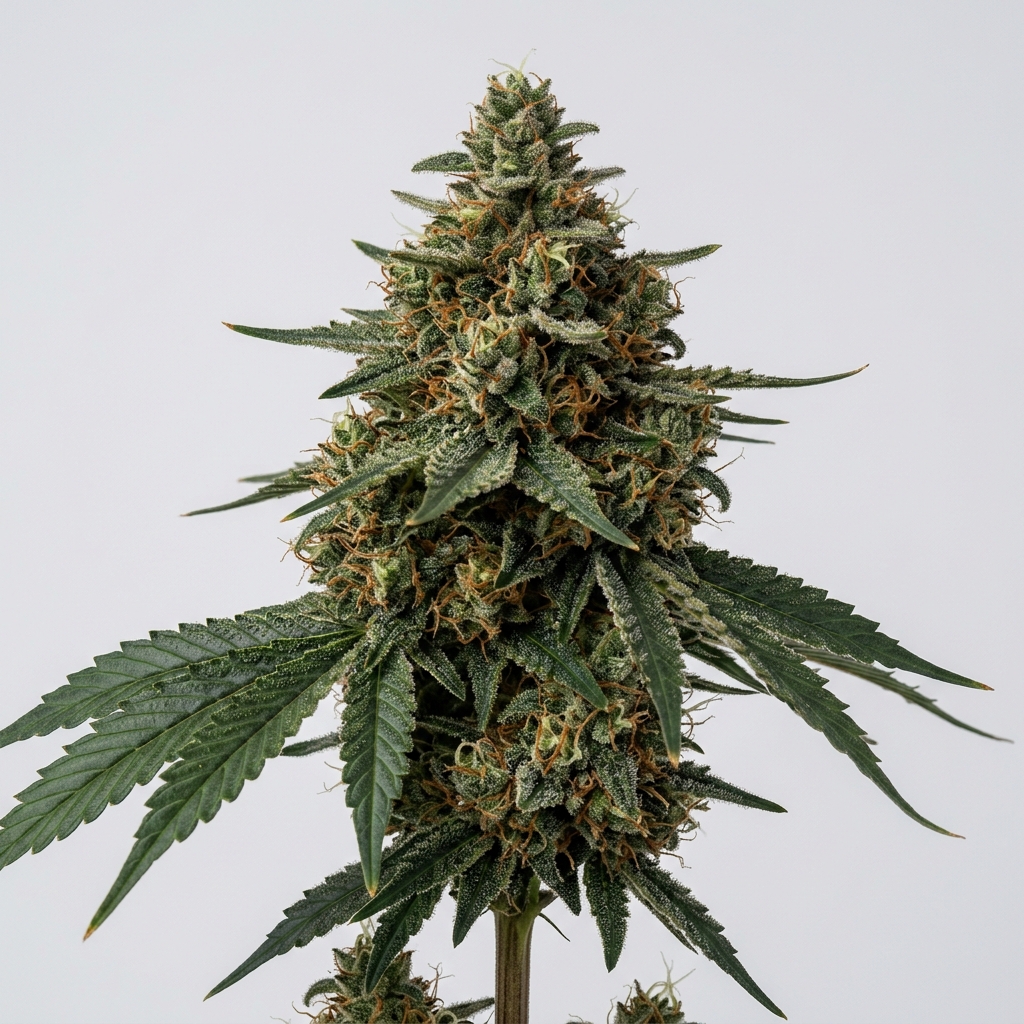
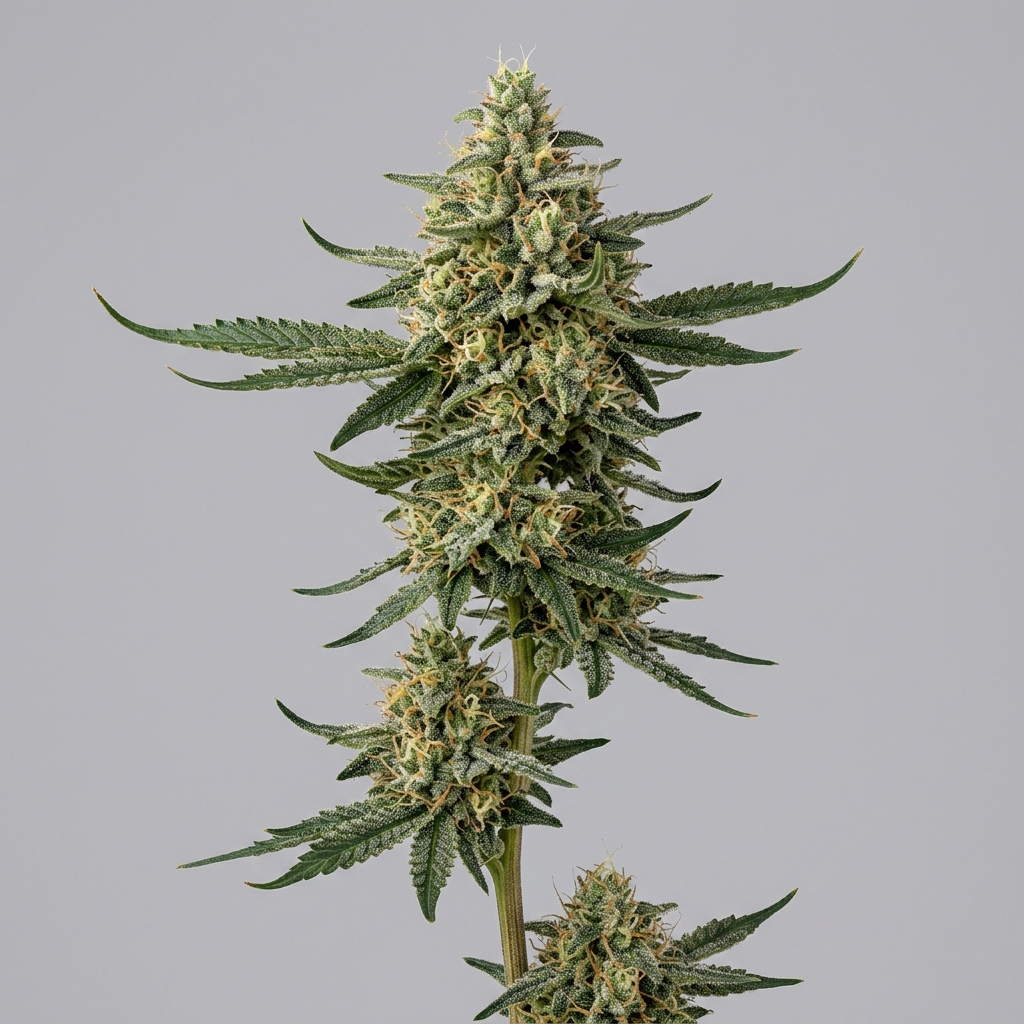
Lemon Royale (Cannabis Strain)
Lemon Royale is a sativa-dominant hybrid typically testing between 20% and 28% THC, bred by Swamp Boy Seeds by crossing Lemon Tree with a GMO and Triangle Kush selection. This cultivar is highly regarded for its greasy resin production and an intense aromatic profile that clashes a sharp citrus lift with a heavy, garlic-gas funk. It typically develops into tall plants with moderate stretch, producing dense, spear-shaped colas that make it a favored choice for solventless extraction.
Cultivators select this strain for its reliable resin coverage and its distinct, savory-sour terpene profile. The finished flowers show off swollen calyxes coated in a wet frost that remains sticky even after a slow dry and cure.
Quick Facts
| Attribute | Details |
|---|---|
| Genetics | Lemon Tree × (GMO × Triangle Kush) |
| Variety | Sativa-dominant Hybrid |
| THC Range | 20% – 28% |
| Flowering Time | 9 – 10 Weeks |
| Yield Potential | Moderate to High |
| Plant Height | Medium to Tall |
| Climate Preference | Temperate, low late-flower humidity |
| Difficulty | Moderate |
Scientific & Botanical Overview
Botanically, Lemon Royale shows a hybrid morphology that leans toward its sativa heritage in height and leaf structure. The plants typically produce thin, narrow-fingered fan leaves with relatively wide internodal spacing, allowing for decent light penetration. Despite this open structure, the flower sites develop with the dense, stacked bract configuration inherited from its GMO lineage.
The resin glands on this cultivar are particularly notable for their physical properties. Rather than dry, sandy trichomes, the plant produces a greasy, oil-rich resin that clings to fingers and trimming tools. This wet frost covers the entire surface of the spear colas and extends deep into the surrounding sugar leaves, preserving volatile monoterpenes during the drying process.
Horticultural management requires attention to vertical space. The plant responds aggressively to topping and requires sturdy trellising to support its thin, flexible branches as the heavy upper colas begin to swell in late flower.
Effects & Use-Cases (Reported)
Commonly reported effects: Users frequently report a clear, cerebral stimulation that sets in quickly, accompanied by a slow, creeping physical relaxation. Unlike heavier indica varieties, this strain rarely induces immediate lethargy, making it suitable for sustained activities.
Use-case context: The balance of mental clarity and physical ease makes this cultivar popular for daytime sensory tasks, creative work, or social settings. It is often chosen by those who appreciate a sharp mental focus without the physical tension sometimes associated with pure sativas.
Note: Due to its high concentration of limonene and gas-heavy terpenes, sensitive individuals should approach initial use with caution, as the rapid onset can feel intense.
Aroma & Flavors
Aroma: A sharp, chemical-like blast of sour lemon cleaner dominates the initial impression, followed quickly by a decaying garlic-onion funk and heavy diesel undertones.
Flavor: The palate experiences a tart lemon peel on the inhale, transitioning to a savory, earthy kush base with a lingering chemical gas finish.
Terpene associations: Lab analyses typically show a dominance of limonene, supported by high levels of caryophyllene and myrcene, which together create the signature sour-and-savory contrast.
Tested Cannabinoid & Terpene Ranges
| Compound | Typical Range |
|---|---|
| Delta-9-THC | 20.0% – 28.0% |
| CBD | < 1.0% |
| CBG | 0.5% – 1.5% |
| Limonene | 0.6% – 1.2% |
| beta-Caryophyllene | 0.4% – 0.9% |
| Myrcene | 0.3% – 0.7% |
Note: Cannabinoid and terpene levels are highly variable and depend on specific cultivation practices, environmental conditions, and curing methods.
Cultivation Notes
- Humidity: Keep late-flower humidity strictly below 45% to protect the dense, resin-choked colas from moisture retention.
- Nutrition: Responds well to moderate feeding; avoid heavy nitrogen in mid-to-late flower to prevent leafy bud structures.
- Training: Topping early and utilizing a double trellis system is highly recommended to manage the plant’s significant vertical stretch.
- Harvest: Look for amber trichome transitions on the calyxes rather than the sugar leaves to judge peak maturity, usually around day 65.
- Phenotype management: Watch for height variation; some phenotypes lean heavily into the tall Lemon Tree structure, while others stay slightly squatter with tighter internodes.
Grower Notes (Week-by-Week Snapshot)
- Weeks 1–3 (Vegetative & Transition): The plant shows a rapid vertical stretch once flipped to a 12/12 light cycle. Early lollipops and low-stress training should be completed during these weeks to establish a clean, even canopy.
- Weeks 4–6 (Mid-Flower): Spear-shaped colas begin to form, and greasy resin starts coating the fan leaves. The sharp citrus aroma becomes prominent, requiring carbon filters to be in top condition.
- Weeks 7–9+ (Late Flower & Flush): Bud density increases significantly as the calyxes swell. Reduce humidity, maintain structural support for heavy branches, and run a clean flush to preserve terpene clarity.
Genetic Lineage
Lemon Royale is built on a foundation of elite modern hybrids. Its maternal parent, Lemon Tree (Lemon Skunk × Sour Diesel), passes down an intense, high-solubility citrus profile and a vigorous growth habit that demands physical space in the grow room.
The paternal side introduces a cross of GMO (Chem D × Forum Cookies) and Triangle Kush. This elite lineage injects the heavy, savory garlic-gas undertone, dense bract structure, and the greasy resin density that makes the offspring highly suited for modern extraction techniques.
Research Insights
Analytical testing of Lemon Royale frequently highlights an unusual co-dominance of monoterpenes and sesquiterpenes. The elevated presence of limonene alongside caryophyllene creates a distinct aromatic tension, where the volatile citrus elements are anchored by heavier, woodier compounds.
Breeders and researchers note that the strain’s physical resin properties—specifically the high ratio of terpene-rich oils within the trichome heads—contribute to its low melting point. This physical trait makes the cultivar highly efficient for solventless separation processes like ice water extraction.
Frequently Asked Questions
Is Lemon Royale a sativa or indica?
Lemon Royale is a sativa-dominant hybrid. While its growth habit and cerebral onset lean toward sativa, its physical relaxation and dense bud structure show strong influence from its GMO and Kush genetics.
How long does Lemon Royale take to flower?
This strain typically requires a flowering period of 9 to 10 weeks (approximately 63 to 70 days) to reach peak resin maturity when grown indoors.
What does Lemon Royale smell like?
It features a complex and pungent aroma that combines sharp, chemical-like lemon cleaner with a savory, heavy garlic-onion funk and an earthy, diesel-gas finish.
Is Lemon Royale suitable for outdoor growing?
Yes, but it requires a warm, dry climate with a long growing season. Because of its dense colas and susceptibility to high humidity, late-season rainfall can pose a mold risk.
Educational Disclaimer
This content is for educational and informational purposes only. It is not intended to provide medical advice, diagnosis, or treatment. Always consult with a qualified healthcare professional regarding any medical condition or treatment plan.
Rate and review this strain
Ratings and reviews are accepted only from signed-in Google accounts.
Sign in with Google to leave a rating and written review.
Latest Reviews
0 reviewsNo reviews yet. Be the first Google user to rate and review this strain.