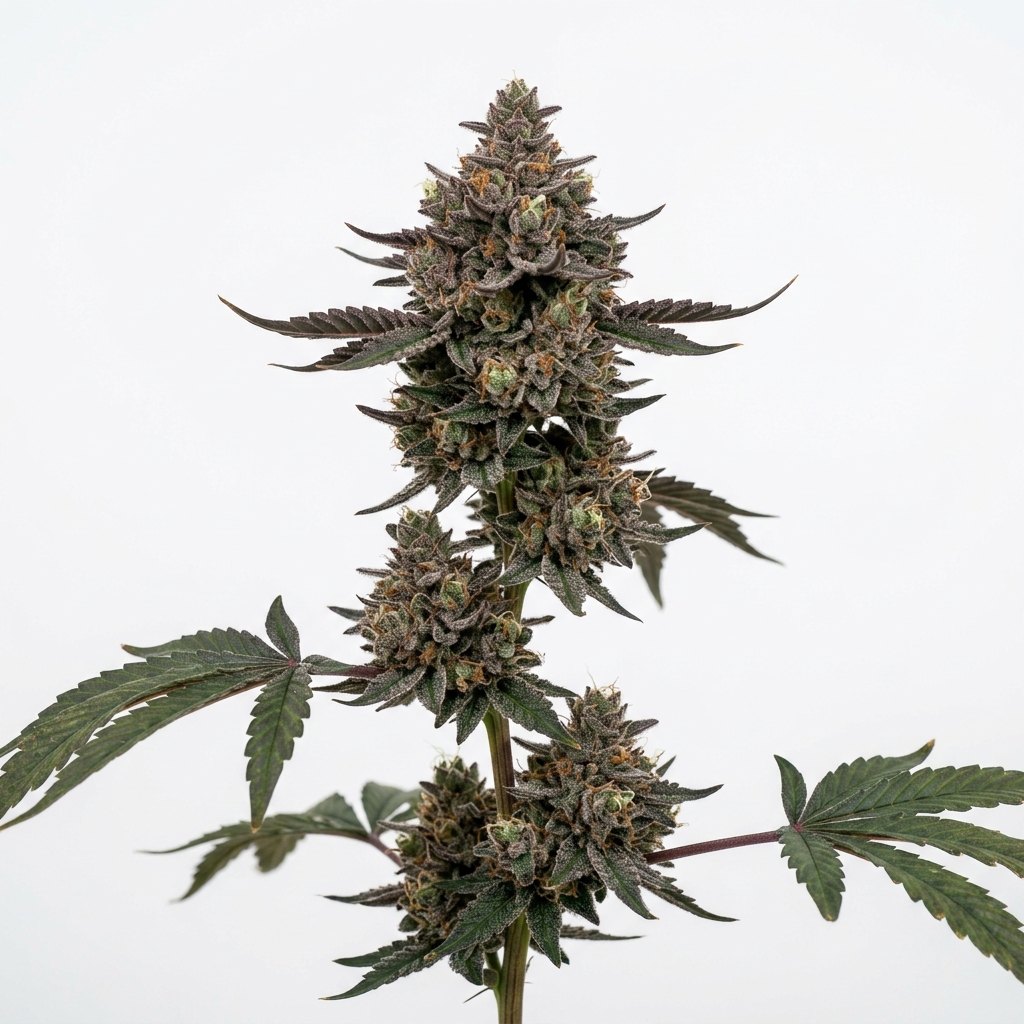
Blueberry Fuego (Cannabis Strain)
Blueberry Fuego is an indica-dominant hybrid cultivar testing between 22% and 28% THC, bred by Canada’s Nextleaf Innovations through a cross of Slurricane and Wedding Crasher. The cultivar is recognized for its saturated dark berry nose, sharp gas undertones, and exceptionally greasy resin coverage over tight, purple-accented bracts. Cultivators prize the cut for its manageable internodal spacing, strong lateral branching, and heavy capitate-stalked trichome output that washes efficiently for solventless extraction.
The genetic pairing brings together the dark fruit and heavy resin of Do-Si-Dos and Purple Punch ancestry with the sweet, vanilla-pastry backbone of Wedding Cake. In the garden, the plants develop sturdy stalks capable of supporting dense spear colas without excessive staking. Consumers consistently report a fast-acting body melt coupled with a calm, clear-headed onset suited to late afternoon and evening sessions.
Quick Facts
| Field | Details |
|---|---|
| Breeder | Nextleaf Innovations |
| Genetics | Slurricane × Wedding Crasher |
| Variety | Indica-dominant hybrid (~70% indica / 30% sativa) |
| THC Range | 22% – 28% |
| Flowering Time | 8 – 9 weeks (56 – 63 days) |
| Yield Potential | Moderate to heavy (450 – 550 g/m² indoor) |
| Plant Height | Medium (controlled 1.5× – 2× stretch) |
| Climate Preference | Temperate to warm Mediterranean; moderate humidity |
| Difficulty | Moderate |
Scientific & Botanical Overview
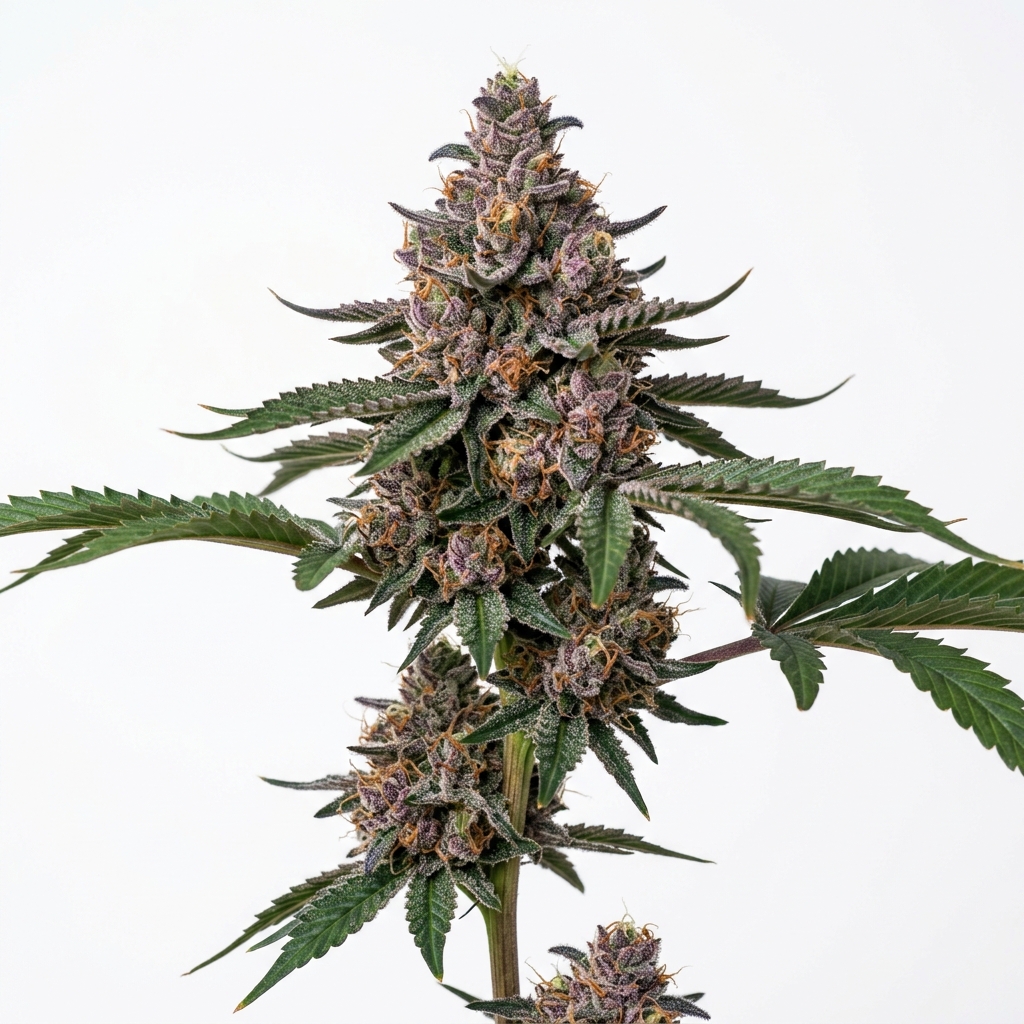
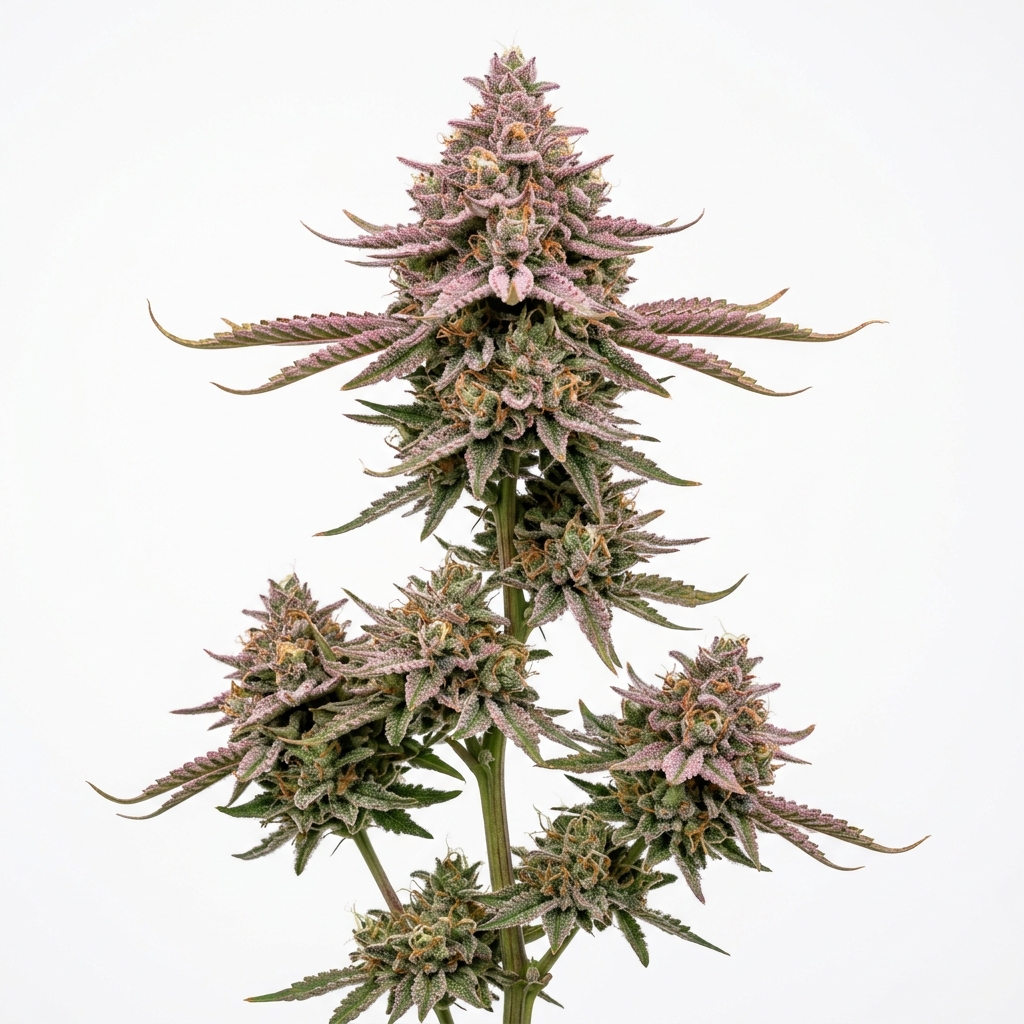
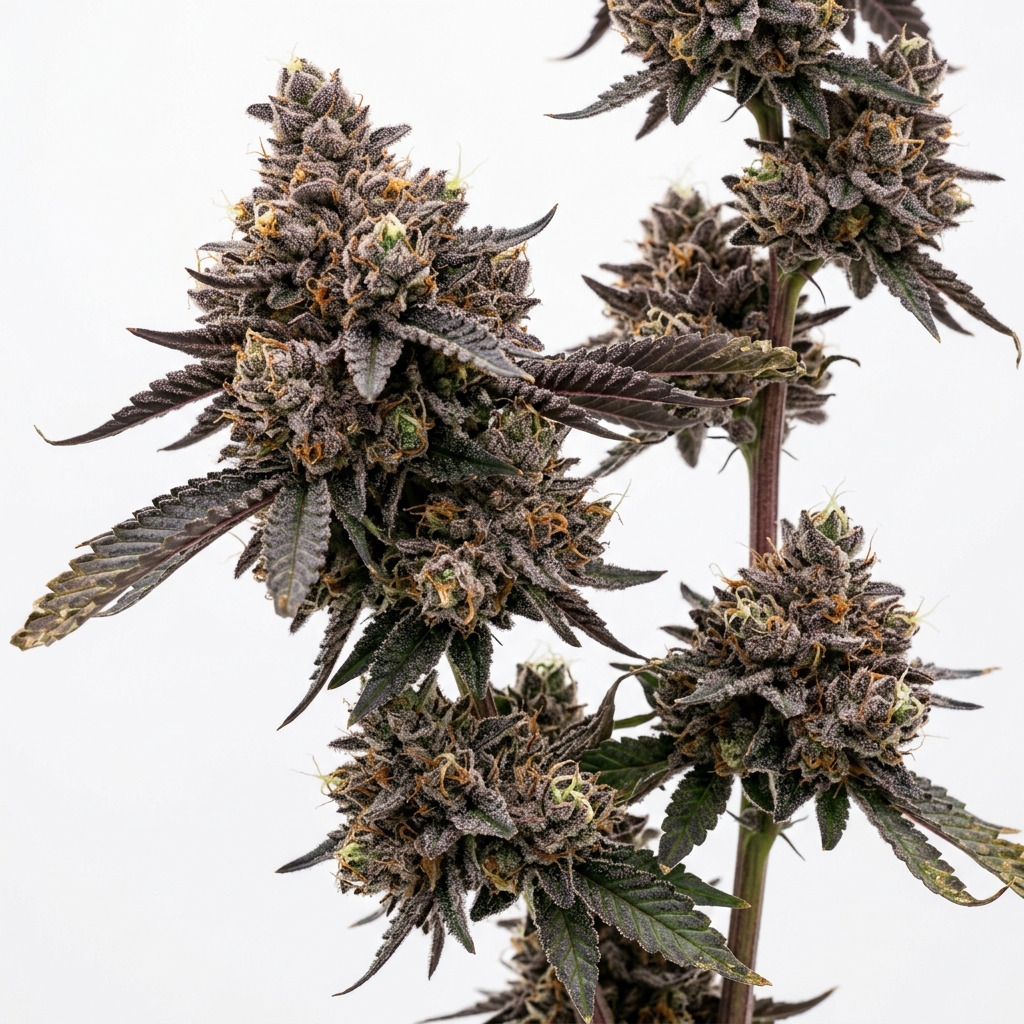
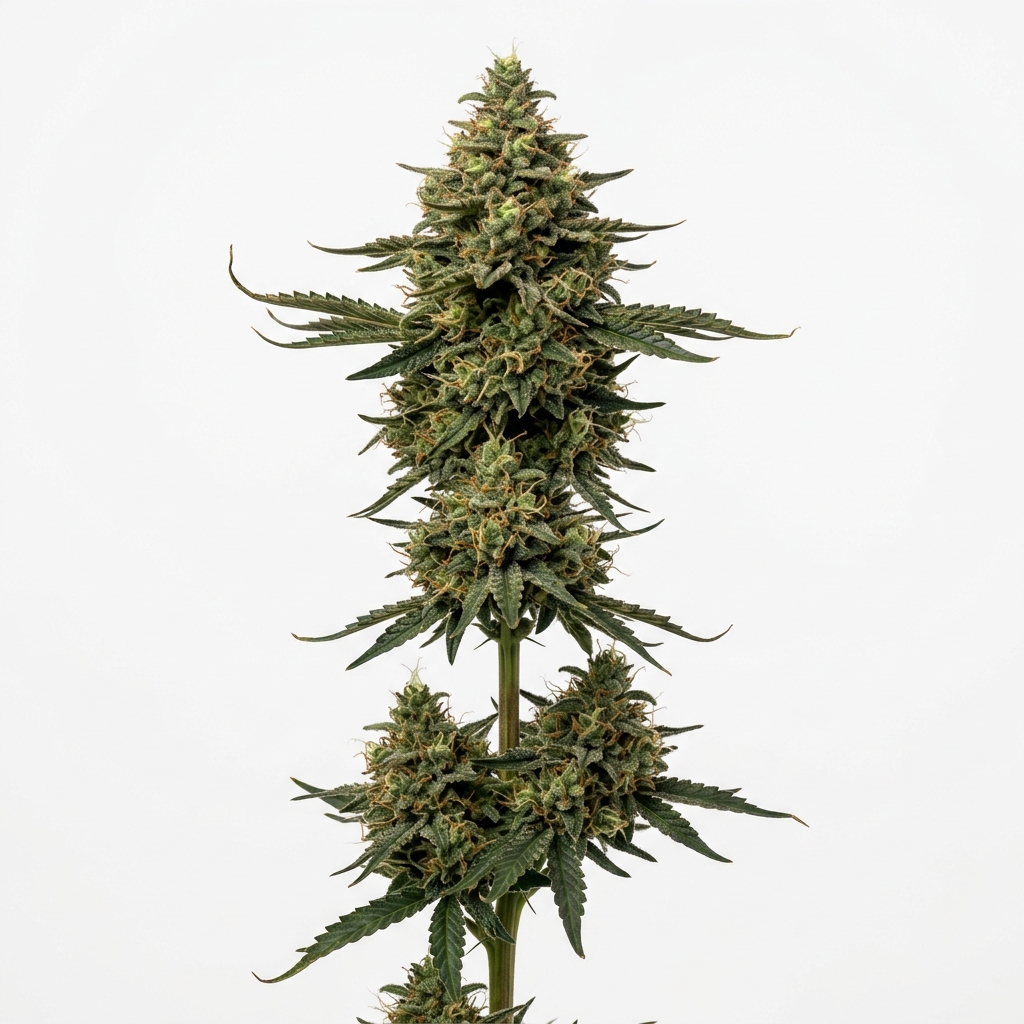
Botanically, Blueberry Fuego presents a compact yet vigorous vegetative habit characterized by thick petioles and deep green, broad fan leaves. As the plant transitions into flower, anthocyanin accumulation becomes noticeable along the bract margins and leaf undersides, intensifying under cooler night cycles into rich plum and charcoal hues. Calyxes swell early in mid-bloom, stacking tightly into golf-ball clusters that merge into dense spear colas.
The glandular trichome heads are large, bulbous, and densely clustered, developing an oily, tactile coat that resists rapid volatilization during post-harvest handling. The cultivar’s resin profile features an elevated monoterpene and sesquiterpene fraction dominated by beta-caryophyllene, myrcene, and limonene. This profile creates a distinctive chemical signature that balances heavy, sedative hydrocarbon notes with sharp volatile esters reminiscent of tart blueberries.
Under balanced photosynthetic photon flux density (PPFD), the strain maintains moderate internodal gaps that reduce the risk of mold accumulation despite the tightness of mature colas. The robust vascular system supports consistent water uptake through week seven, after which the plant naturally eases its nutrient demand and redirects mobile nutrients into resin maturation and bract swelling.
Effects & Use-Cases (Reported)
Commonly reported effects: Consumers typically describe a rapid wave of physical relaxation that starts behind the eyes and moves steadily down the shoulders and torso. While the initial onset carries an uplifting, mild cerebral buzz, the experience quickly settles into a deep, weighted physical calm that slows pacing without triggering acute mental cloudiness.
Use-case context: The cultivar is commonly chosen for uncoiling after long workdays, quiet creative hobbies, watching films, and preparing for restorative sleep. The grounding body feel makes it less suited for demanding daytime tasks or intense physical labor, functioning best as a late-evening wind-down companion.
Note: Individual reactions vary widely based on dosage, tolerance, consumption method, and personal endocannabinoid tone. High-THC cultivars should always be approached with measured pacing.
Aroma & Flavors
Aroma: The primary aroma leads with crushed fresh blueberries and sweetened dough, followed by a pungent surge of sour gas and earthy spice when cured buds are broken open. A background layer of damp cedar and musk anchors the sweeter fruit notes, keeping the nose balanced and complex.
Flavor: The smoke delivers an immediate tart berry glaze across the palate, followed by creamy vanilla dough on the mid-palate and a lingering peppery diesel finish on the exhale. The fruitiness remains clean rather than artificial, preserving a savory gas edge throughout the session.
Terpene associations: The aroma profile is driven by beta-caryophyllene for peppery warmth, myrcene for ripe fruit earthiness, and limonene for bright citrus lift, complemented by secondary traces of linalool and humulene that contribute subtle floral pastry and woody tones.
Tested Cannabinoid & Terpene Ranges
| Compound | Typical Flower Range |
|---|---|
| Δ9-THC / THCA | 22% – 28% |
| CBD / CBDA | < 0.5% |
| CBG / CBGA | 0.5% – 1.5% |
| Total Terpenes | 2.0% – 3.8% |
| Primary Terpenes | Beta-Caryophyllene, Myrcene, Limonene |
| Secondary Terpenes | Linalool, Humulene, Beta-Pinene |
Range note: Quantitative chemical profiles reflect aggregate third-party laboratory flower testing and breeder documentation. Cannabinoid and terpene values fluctuate based on environmental parameters, light intensity, rootzone health, dry-cure practices, and phenotype selection.
Cultivation Notes
- Humidity management: Maintain 55% to 60% relative humidity during early bloom, lowering strictly to 42% to 48% in the final three weeks to protect the dense, trichome-packed colas from botrytis.
- Nutrient requirements: The cultivar handles moderate to heavy electrical conductivity (1.8 – 2.2 EC in mid-flower), showing an appetite for calcium and magnesium during the stretch and potassium during weeks five and six.
- Canopy training: Responds cleanly to early topping at the fourth or fifth node followed by low-stress training (LST) or a single trellis layer to spread lower branches and develop an even canopy of upper spears.
- Defoliation: Perform a thorough cleanup on day 21 of flower to strip inward-facing fan leaves, followed by a light maintenance pass at day 42 to ensure unimpeded airflow and light penetration to secondary nodes.
- Harvest window: Look for mostly cloudy trichome heads with approximately 10% to 15% amber coverage, which typically occurs between days 56 and 63 for an optimal balance of terpene clarity and heavy body onset.
Grower Notes (Week-by-Week Snapshot)
- Weeks 1–3 (Stretch & Transition): The plant displays a controlled vertical stretch of approximately 1.5× to 2× its vegetative height. Focus on securing lateral shoots into the trellis net and complete final lower-stem pruning before the end of week three.
- Weeks 4–6 (Bud Formation & Resin Shift): Bract clusters bulk up rapidly and trichome heads proliferate across sugar leaves and stems. Introduce supplemental phosphorus and potassium while monitoring night temperatures around 20°C (68°F) to initiate early anthocyanin pigmentation.
- Weeks 7–9 (Ripening & Senescence): Flowers swell noticeably, pistils oxidize to a vibrant rust-orange, and calyxes turn deeply purple. Lower room humidity to sub-45%, taper nitrogen inputs, and monitor trichome cloudiness closely.
- Post-Harvest (Dry & Cure): Dry whole hung branches at 15°C to 18°C (60°F) and 60% relative humidity for 12 to 16 days. Jar or tote cure for a minimum of 21 days with steady burping to preserve the delicate berry terpene fraction.
Genetic Lineage
Blueberry Fuego inherits its core traits from two heavyweight modern hybrids: Slurricane and Wedding Crasher. Slurricane—bred from Do-Si-Dos and Purple Punch—supplies the intense dark fruit bouquet, dense violet bract structure, and heavy trichome density. This parent is largely responsible for the cultivar’s rich visual appeal and its deeply soothing physiological footprint.
On the other side of the pedigree, Wedding Crasher—a cross of Wedding Cake and Purple Punch—reinforces the sweet vanilla pastry undertone while adding structural vigor and a lighter, mood-elevating initial onset. The resulting cross unifies the berry-forward pungency of Purple Punch with the resinous, fuel-soaked bite of Cookies and OG Kush ancestry.
Research Insights
Academic investigations into cannabis phytochemistry highlight how terpene-cannabinoid profiles influence consumer sensory perception and subjective experience. Published pharmacological studies indicate that beta-caryophyllene functions as a dietary cannabinoid capable of directly binding to peripheral CB2 receptors, where it mediates anti-inflammatory and calming pathways. Concurrently, high concentrations of myrcene are associated in literature with altered blood-brain barrier permeability and enhanced physical relaxation.
It is important to emphasize that general pharmacological research on isolated terpenes provides conceptual groundwork rather than direct clinical validation of any single cultivar. Whole-flower cannabis contains dozens of minor volatile compounds, esters, and flavonoids whose combined contributions remain active subjects of botanical research. Individual physiological responses to Blueberry Fuego will depend heavily on individual biology, tolerance, and consumption context.
Frequently Asked Questions
Who bred Blueberry Fuego?
Blueberry Fuego was bred and selected by Canadian cannabis extractor and cultivator Nextleaf Innovations, utilizing a cross of Slurricane and Wedding Crasher.
Is Blueberry Fuego an indica or sativa?
Blueberry Fuego is an indica-dominant hybrid (approximately 70% indica / 30% sativa), offering a pronounced body melt and calming evening properties accompanied by a gentle cerebral lift.
What does Blueberry Fuego smell and taste like?
The cultivar features an aroma of tart, freshly crushed blueberries, sweet vanilla dough, and pungent gas. The flavor mirrors this with sweet berry pastry notes upfront and a lingering peppery diesel finish on the exhale.
What is the typical flowering time for Blueberry Fuego?
When grown indoors under standard 12/12 lighting cycles, Blueberry Fuego completes its flowering window in 8 to 9 weeks (56 to 63 days).
Educational Disclaimer
This content is for educational and informational purposes only. Cannabis laws and regulations vary by jurisdiction. Always consult with a qualified professional before beginning any cultivation project or consuming cannabis products.
Rate and review this strain
Ratings and reviews are accepted only from signed-in Google accounts.
Sign in with Google to leave a rating and written review.
Latest Reviews
0 reviewsNo reviews yet. Be the first Google user to rate and review this strain.
Follow New Cultivar Records
Get newly documented genetics, breeder history, research highlights, and important Strainpedia discoveries by email.