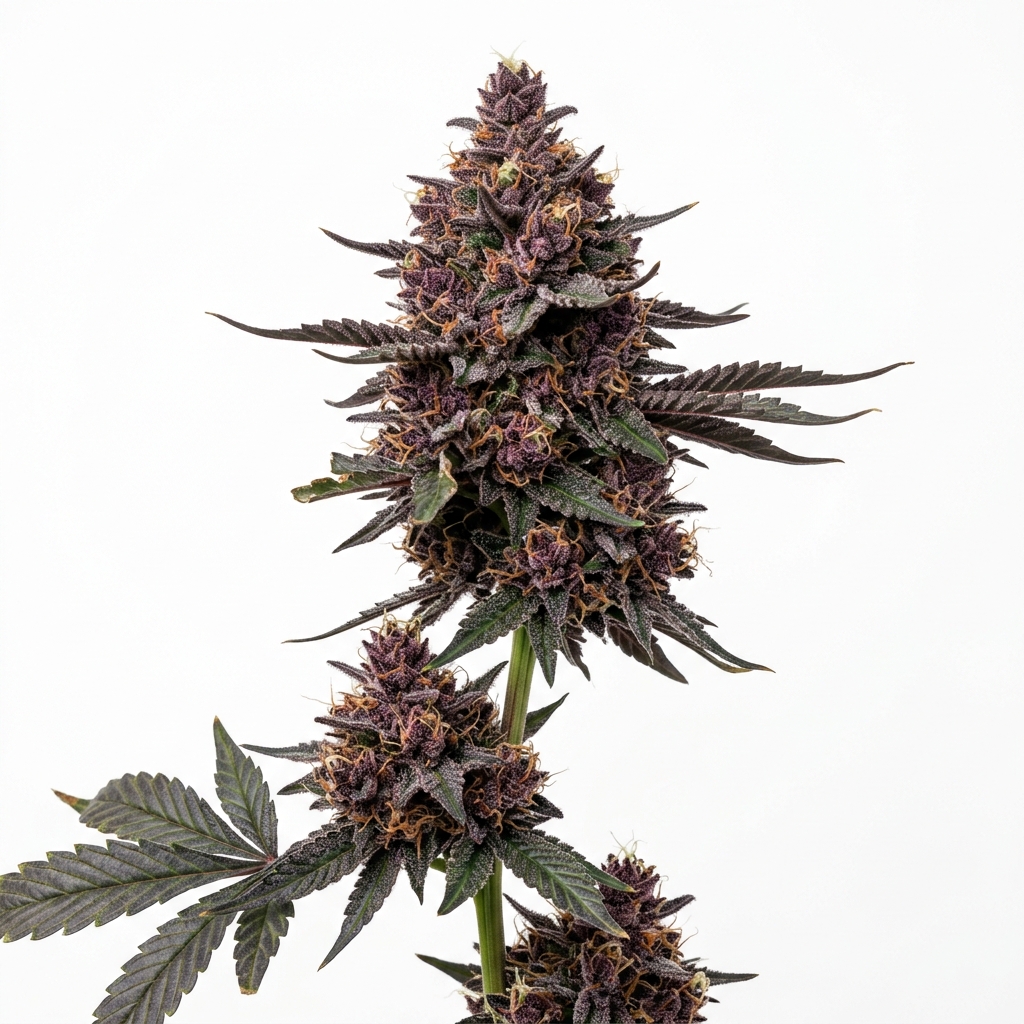
Forbidden Guava (Cannabis Strain)
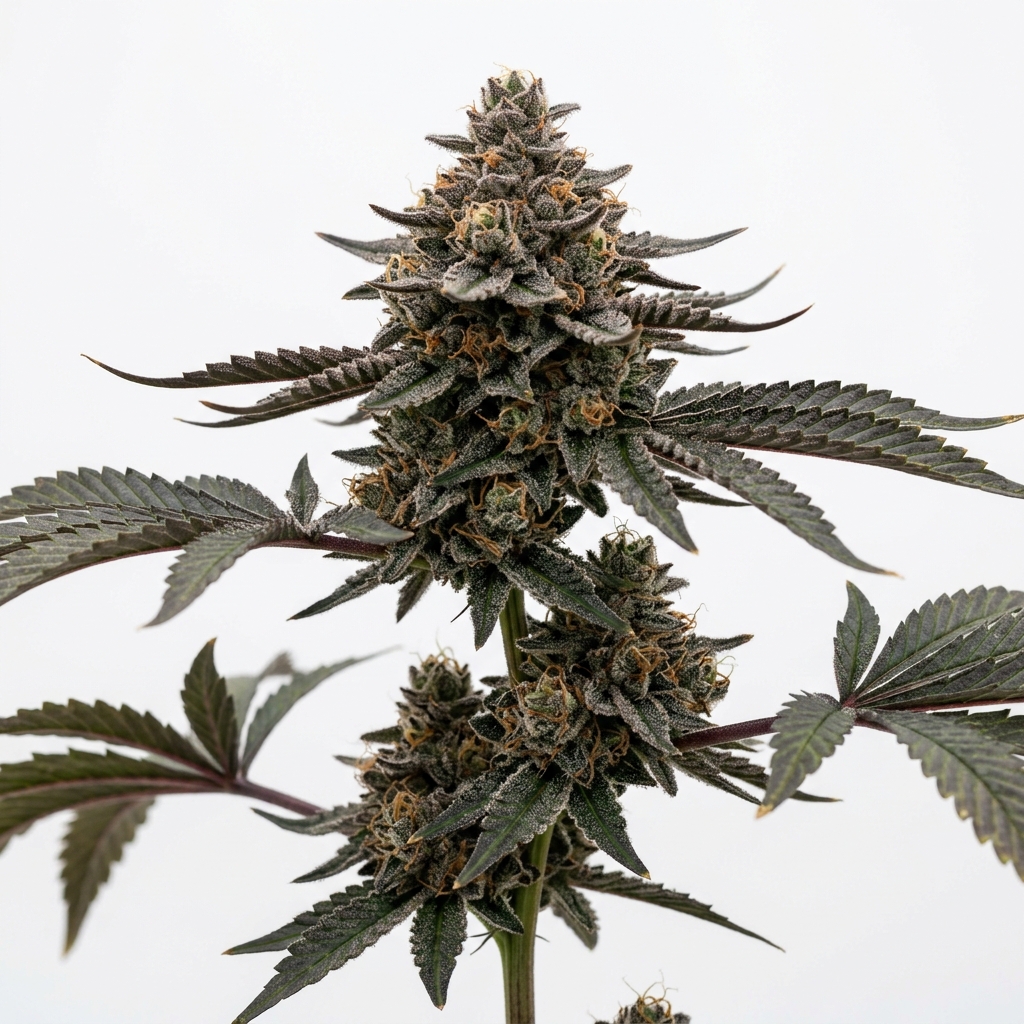
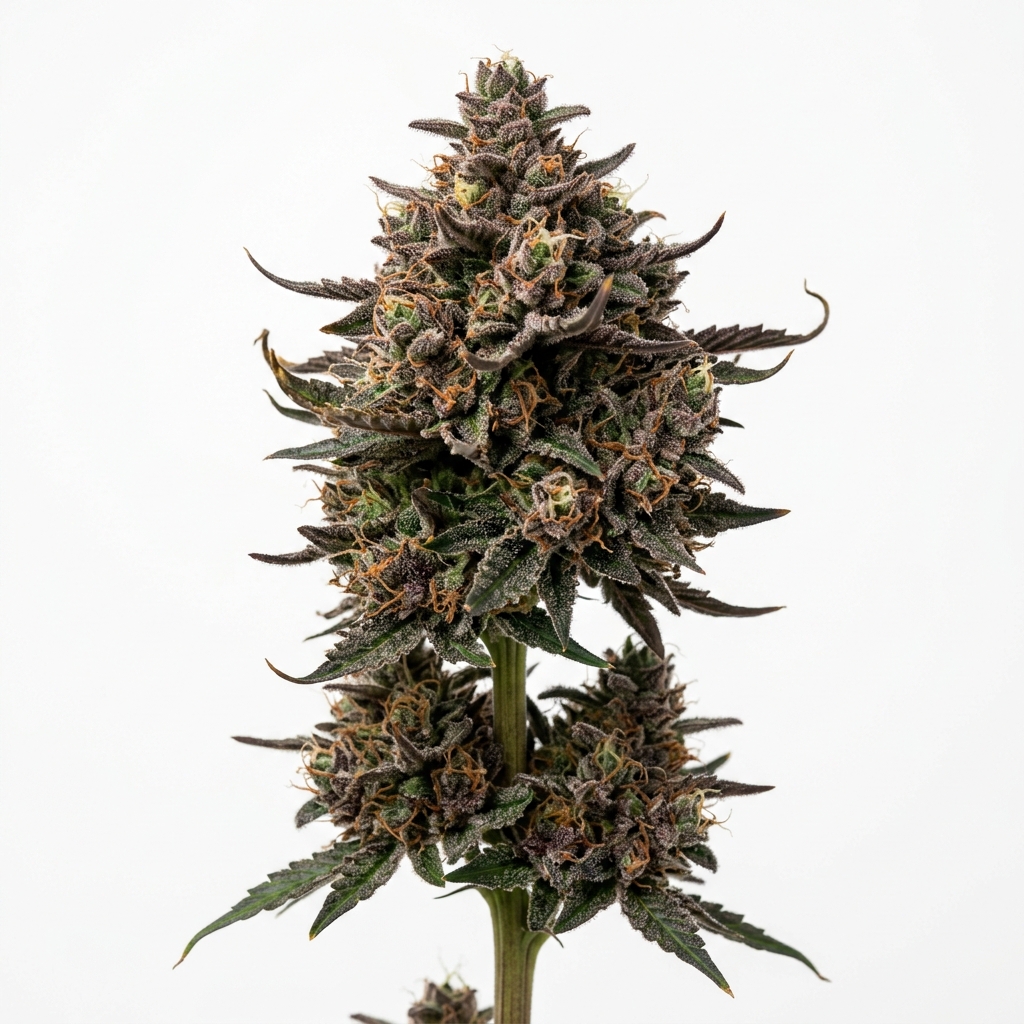
Forbidden Guava is an indica-dominant hybrid cultivar testing typically between 19% and 24% THC, developed by crossing Forbidden Fruit with Guava. Renowned for dense, jewel-toned flowers and heavy terpene saturation, the cultivar delivers a layered profile of ripe guava, tart passionfruit, candied citrus peel, and damp earth. Its resin heads are plump and easily detached, making the cut a favorite among solventless hash makers who prioritize tropical terpene retention and greasy trichome coverage.
The original breeder is not consistently documented across public registries, though the cut emerged from California craft circles during the wave of exotic tropical selections. Combining the deep violet hues and musky cherry funk of Forbidden Fruit with the bright equatorial sweetness of Guava, the plant produces moderate stretch and medium-density spear colas. Consumers and cultivators typically note a fast sensory shift toward physical relaxation paired with a tranquil, clear headspace.
Quick Facts
| Field | Details |
|---|---|
| Breeder | Not consistently documented |
| Genetics | Forbidden Fruit × Guava |
| Variety | Indica-dominant hybrid |
| THC Range | 19.0% – 24.0% |
| Flowering Time | 8 – 9 weeks (56 – 63 days) |
| Yield Potential | Moderate to High (400 – 500 g/m²) |
| Plant Height | Medium (100 – 140 cm) |
| Climate Preference | Warm, temperate, controlled indoor / greenhouse |
| Difficulty | Moderate |
Scientific & Botanical Overview
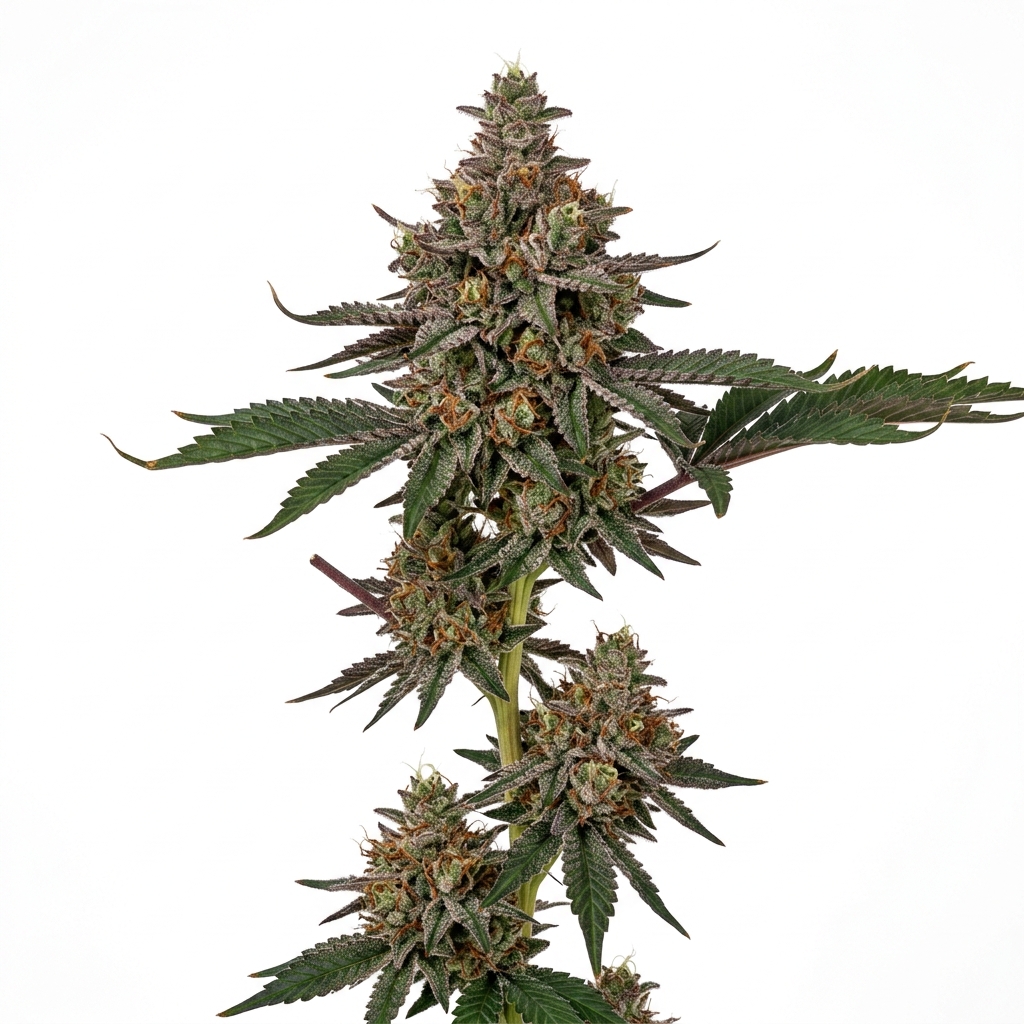
Botanically, Forbidden Guava shows classic hybrid vigor with strong indica structural traits. The canopy forms thick fan leaves that transition from deep forest green to plum and charcoal during late flowering when exposed to moderate day-night temperature drops. Internodal spacing remains tight to moderate, allowing secondary lateral branches to form uniform satellite colas around the central leader.
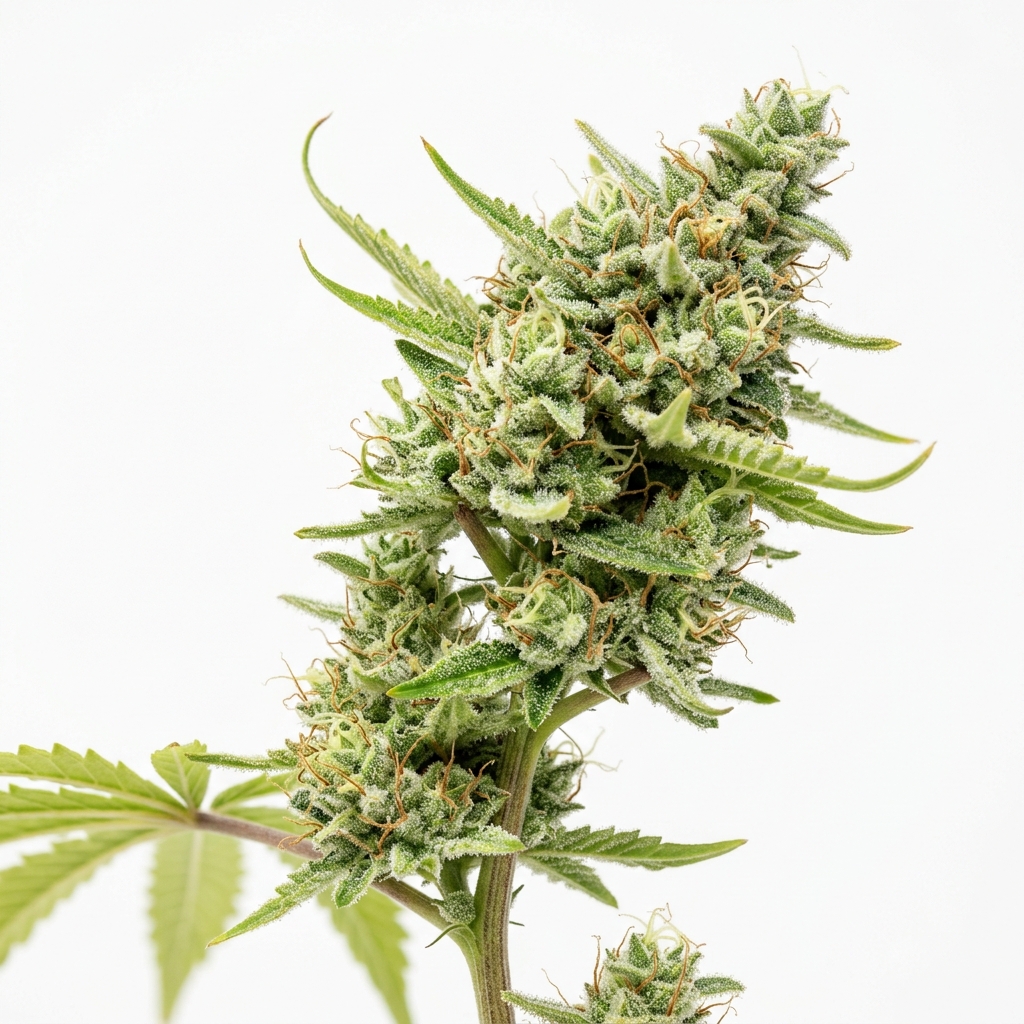
The inflorescences develop as dense, conical clusters dominated by swollen bracts and vibrant copper-orange stigmas. Capitate-stalked glandular trichomes coat the calyxes in a layer of wet frost, carrying a high density of monoterpenes that volatilize rapidly if cure temperatures exceed standard targets. Phenotypes lean heavily into rich anthocyanin pigmentation inherited from the Cherry Pie and Tangie ancestry within Forbidden Fruit.
Stems are sturdy and capable of supporting moderate flower weight without severe sagging, though trellis netting helps maintain canopy geometry. The plant processes nitrogen efficiently during vegetative development and responds well to higher phosphorus and potassium ratios once floral initiation begins. Late-flower humidity control is essential to safeguard the tight bract clusters from internal mold development.
Effects & Use-Cases (Reported)
Commonly reported effects: The initial onset brings a gentle cerebral lift characterized by heightened sensory awareness and reduced mental tension. As the session progresses, this gives way to a spreading body warmth that loosens muscle tightness without forcing immediate sleepiness, settling into steady, unbothered physical calm.
Use-case context: Cultivators and consumers frequently choose Forbidden Guava for late afternoon decompression, low-stress creative tasks, social unwinding, or evening rest. The balanced physical heaviness makes it suitable for quiet transition periods between work and personal time.
Note: Reported effects reflect consumer observations and should not be construed as medical advice. Individual tolerance, dosage, and consumption method strongly influence subjective response.
Aroma & Flavors
Aroma: Pungent and tropical, opening with overripe guava flesh, macerated berries, and tart citrus peel. Breaking open a cured bud releases deeper notes of damp forest floor, skunky musk, and sweet floral gasoline.
Flavor: The inhale delivers a heavy wash of tropical nectar and tangy passionfruit balanced by candied grapefruit rind. The exhale shifts toward a darker profile, leaving an earthy kush base and a lingering sweet berry finish on the palate.
Terpene associations: The sensory profile is primarily driven by myrcene, caryophyllene, and limonene, with secondary concentrations of ocimene and linalool providing the bright, perfume-like tropical top notes.
Tested Cannabinoid & Terpene Ranges
| Compound | Typical Flower Range |
|---|---|
| Δ9-THC | 19.0% – 24.0% |
| CBD | < 0.2% |
| CBG | 0.4% – 1.1% |
| β-Myrcene | 0.60% – 1.30% |
| β-Caryophyllene | 0.30% – 0.75% |
| d-Limonene | 0.25% – 0.60% |
| Total Terpenes | 1.8% – 3.2% |
Range note: Cannabinoid and terpene concentrations vary significantly according to phenotype selection, light intensity, rootzone environment, harvest timing, and post-harvest drying parameters. Values listed represent dried, uninfused flower testing.
Cultivation Notes
- Humidity management: Maintain 60% – 65% RH in early vegetative growth, decreasing gradually to 45% – 50% during mid-flower and down to 40% in late flowering to prevent botrytis within dense colas.
- Nutrient requirements: Feed moderately during vegetative stages; avoid heavy nitrogen in mid-to-late flower to preserve terpene clarity and prevent dark, leafy bracts.
- Canopy training: Responds well to early topping and low-stress training (LST), which evens out apical dominance and promotes multiple uniform spear colas.
- Defoliation: Perform a targeted strip around day 21 of flower to expose lower bud sites and increase airflow through the interior canopy.
- Harvest window: Optimal trichome ripeness generally occurs between days 56 and 63 when glandular heads show roughly 10% – 15% amber and fully cloudy bulbs.
Grower Notes (Week-by-Week Snapshot)
- Weeks 1–3 (Transition & Stretch): Expect a controlled stretch of roughly 1.5× the vegetative height. Internodes space moderately; begin weaving branches into trellis netting to set an even surface.
- Weeks 4–6 (Bud Formation & Scent Development): Calyxes swell rapidly into distinct clusters. Tropical fruit aromas intensify noticeably, and wet resin begins coating upper fan leaves and sugar leaf edges.
- Weeks 7–9 (Ripening & Color Shift): Anthocyanin expression deepens into purple and dark magenta if night temperatures drop 5°C – 7°C below daytime levels. Stigmas curl inward and resin heads mature to milky opacity.
- Post-Harvest (Drying & Curing): Dry slowly at 15°C – 18°C (59°F – 64°F) and 58% – 62% RH for 12 to 14 days to preserve volatile monoterpenes before a 3- to 4-week jar cure.
Genetic Lineage
Forbidden Guava inherits its defining traits from two flavor-forward modern parents. Forbidden Fruit (a cross of Tangie and Cherry Pie) contributes extreme resin density, vibrant purple coloration, and deep musky fruit aromas loaded with myrcene and floral terpenes. This parent is well known for providing heavy physical relaxation alongside unmistakable bag appeal.
The Guava lineage (often tied to select Stardawg or Gelato phenotypic branches prized for tropical expression) injects bright citrus fuel, ripe melon notes, and improved floral structure. Together, these genetics produce a cultivar that marries high terpene saturation with stable vegetative growth and dense, resin-covered flowers.
Research Insights
Cannabis research increasingly investigates the synergistic dynamics between predominant phytocannabinoids like Δ9-THC and major monoterpenes such as myrcene and limonene. Studies indicate that myrcene can influence cell membrane permeability, while caryophyllene functions as a selective dietary cannabinoid by binding directly to peripheral CB2 receptors. These interactions are literature-informed concepts that describe general pharmacological pathways rather than clinical outcomes for specific branded flowers.
Cultivar-specific laboratory analyses demonstrate that tropical terpene profiles often correlate with elevated levels of minor monoterpenes such as ocimene alongside baseline caryophyllene and humulene. Continued analytical testing of craft cultivars like Forbidden Guava provides insight into how polyhybrid breeding strategies consistently preserve high volatile terpene contents in dense, high-resin commercial flower.
Frequently Asked Questions
Who bred Forbidden Guava?
The exact original breeder is not consistently documented in commercial records, though the cut emerged from California boutique cultivation networks during the late 2010s exotic fruit wave.
Is Forbidden Guava an indica or sativa?
Forbidden Guava is an indica-dominant hybrid cultivar, typically showing compact plant architecture, broad leaves, and calming, physically grounded consumer effects.
What does Forbidden Guava smell and taste like?
It carries a prominent aroma of ripe tropical guava, passionfruit, and candied citrus peel, paired with an earthy, sweet berry funk and subtle fuel notes on the exhale.
How long does Forbidden Guava take to flower?
Indoor flowering typically completes in 8 to 9 weeks (56 to 63 days), depending on phenotype selection and environmental controls.
Educational Disclaimer
This content is for educational and informational purposes only. Cannabis laws and regulations vary by jurisdiction. Always consult with a qualified professional before beginning any cultivation project or consuming cannabis products.
Rate and review this strain
Ratings and reviews are accepted only from signed-in Google accounts.
Sign in with Google to leave a rating and written review.
Latest Reviews
0 reviewsNo reviews yet. Be the first Google user to rate and review this strain.
Follow New Cultivar Records
Get newly documented genetics, breeder history, research highlights, and important Strainpedia discoveries by email.