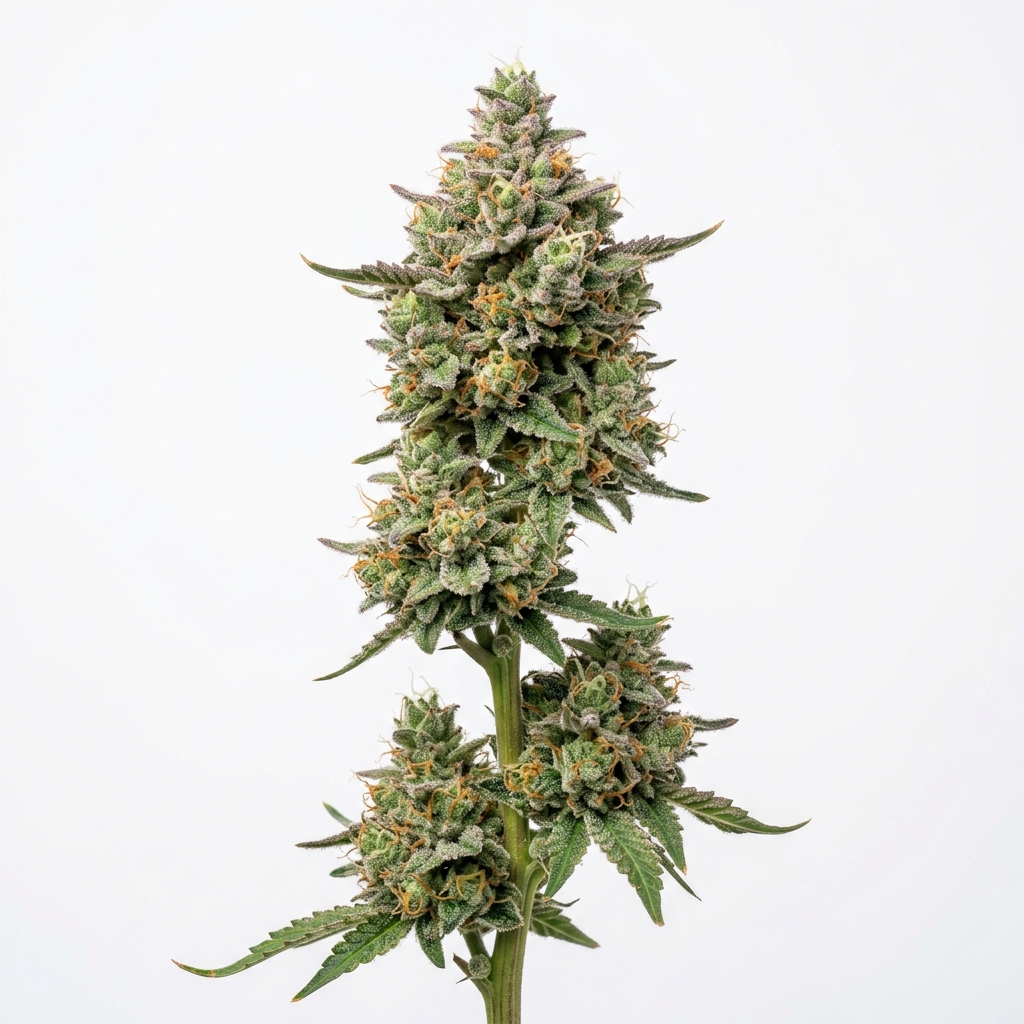
Blumosa (Cannabis Strain)
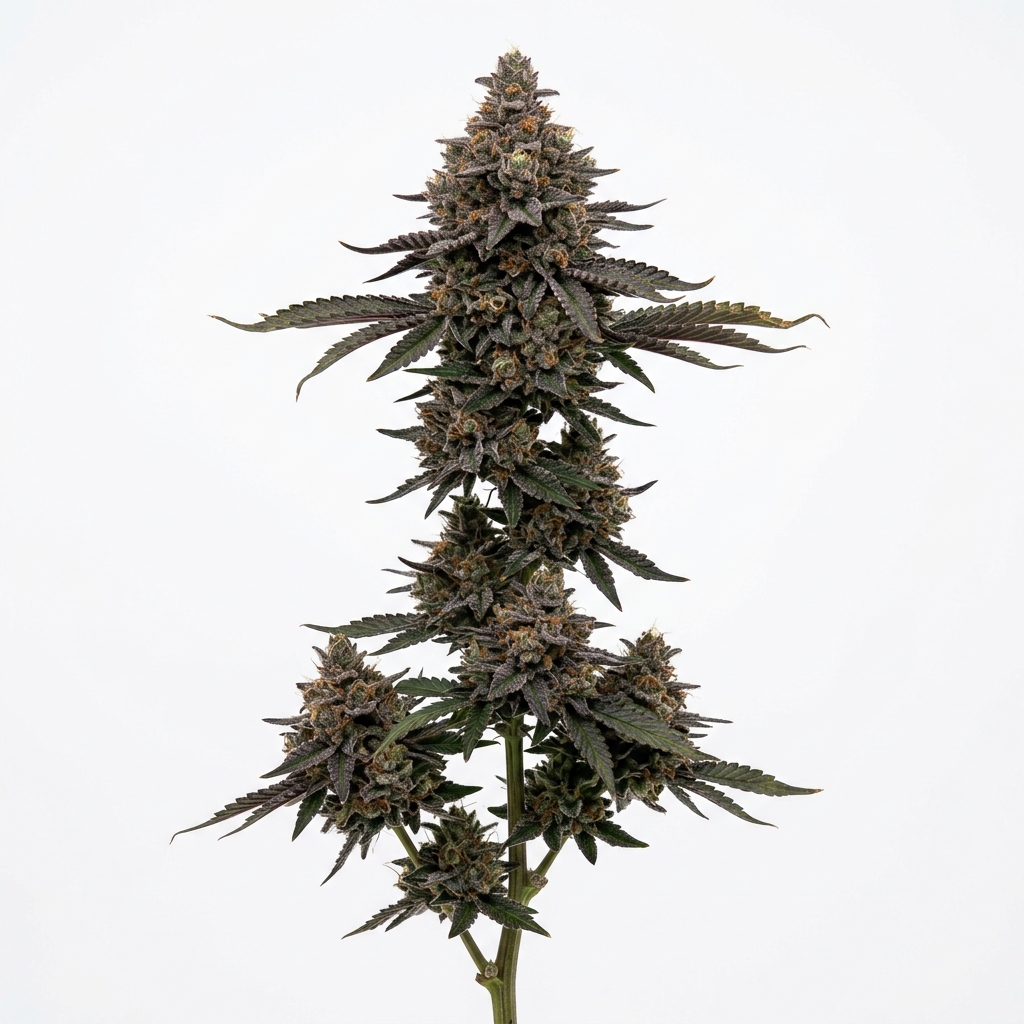
Blumosa is a resin-dense hybrid cultivar bred by Bloom Seed Co., created by crossing Blue Cookies with Mimosa. Typically testing between 20% and THC not consistently reported, the strain is recognized for its sharp citrus and sweet berry bouquet, heavy trichome coverage, and strong appeal among solventless extractors. In the garden, it develops spear-shaped colas with a high calyx-to-leaf ratio, combining the rapid vigor of its sativa-leaning ancestry with the stout structural integrity of modern dessert lines.
The cross brings together the candied orange and champagne notes of Mimosa with the rich, doughy berry undertones of Blue Cookies. Plants display moderate internodal spacing and respond well to canopy training, yielding chunky, frost-coated bracts that retain strong terpene clarity through a careful dry and cure. Reported experiences generally emphasize an uplifting, clear-headed onset followed by gentle physical ease, making it a versatile daytime or early evening selection.
Quick Facts
| Field | Details |
|---|---|
| Breeder | Bloom Seed Co. |
| Genetics | Blue Cookies × Mimosa |
| Variety | Hybrid |
| THC Range | 20% – 26% |
| Flowering Time | 8 – 9 weeks (56 – 63 days) |
| Yield Potential | Moderate to High (450 – 550 g/m² indoors) |
| Plant Height | Medium (controlled 1.5× – 2× stretch) |
| Climate Preference | Temperate to warm Mediterranean with dry late flower |
| Difficulty | Moderate |
Scientific & Botanical Overview
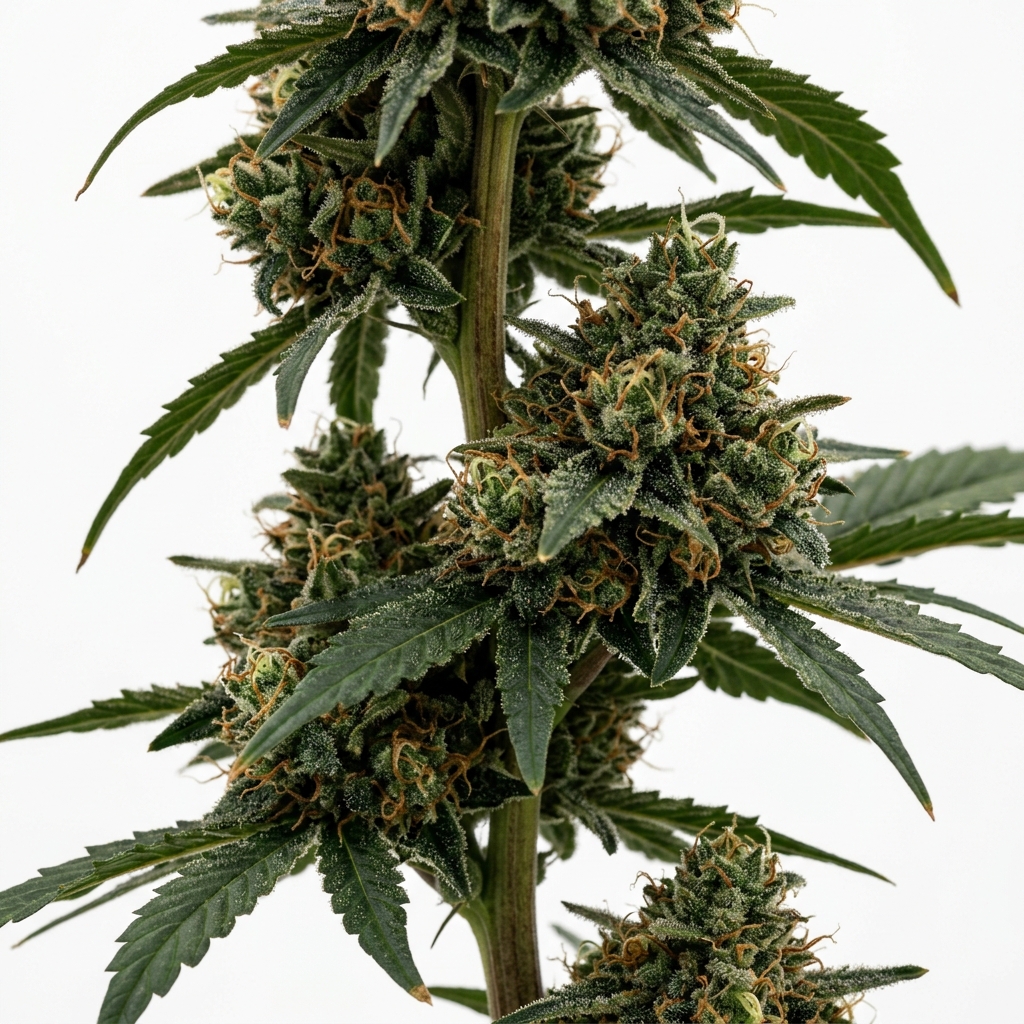
Blumosa produces an open, branchy architecture during vegetative growth that transitions into dense, spear-shaped flower clusters during bloom. Stems are moderately rigid with manageable internodal distance, allowing light to reach secondary bud sites with minimal structural intervention. The fan leaves typically show medium-width leaflets that transition to darker forest greens as flower set begins.
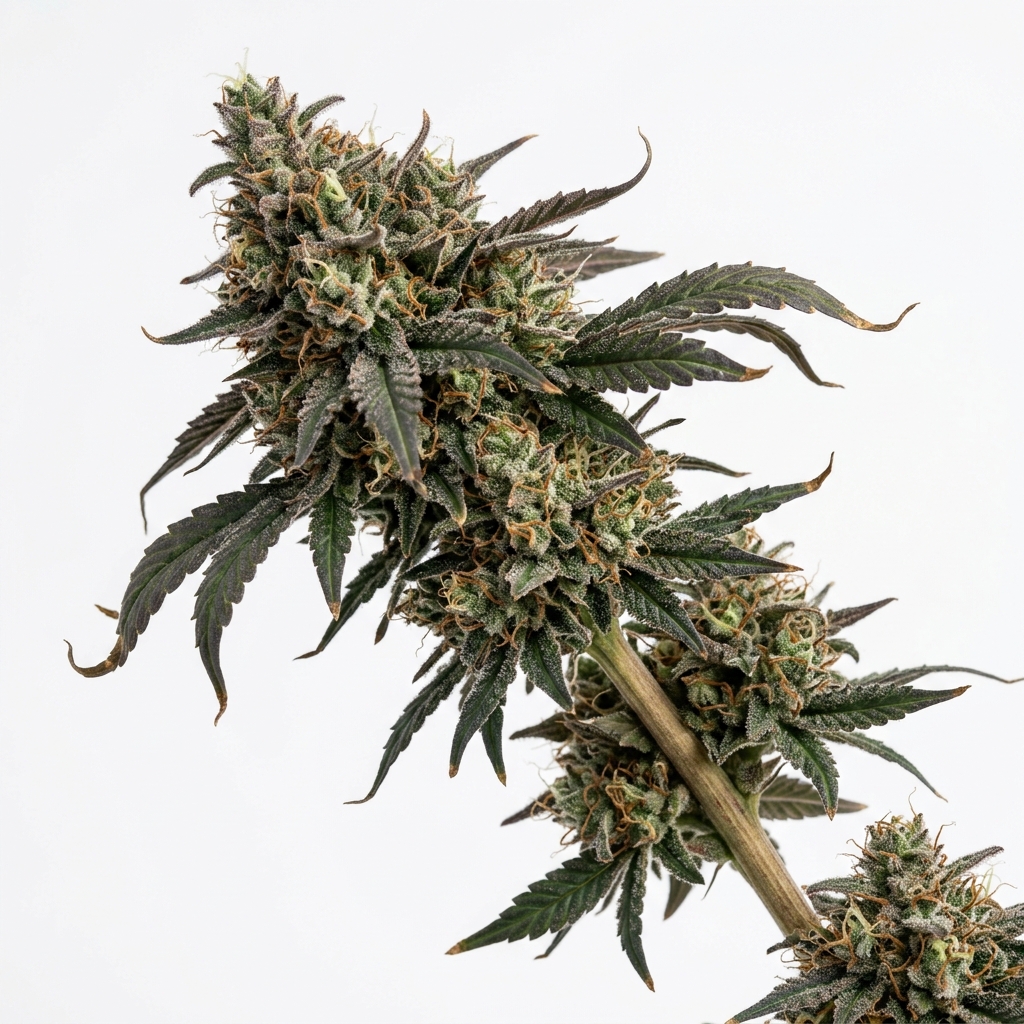
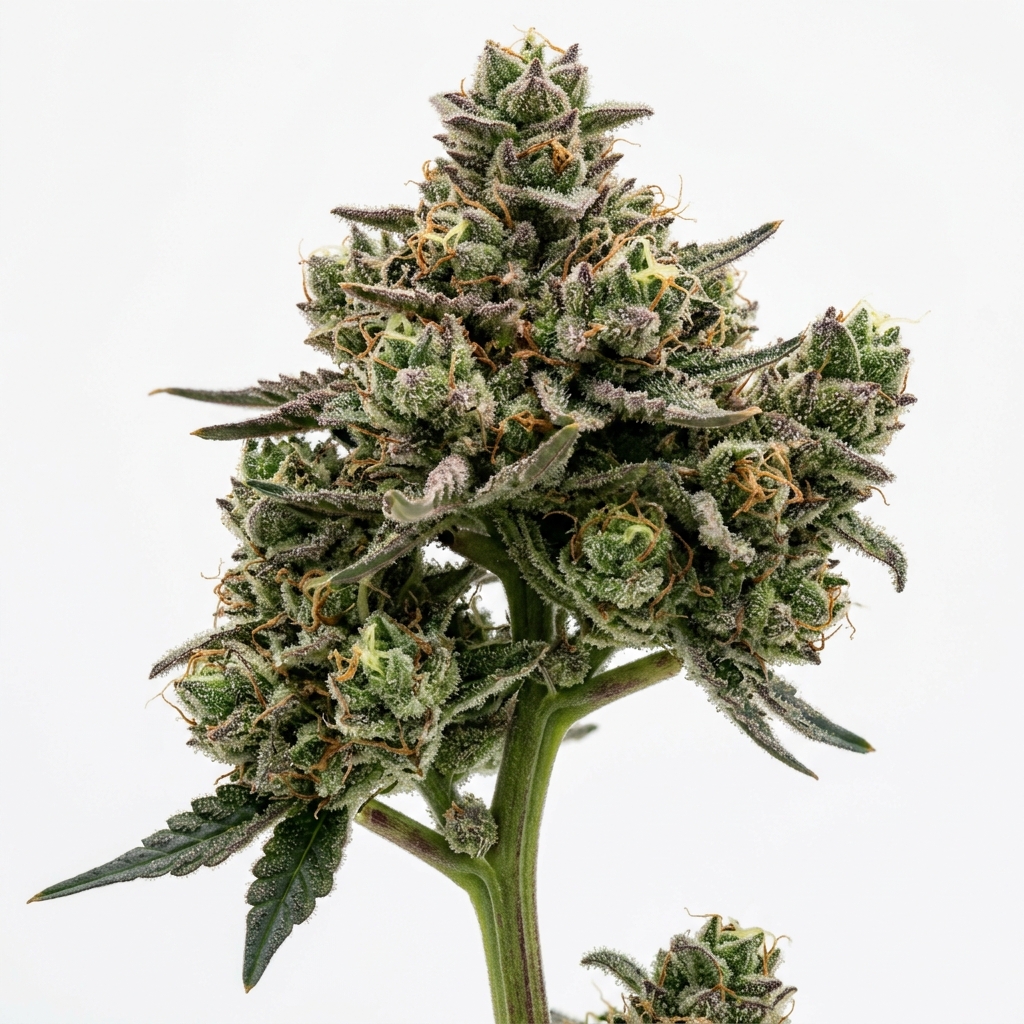
The cultivar is distinguished by its capitate-stalked glandular trichome production, which coats both bracts and adjacent sugar leaves in a layer of wet, greasy frost. Bracts swell significantly in the final two weeks of flower, often expressing subtle lavender or violet pigmentation when night temperatures are reduced toward the end of the cycle. Its calyx-to-leaf ratio remains favorable, simplifying trimming post-harvest.
Aromatic volatile production starts early in flower, usually around week four, and intensifies as resin heads mature. Limonene and beta-caryophyllene dominate the analytical profile, backed by linalool and myrcene. This biochemical profile produces a sharp citrus-forward scent with sweet berry undertones that holds up exceptionally well during solventless wash procedures.
Effects & Use-Cases (Reported)
Commonly reported effects: Consumers generally describe an energetic, mood-elevating cerebral onset accompanied by heightened sensory focus and mental clarity. As the initial brightness levels out, a soothing, mild physical relaxation develops across the shoulders and neck without inducing heavy lethargy or couch-lock.
Use-case context: The cultivar is commonly selected for daytime creative projects, social gatherings, outdoor walks, or low-stress work sessions. Its balanced profile allows consumers to remain functional and engaged while shedding minor physical tension.
Note: Individual experiences vary based on dosage, tolerance, consumption method, and specific batch chemistry.
Aroma & Flavors
Aroma: Freshly peeled clementine and sharp orange zest dominate the initial jar appeal, underpinned by sweet blueberry syrup, subtle floral notes, and a faint backdrop of damp earth and dough.
Flavor: The smoke and vapor deliver a bright blast of candied citrus and tangy tropical fruit on the inhale. The exhale softens into sweet berry skin, light gas, and a smooth pastry finish that lingers on the palate.
Terpene associations: The sensory profile aligns closely with dominant levels of d-limonene and beta-caryophyllene, supported by secondary concentrations of linalool, myrcene, and alpha-pinene.
Tested Cannabinoid & Terpene Ranges
| Compound | Typical Range (Dried Flower) |
|---|---|
| Δ9-THC / THCA | 20.0% – 26.0% |
| CBG / CBGA | 0.4% – 1.2% |
| CBD / CBDA | < 0.5% |
| Total Terpenes | 1.8% – 3.2% |
| Primary Terpenes | d-Limonene, beta-Caryophyllene, Linalool, Myrcene |
Range note: Cannabinoid and terpene values reflect dried, uninfused flower samples tested across commercial and boutique environments. Exact figures fluctuate based on environmental conditions, cultivation medium, lighting intensity, and post-harvest drying parameters.
Cultivation Notes
- Humidity management: Maintain relative humidity around 55% to 60% during early bloom, lowering to 40% to 45% during the final three weeks to protect the dense colas from botrytis.
- Nutrient requirements: Plants handle moderate feeding throughout vegetative growth; reduce nitrogen early in flower and support steady phosphorus, potassium, and calcium inputs through peak resin production.
- Canopy training: Responds cleanly to early topping and low-stress training (LST). A single SCROG trellis helps space main branches to ensure uniform light penetration.
- Defoliation: Perform a thorough selective defoliation around day 21 of flower to strip interior fan leaves, followed by a lighter clean-up around day 42 to sustain lower airflow.
- Harvest window: Optimal trichome maturity typically arrives between day 56 and day 63, when resin heads transition from cloudy to roughly 10% to 15% amber.
Grower Notes (Week-by-Week Snapshot)
- Weeks 1–3 (Stretch & Transition): The plant stretches roughly 1.5× to 2× its vegetative height. Establish canopy framework and set trellis netting before floral sites lock in.
- Weeks 4–6 (Bud Formation & Resin Onset): Calyxes stack along the main branches and trichome production accelerates rapidly. A strong citrus aroma becomes prominent in the room.
- Weeks 7–9 (Swelling, Color & Ripening): Bracts swell and harden while pistils turn from pale cream to deep copper. Dropping night temperatures slightly encourages purple accents across outer leaves.
- Post-Harvest (Dry & Cure): Dry whole plants at 60°F (15.5°C) and 60% relative humidity for 12 to 14 days to preserve monoterpenes before slow glass curing.
Genetic Lineage
Blumosa inherits its distinct qualities from two celebrated parents: Blue Cookies (Girl Scout Cookies × Blueberry) and Mimosa (Clementine × Purple Punch). Blue Cookies provides structural density, deep berry tones, and heavy glandular head development. It anchors the plant with sturdy branching and a balanced hybrid foundation.
Mimosa contributes vigorous vertical growth, exceptional bag appeal, and an intense punch of sweet citrus and orange zest terpenes. The combination stabilizes these traits, yielding an aromatic, extraction-ready plant that showcases the fruit-forward profiles of modern breeding programs.
Research Insights
Cannabis scientific literature highlights limonene as a volatile monoterpene frequently correlated with mood elevation and perceived uplifting effects in sensory studies. When combined with beta-caryophyllene, which functions as a dietary cannabinoid binding directly to CB2 receptors, these compounds can influence the overall perceived character of THC-rich flower.
While general botanical studies confirm that terpene ratios and cannabinoid concentrations interact to shape individual experiences, strain-specific clinical trials on Blumosa remain limited. Commercial test results consistently document high monoterpene preservation in this cross, explaining its popularity in both flower and whole-plant fresh frozen markets.
Frequently Asked Questions
Who is the original breeder of Blumosa?
Blumosa was bred by Bloom Seed Co., a boutique breeding project known for developing resin-heavy cultivars optimized for terpene richness and solventless extraction.
Is Blumosa an indica or sativa?
Blumosa is a balanced hybrid that expresses both sativa and indica characteristics, offering functional daytime clarity alongside gentle physical relaxation.
What does Blumosa smell and taste like?
The cultivar features an aroma of sharp orange zest, fresh clementines, and tart blueberries. The taste mirrors the scent with sweet citrus, berry skin, and a subtle doughy finish.
What is the flowering time for Blumosa?
Indoor flowering typically completes in 8 to 9 weeks (56 to 63 days) under standard 12/12 lighting cycles.
Educational Disclaimer
This content is for educational and informational purposes only. Cannabis laws and regulations vary by jurisdiction. Always consult with a qualified professional before beginning any cultivation project or consuming cannabis products.
Rate and review this strain
Ratings and reviews are accepted only from signed-in Google accounts.
Sign in with Google to leave a rating and written review.
Latest Reviews
0 reviewsNo reviews yet. Be the first Google user to rate and review this strain.
Follow New Cultivar Records
Get newly documented genetics, breeder history, research highlights, and important Strainpedia discoveries by email.