White Rhino (Cannabis Strain) — Strainpedia
White Rhino stands out as a compact, resin-rich indica-dominant hybrid with a legacy tied to Green House Seed Co. and a lineage often described as Afghani, Brazilian, and South Indian. Its identity is built around dense, frosted flowers, an earthy-pine aroma, and an effect profile that is typically reported as deeply relaxing rather than brightly cerebral.
Compared with lighter modern hybrids, White Rhino leans into old-school structure and weighty flower formation. Growers usually notice its short stature, strong main colas, and the way the plant pushes a hashy, skunky terpene set late in bloom, while consumers often associate it with a calm, body-forward finish that fits evening use-cases.
Quick Facts
| Genetics | Afghani x Brazilian x South Indian |
|---|---|
| Original Breeder | Green House Seed Co. |
| Variety | Indica-dominant Hybrid |
| Flowering Time | Approximately 8–9 weeks indoors |
| Yield Potential | Moderate to high with stable indoor conditions |
| Plant Height | Short to medium |
| Climate Preference | Warm, controlled indoor grows or dry outdoor conditions |
| Difficulty | Moderate |
Strain Classification
| Type | Indica-dominant Hybrid |
|---|---|
| Genetic Family | Old-school hashplant and landrace-inspired indica line |
| Primary Terpenes | Myrcene, caryophyllene, pinene* |
| Original Breeder | Green House Seed Co. |
| Breeding Lineage | Afghani x Brazilian x South Indian |
*Exact terpene dominance may vary by phenotype and cultivation method.
Scientific & Botanical Overview
From a botanical standpoint, White Rhino is valued for its compact internodal spacing, broadleaf-leaning morphology, and flower density that trends toward indica expression. The cultivar’s structure typically supports heavy terminal bud development, with lateral sites that can bulk up substantially when light penetration and nutrition are dialed in.
In breeding terms, White Rhino sits in a category of cultivars designed to preserve dense resin output and physically stout plant architecture. The result is a strain that often expresses a pronounced trichome layer, a relatively fast finish, and a terpene profile that pulls toward earthy, woody, and hash-forward notes rather than bright fruit or confectionary tones.
Appearance
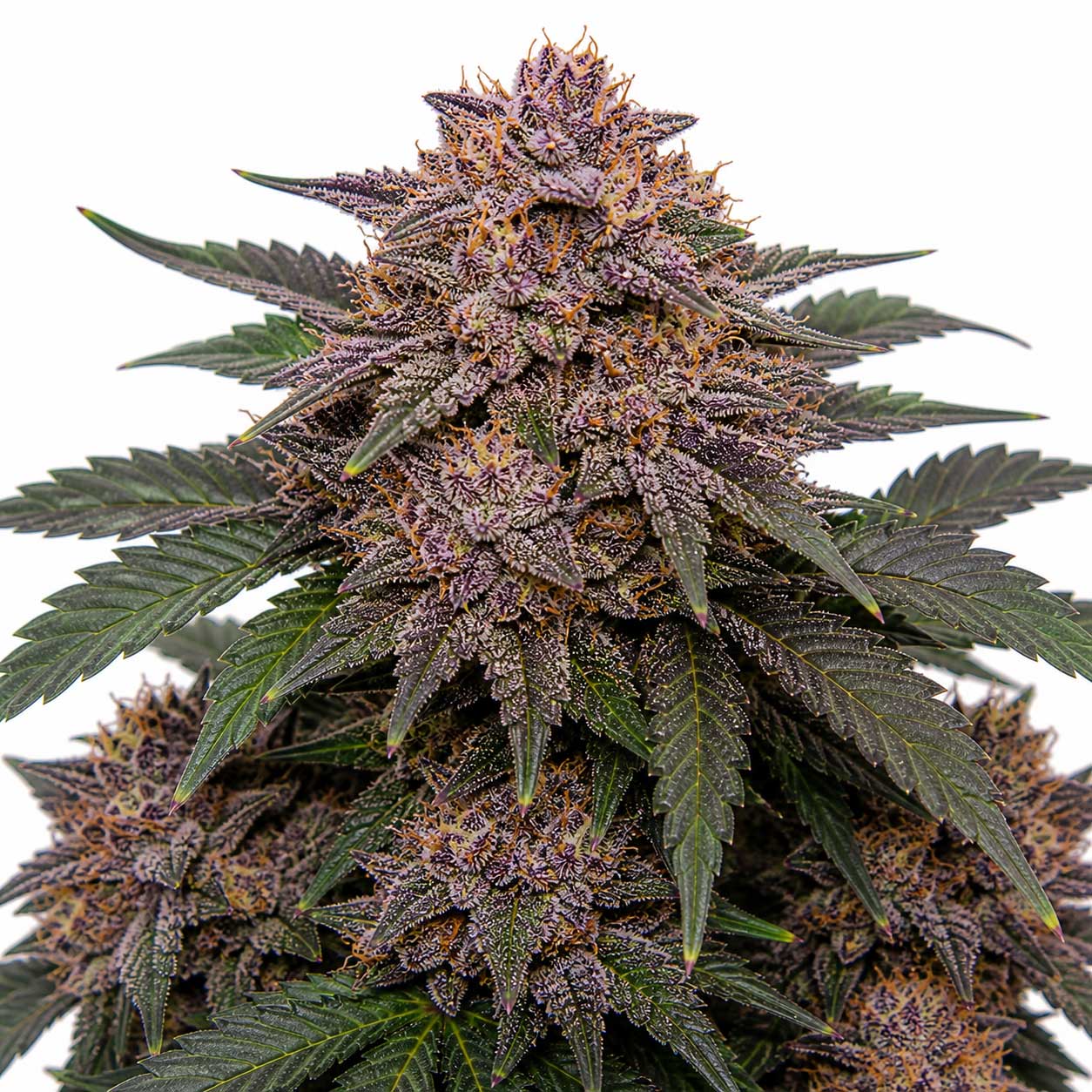
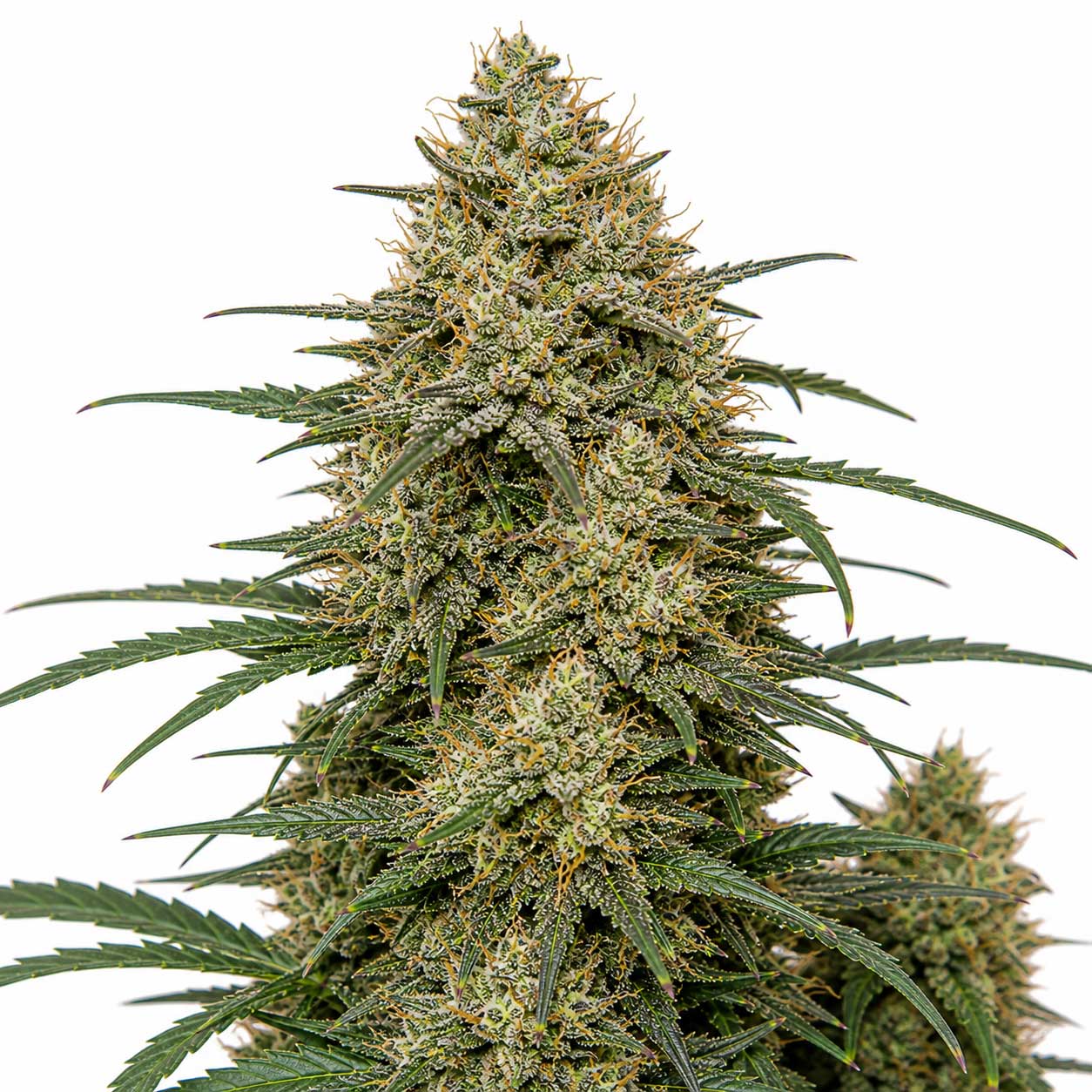
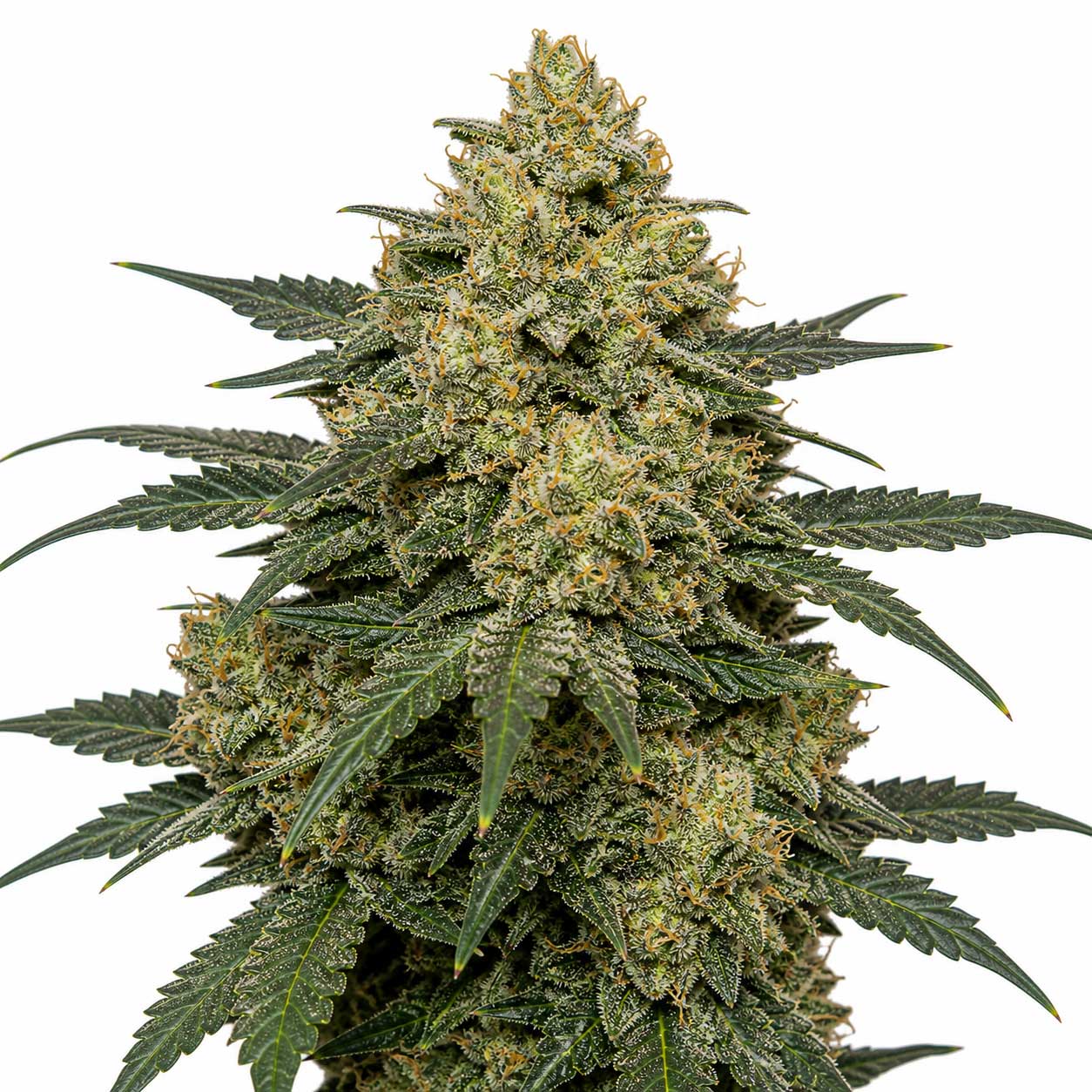
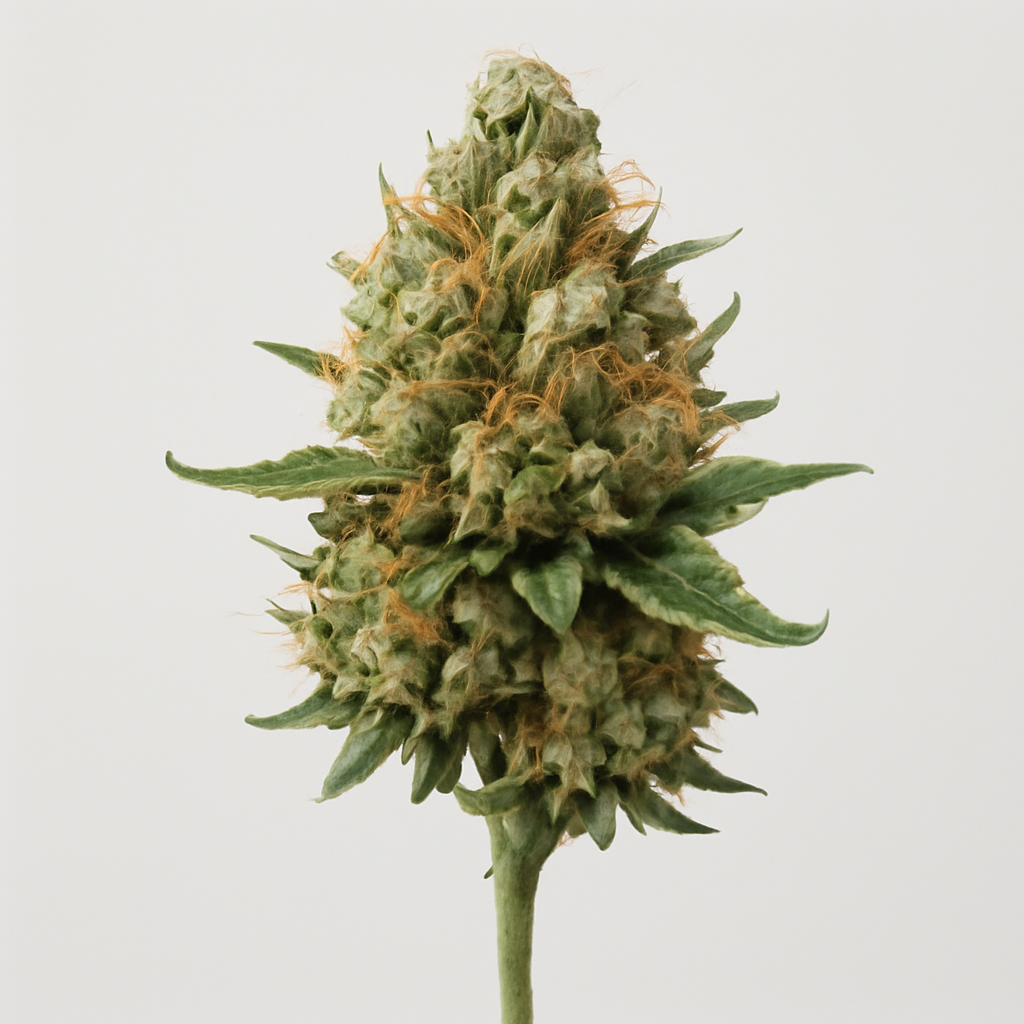
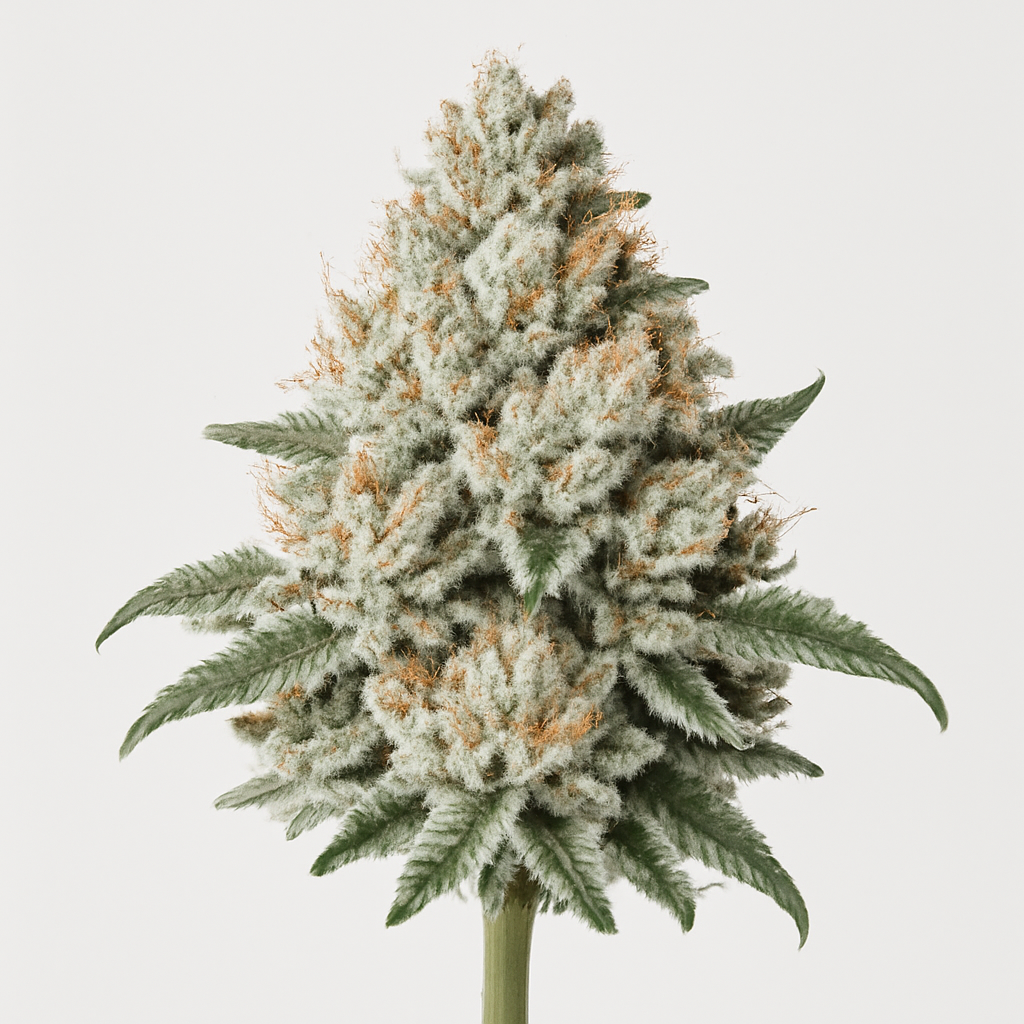
White Rhino buds are usually thick, chunky, and tightly packed, with a classic indica silhouette that looks substantial even before trim. The flowers often appear deep green under their heavy trichome frost, and the pistils tend to emerge in vivid orange or amber tones as the buds mature.
Phenotype variation is most noticeable in resin coverage and calyx density. Some expressions lean especially snowy and sticky, while others show more pronounced leaf-to-bud contrast and occasional darkening in cooler late-flower environments, giving the cultivar a slightly darker, more rugged finish.
Effects & Use-Cases (Reported)
- Commonly reported effects: heavy relaxation, calm mental quiet, body warmth, mild euphoria, and a sleepy finish
- Use-case context: often chosen for late-evening sessions, low-key downtime, and situations where a slower, more settled experience is preferred
- Body character: typically described as full-bodied and sink-in heavy, with more weight than lift
- Note: These observations are anecdotal and do not constitute medical claims.
Observational Note: White Rhino usually presents as a strain that moves from a brief, slightly uplifting opening into a far more grounded body effect. It is not generally described as lively or social for extended periods, and its appeal often comes from its ability to reduce the pace of a session.
Potency Note: While individual batches vary, the strain is commonly tested in the moderate-to-strong THC range. The experience can feel more forceful than the numbers suggest because the profile tends to be dense, resinous, and steadily sedating.
Aroma & Flavor Profile
- Aroma: earthy, pine-forward, skunky, spicy, and woody with a hashlike edge
- Flavor: herbal earth, pepper, pine sap, and a lingering hash finish
- Aftertaste: dry, resinous, and slightly spicy with a persistent woody finish
- Terpene associations: commonly aligned with myrcene, caryophyllene, and pinene.
For readers searching for White Rhino strain flavor, aroma, or terpene information, the cultivar is best described as old-school and resin-forward rather than sweet or candy-like. Its sensory profile tends to reward fans of earthy hash, conifer, and pepper notes, especially in well-cured flower.
Tested Cannabinoid & Terpene Ranges
| Compound | Typical Range* | Notes |
|---|---|---|
| Δ⁹-THC | ~18–20% | Usually moderate to strong; batch results may vary by cut and cure. |
| CBD | <0.5% to 1% | Typically low and not considered a CBD-forward cultivar. |
| Myrcene | ~0.20–0.60% | Often associated with the strain’s earthy, heavier aromatic impression. |
| Caryophyllene | ~0.10–0.35% | Commonly linked to peppery spice and a warm, woody edge. |
| Pinene | ~0.05–0.20% | Helps shape the pine note that can show up in aroma and aftertaste. |
*Ranges are estimates and may vary by phenotype, harvest timing, and testing methods.
Cultivation Notes
- Light Cycle: 18/6 for vegetative growth; 12/12 for flowering
- Humidity: Moderate in veg, then reduced in late flower to protect dense colas
- Stretch: Usually modest, with limited vertical expansion after the flip
- Training: Topping, low-stress training, and scrogging are often effective
- Odor Control: Strongly recommended once flowers begin stacking
- Harvest Window: Approximately 8–9 weeks indoors
White Rhino is generally considered manageable for intermediate growers because it stays relatively compact and responds well to canopy shaping. The main cultivation watchpoints are airflow, humidity control, and maintaining enough support for the weight of the flowers as they mature.
Grower Notes (Week-by-Week Snapshot)
- Weeks 1–3: Establish roots and vegetative structure; keep the canopy even and encourage strong lateral branching.
- Weeks 4–5: Flower sites begin stacking, and the plant starts to show its dense, resinous character.
- Weeks 6–8: Buds thicken quickly, trichome coverage increases, and aroma becomes noticeably earthier and more pungent.
- Weeks 9–10: Final ripening focuses on resin maturity, pistil color change, and a heavier finish if the phenotype runs slightly longer.
Genetic Lineage
White Rhino is generally documented as descending from Afghani, Brazilian, and South Indian parent material, a combination that has helped define its stocky plant form and resin-heavy flowers. The Afghani influence is usually credited with the compact structure and dense bud set, while the tropical components are often associated with added vigor and a more layered aromatic profile.
That background matters because White Rhino sits at the intersection of classic hashplant breeding and modern commercial selection. Its lineage helps explain why the cultivar remains relevant in breeding conversations: it offers a stable, heavy-flowering frame without losing the old-school terpene identity that many legacy consumers still seek.
Research Insights
White Rhino remains important in the modern market because it represents a lineage-driven approach to indica breeding that predates today’s dessert-heavy trends. It is frequently searched by growers and consumers who want a clearer link to classic hash plants, resin production, and compact flowering behavior rather than exaggerated novelty branding.
Frequently Asked Questions
Is White Rhino more indica or sativa?
White Rhino is generally classified as an indica-dominant hybrid. Its plant structure, flower density, and reported effect profile all lean strongly toward indica expression.
What does White Rhino smell like?
The aroma is usually described as earthy, piney, skunky, and slightly spicy. In a good cure, the hash-like finish becomes more noticeable.
How long does White Rhino take to flower?
Most indoor grows finish in about 8 to 9 weeks. Some phenotypes may run a little longer depending on conditions and ripeness targets.
Is White Rhino suitable for beginner growers?
It can be approachable for beginners with decent environmental control, but the dense bud structure means humidity management and airflow are important.
What kind of effects do people usually report from White Rhino?
People commonly report a heavy, calming body effect with a relaxed mental state. It is often associated with evening use rather than active daytime sessions.
Educational Disclaimer: This page is provided strictly for scientific and horticultural reference. Cannabis cultivation, possession, and use are regulated by local laws. This content does not promote illegal activity or constitute medical advice. Always comply with applicable regulations in your jurisdiction.
Rate and review this strain
Ratings and reviews are accepted only from signed-in Google accounts.
Sign in with Google to leave a rating and written review.
Latest Reviews
0 reviewsNo reviews yet. Be the first Google user to rate and review this strain.