Romulan (Cannabis Strain) — Strainpedia
Romulan is a classic indica-leaning cultivar with a long legacy in Canadian and Pacific Northwest cannabis circles. Its appeal rests in a dense, resin-heavy flower structure, a pine-and-earth aroma profile, and a strongly physical effect style that many consumers associate with evening use.
Because the exact breeder history is not consistently documented, Romulan is best understood as an old regional selection rather than a tidy modern brand release. That ambiguity has not reduced its relevance: the strain remains a reference point for growers and smokers who value compact plants, pungent terpene expression, and a finish that often leans heavy and sedating.
Quick Facts
| Genetics | Likely a Canadian/B.C. indica line; exact parentage varies by source |
|---|---|
| Original Breeder | Not clearly documented |
| Variety | Indica-dominant Hybrid |
| Flowering Time | Approximately 8–9 weeks indoors |
| Yield Potential | Moderate to good, depending on phenotype and canopy management |
| Plant Height | Short to medium indoors; compact outdoors in temperate climates |
| Climate Preference | Temperate to warm indoor-style conditions with stable humidity control |
| Difficulty | Moderate |
Strain Classification
| Type | Indica-dominant Hybrid |
|---|---|
| Genetic Family | Legacy North American indica selection with Afghani-leaning traits |
| Primary Terpenes | Myrcene, pinene, caryophyllene* |
| Original Breeder | Not clearly documented |
| Breeding Lineage | Exact parent strains are inconsistently reported; commonly linked to old-school British Columbia or Northern Pacific indica stock |
*Exact terpene dominance may vary by phenotype and cultivation method.
Scientific & Botanical Overview
Botanically, Romulan behaves like a compact indica selection with short internodes, thick lateral branching, and flowers that mature into dense, spear-like colas. The plant architecture suggests selection for resin production and manageable structure rather than extreme stretch, which is one reason it has remained useful in indoor gardens.
From a breeding perspective, Romulan is important because it reflects an earlier era of cultivar development, when local stability and effect were often prioritized over modern marketing names. Its terpene profile frequently trends toward pine, forest floor, and pepper, which aligns with the broader family of indica lines that emphasize heavier aromatic resins and a grounded, physical finish.
Appearance
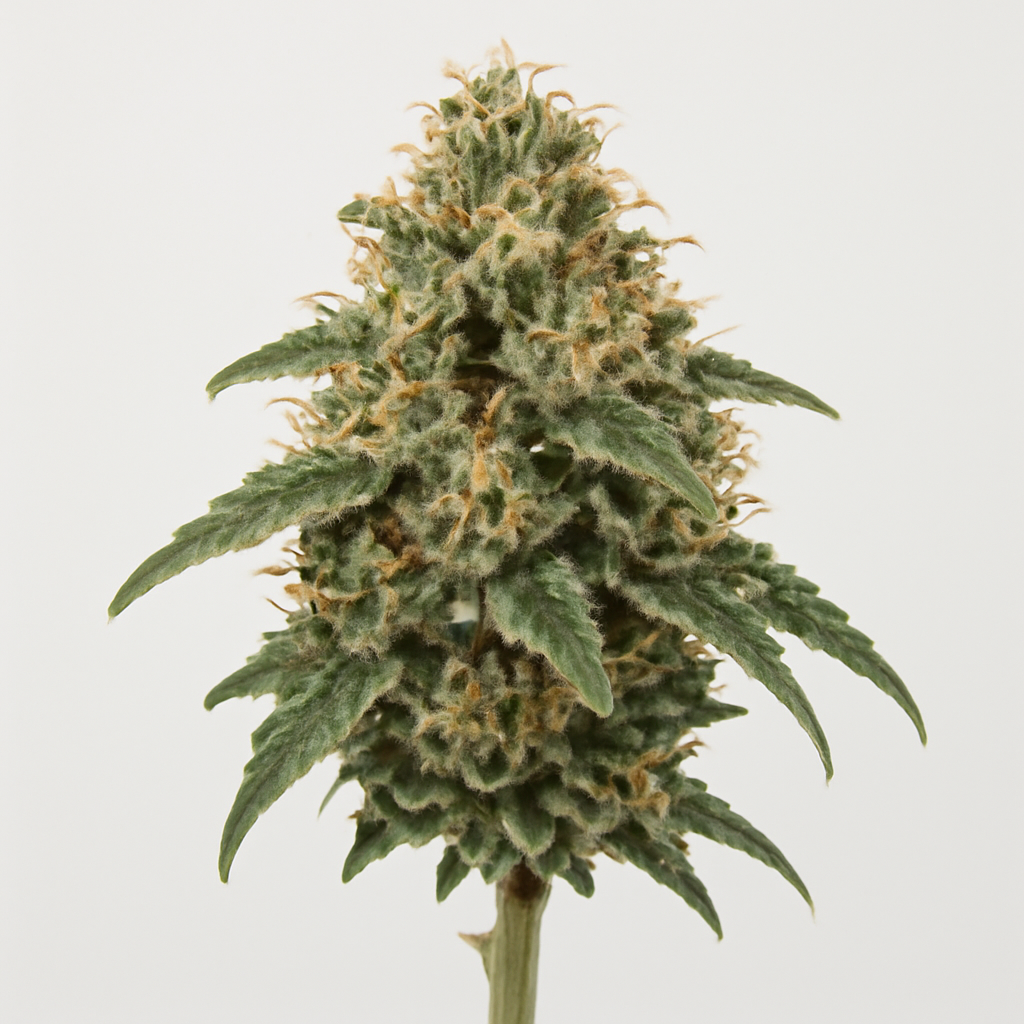
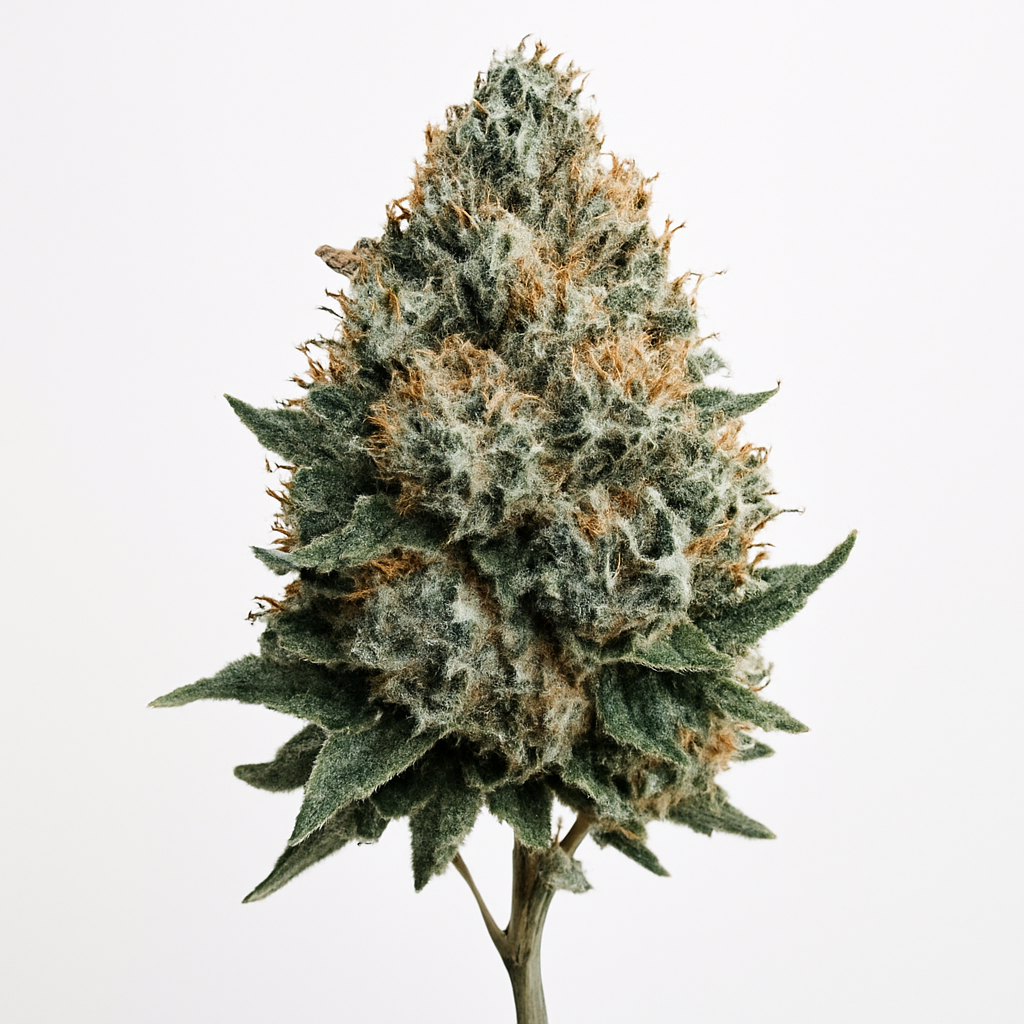
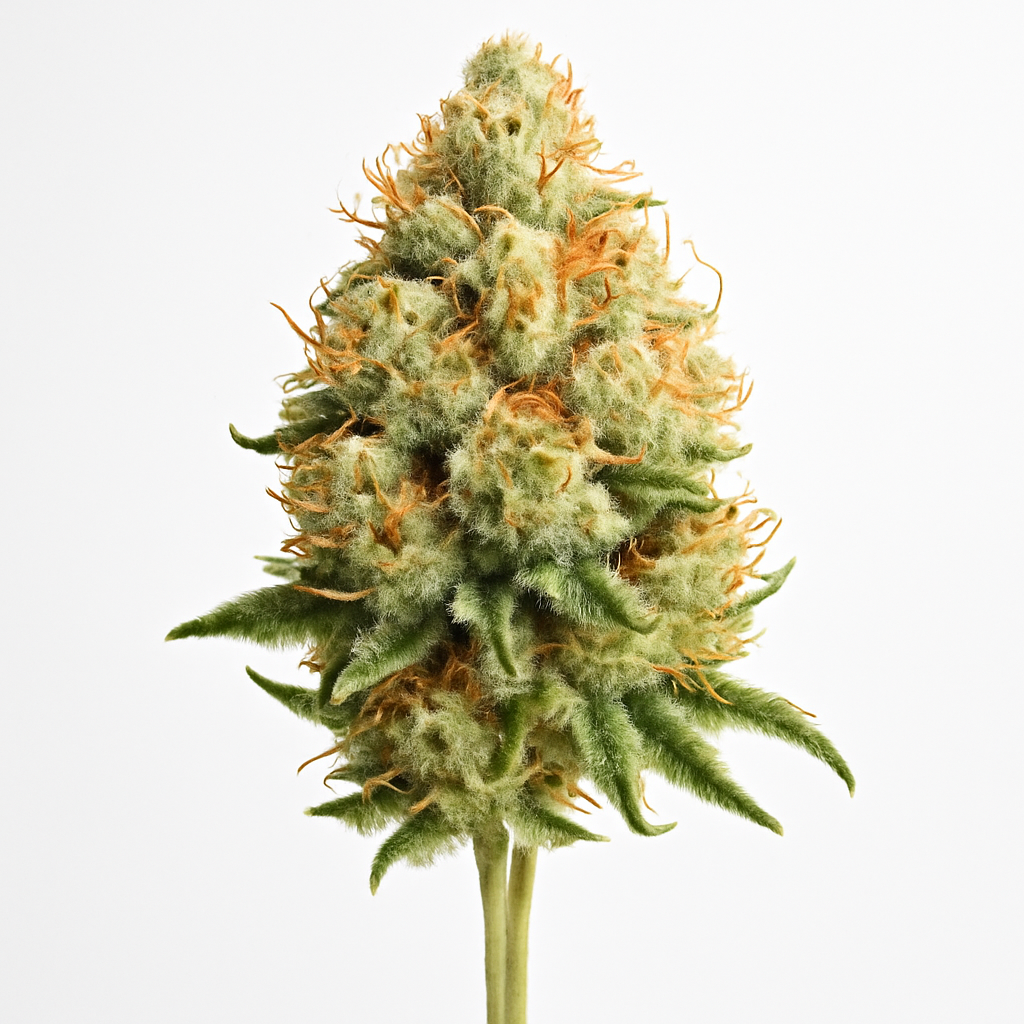
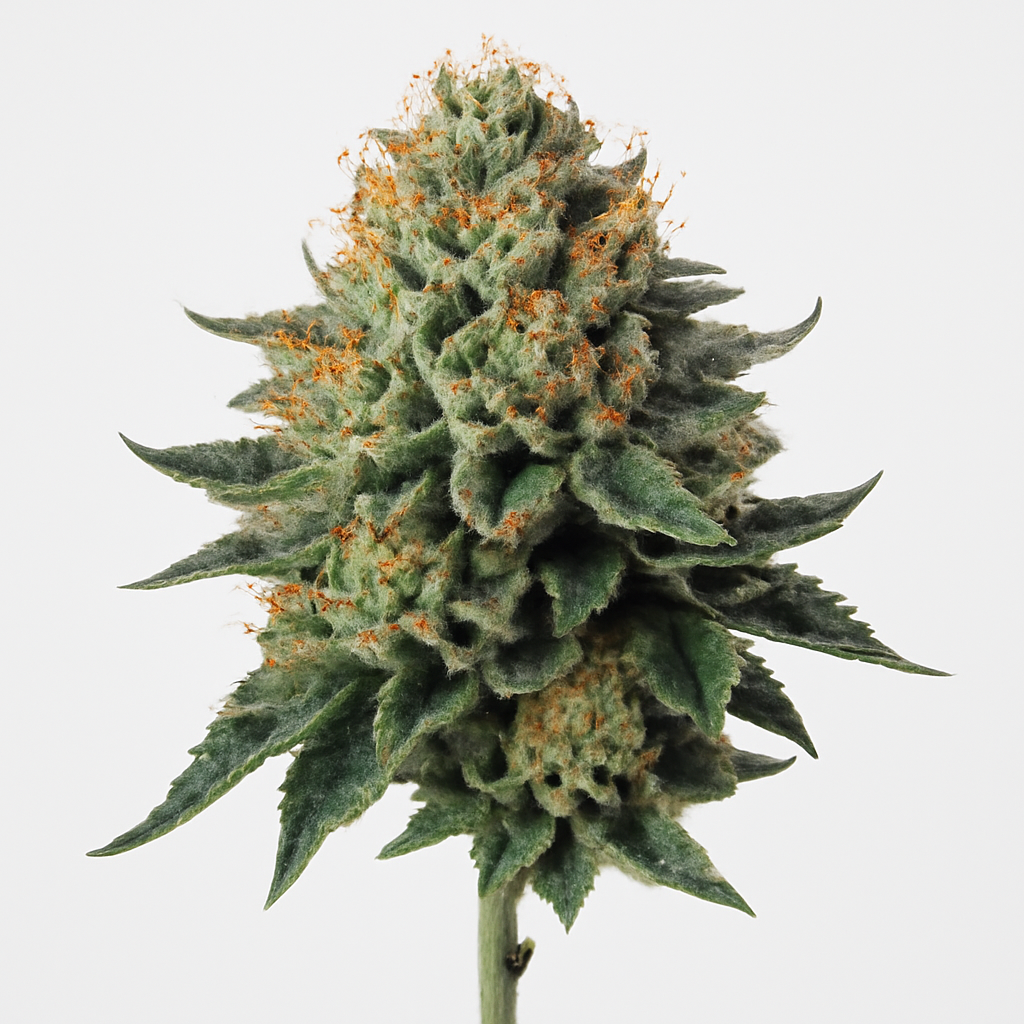
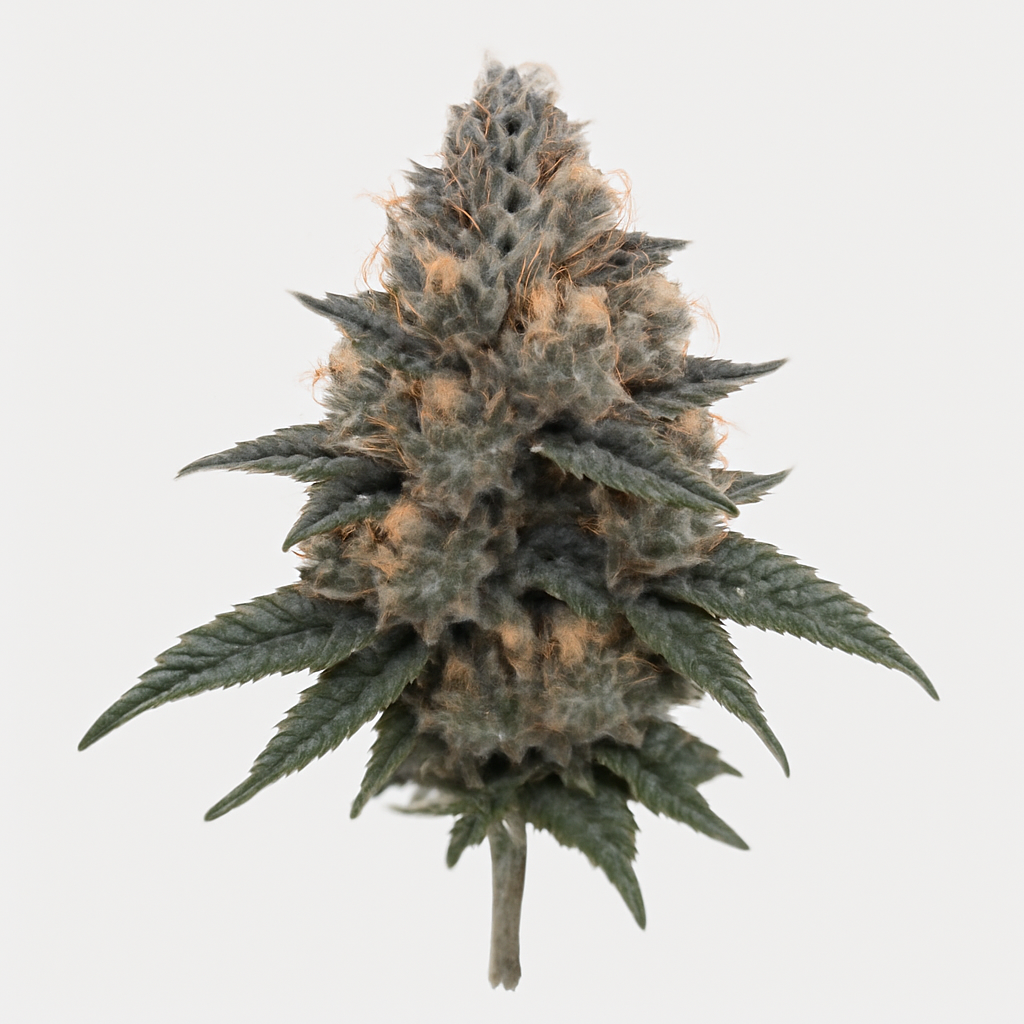
Romulan buds are typically dense and conical, with tightly packed calyxes and very visible trichome coverage. The flower often carries a deep green base, though some phenotypes may show purple or bluish shading as temperatures dip late in bloom.
Orange to rust-colored pistils are usually abundant and stand out against the frosted surface, especially on well-cured flower. The overall look is more classic and resinous than flashy, with phenotype variation most obvious in color depth, calyx size, and the thickness of the trichome blanket.
Effects & Use-Cases (Reported)
- Commonly reported effects: heavy relaxation, calm mental drift, body-soothing sensation, and a sleepy late-stage finish
- Use-case context: often chosen for low-key evenings, post-work downtime, or sessions where a slower pace is preferred
- Body character: frequently described as physically anchoring, with a weighted feel that can build gradually
- Note: These observations are anecdotal and do not constitute medical claims.
Observational Note: Romulan usually comes across as a strain with little interest in overstimulation. The experience is often described as smooth at onset, then progressively more grounded, with the mental tone settling rather than racing.
Potency Note: THC levels can vary meaningfully by grow and cut, but the strain is generally regarded as potent enough that small doses are sensible for new users or anyone sensitive to heavier indica effects.
Aroma & Flavor Profile
- Aroma: pine-forward, earthy, sweet spice, resinous skunk, and citrus peel accents
- Flavor: herbal pine, woodsy earth, pepper, subtle sweetness, and a dry resin finish
- Aftertaste: lingering pine and spice with a faintly bitter herbal tail
- Terpene associations: commonly aligned with myrcene, pinene, and caryophyllene.
If you are searching for Romulan strain flavor, the defining impression is usually a sharp pine-and-earth profile with a spicy backend rather than dessert-style sweetness. The aroma can become especially resinous after grinding, which is one reason the strain still attracts fans of classic old-school cannabis character.
Tested Cannabinoid & Terpene Ranges
| Compound | Typical Range* | Notes |
|---|---|---|
| Δ⁹-THC | ~18–24% | Often sufficient for a strong indica-leaning effect profile, though individual batches vary. |
| CBD | <1% | Usually low and not a defining feature of the cultivar. |
| Myrcene | ~0.25–0.80% | Frequently associated with earthy depth and a more relaxed aromatic impression. |
| Pinene | ~0.15–0.45% | Supports the pine-forward top note that many Romulan samples express. |
| Caryophyllene | ~0.10–0.35% | Adds pepper, spice, and a dry finish to the aroma profile. |
*Ranges are estimates and may vary by phenotype, harvest timing, and testing methods.
Cultivation Notes
- Light Cycle: 18/6 in veg; 12/12 for flowering
- Humidity: Moderate humidity in early flower, with lower levels late to protect dense buds
- Stretch: Limited to moderate, with a compact finish
- Training: Responds well to topping, low-stress training, and canopy leveling
- Odor Control: Strong odor control is recommended once flowering begins
- Harvest Window: Approximately 8–9 weeks indoors
Romulan is generally straightforward for growers who already understand how to manage dense indica flowers. The main priorities are airflow, humidity discipline, and even light distribution, since the plant’s compact bud structure can trap moisture if conditions are too humid late in bloom.
Grower Notes (Week-by-Week Snapshot)
- Weeks 1–3: Vegetative growth stays compact, with short nodes and sturdy side branching that benefits from early training.
- Weeks 4–5: Flower sites begin stacking quickly, and the plant often shifts from vegetative vigor to flower-site consolidation.
- Weeks 6–8: Buds thicken noticeably, resin becomes more apparent, and odor intensity rises sharply.
- Weeks 9–10: Final maturation focuses on trichome clouding and aroma refinement; some phenotypes may finish by week 8 or 9 indoors.
Genetic Lineage
Romulan’s lineage is not locked to a single universally accepted pedigree, which is common for older regional cultivars. It is often discussed as a BC-origin indica selection with Afghani influence, and those background traits help explain its dense flower structure, short growth habit, and resin-rich finish.
What parentage is most often implied by legacy accounts is less about precise names and more about inherited traits: compact architecture, strong earthy-pine terpene expression, and a deeply relaxing effect profile. For that reason, Romulan is best evaluated as a classic heritage line whose phenotype history mattered more than modern trademark-style breeding records.
Research Insights
Romulan remains relevant because it represents a style of cannabis that predates many of today’s dessert-heavy and gas-forward releases. In search terms, it continues to attract users who want old-school indica flavor, growers who prefer shorter flowering plants, and collectors interested in regional genetics with unclear but culturally important origins.
In the modern market, that combination gives Romulan a durable niche: it is not built around hype, but around a recognizable sensory profile and a cultivation pattern that still makes practical sense. For breeders and phenotype hunters, it also serves as a reminder that some of the most enduring cultivars entered circulation long before documentation became standardized.
Frequently Asked Questions
Is Romulan more indica or sativa?
Romulan is generally treated as an indica-dominant hybrid. Its structure, flowering behavior, and reported effects all lean strongly toward the indica side of the spectrum.
What does Romulan taste like?
Most descriptions center on pine, earth, spice, and a dry herbal finish. Some samples also show a faint sweetness underneath the sharper forest-like notes.
How long does Romulan take to flower?
Indoors, Romulan typically finishes in about 8 to 9 weeks, although specific phenotypes and environmental conditions can shift that slightly.
Is Romulan a good strain for indoor growing?
Yes, it is often considered suitable for indoor cultivation because of its compact size and manageable stretch. Dense buds do require good airflow and humidity control.
Why is Romulan’s breeder history unclear?
Romulan circulated through legacy cannabis communities before modern cataloging practices became consistent. As a result, several source histories exist, and not all agree on a single original breeder or exact cross.
Educational Disclaimer: This page is provided strictly for scientific and horticultural reference. Cannabis cultivation, possession, and use are regulated by local laws. This content does not promote illegal activity or constitute medical advice. Always comply with applicable regulations in your jurisdiction.
Rate and review this strain
Ratings and reviews are accepted only from signed-in Google accounts.
Sign in with Google to leave a rating and written review.
Latest Reviews
0 reviewsNo reviews yet. Be the first Google user to rate and review this strain.