Triangle Kush (Cannabis Strain) — Strainpedia
Triangle Kush is a classic Florida-linked OG Kush selection that leans hard into the old-school Kush side of the cannabis gene pool. Its flavor identity is built around fuel, earth, pine, and lemon peel, while the flower usually lands with dense structure and a heavy resin coat that signals its OG heritage immediately.
What separates Triangle Kush from softer modern hybrids is its sharper edge: the aroma can read skunky and hashy rather than sweet, and the effect style is often described as deep, weighty, and increasingly sedating at higher doses. The cultivar is usually associated with moderate indoor stretch, a 9–10 week flowering window, and a breeding history that remains closely tied to Florida OG cut culture rather than a fully standardized seed release.
Quick Facts
| Genetics | Florida OG Kush cut |
|---|---|
| Original Breeder | Not clearly documented |
| Variety | Indica-dominant Hybrid |
| Flowering Time | Approximately 9–10 weeks indoors |
| Yield Potential | Moderate to above average under stable conditions |
| Plant Height | Medium, with moderate early stretch |
| Climate Preference | Warm, dry, well-ventilated environments |
| Difficulty | Moderate |
Strain Classification
| Type | Indica-dominant Hybrid |
|---|---|
| Genetic Family | OG Kush / classic Kush family selection |
| Primary Terpenes | Myrcene, limonene, caryophyllene* |
| Original Breeder | Not clearly documented |
| Breeding Lineage | Florida OG Kush selection; exact seed-line origin is inconsistently recorded |
*Exact terpene dominance may vary by phenotype and cultivation method.
Scientific & Botanical Overview
From a botanical standpoint, Triangle Kush is best understood as an OG-type cultivar selected for its compact flower architecture, strong glandular trichome development, and pronounced terpene expression. The plant typically presents with the tight internodal spacing and dense calyx formation that growers associate with Kush-leaning genetics, especially when environmental conditions are held steady through late bloom.
The cultivar matters in breeding because it behaves like a concentrated OG reference point rather than a broad, airy sativa-leaning line. That gives it value in hybrid work where aroma intensity, resin output, and a heavier finish are desirable traits. In modern cannabis menus, Triangle Kush often fills the role of a terp-rich legacy cut with a more grounded, less sugary profile than many newer dessert-style hybrids.
Appearance
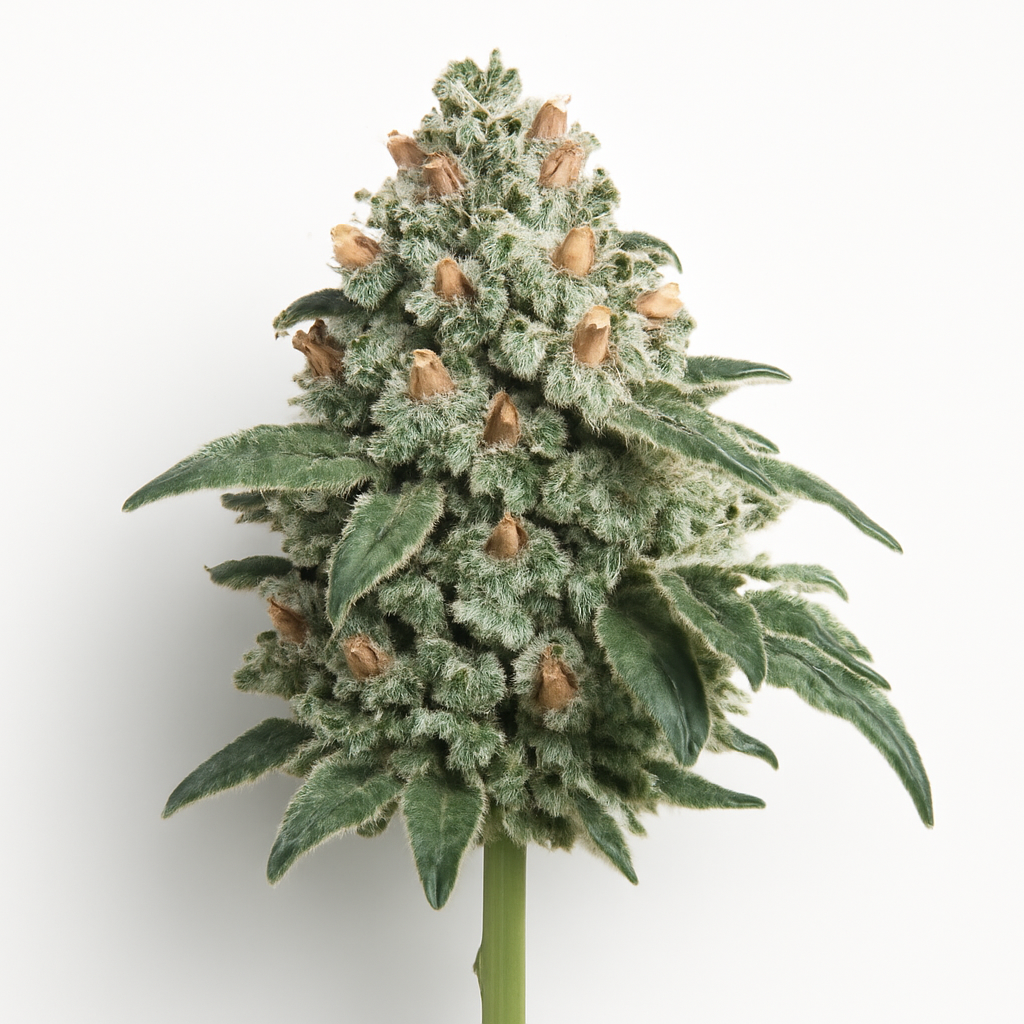
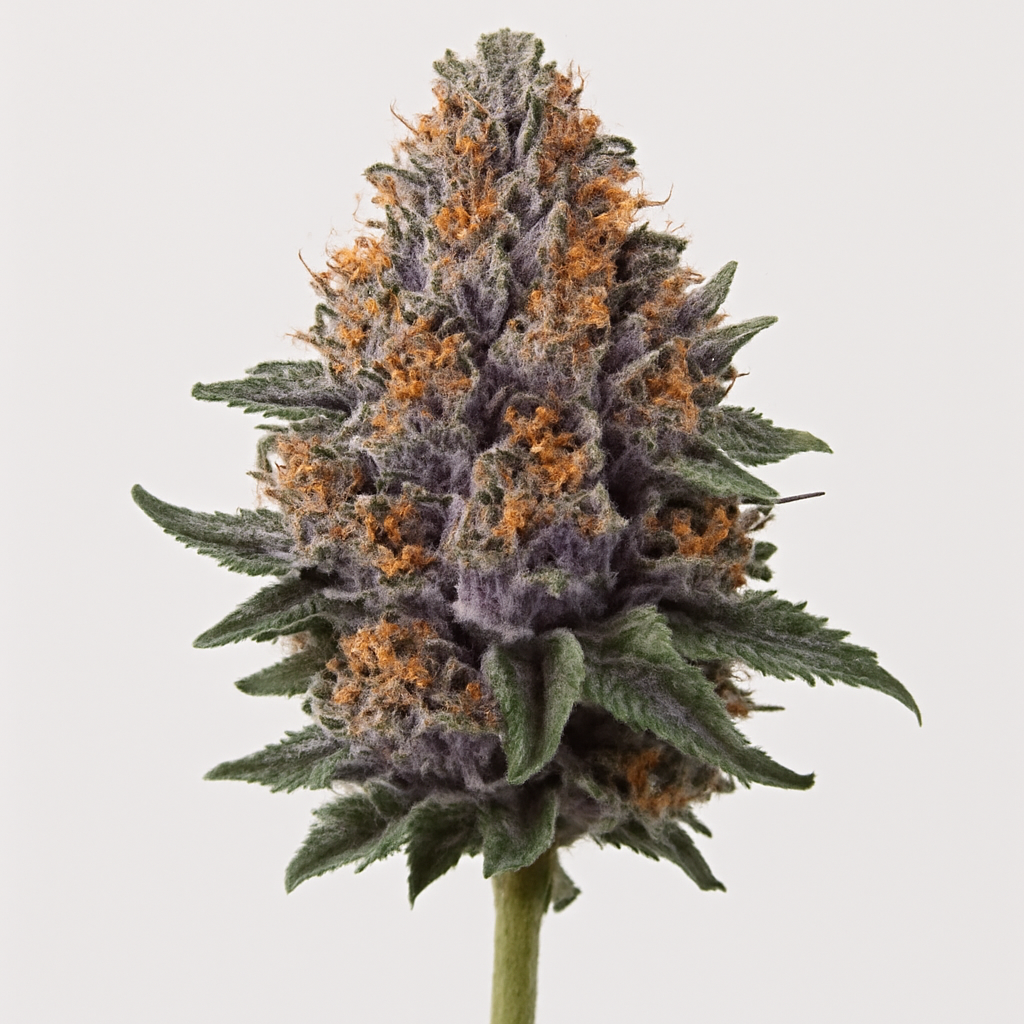
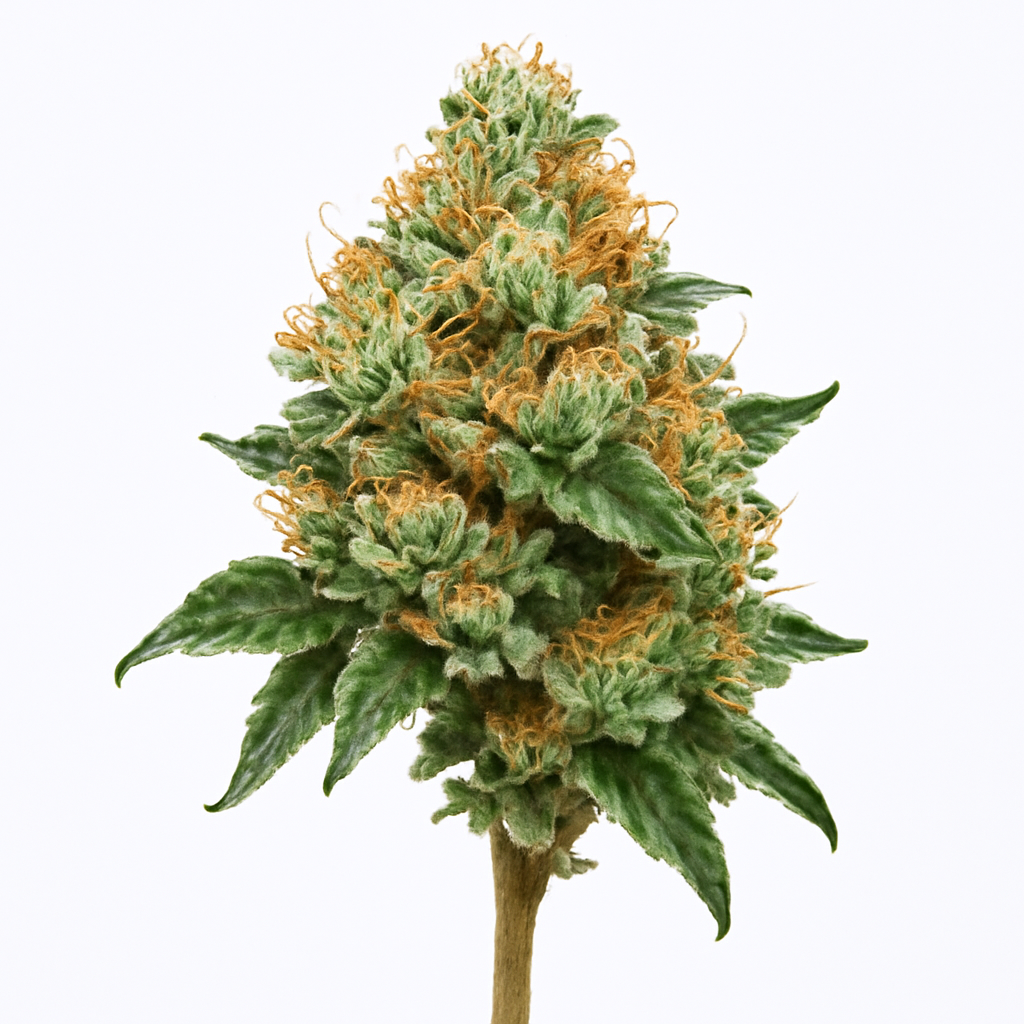
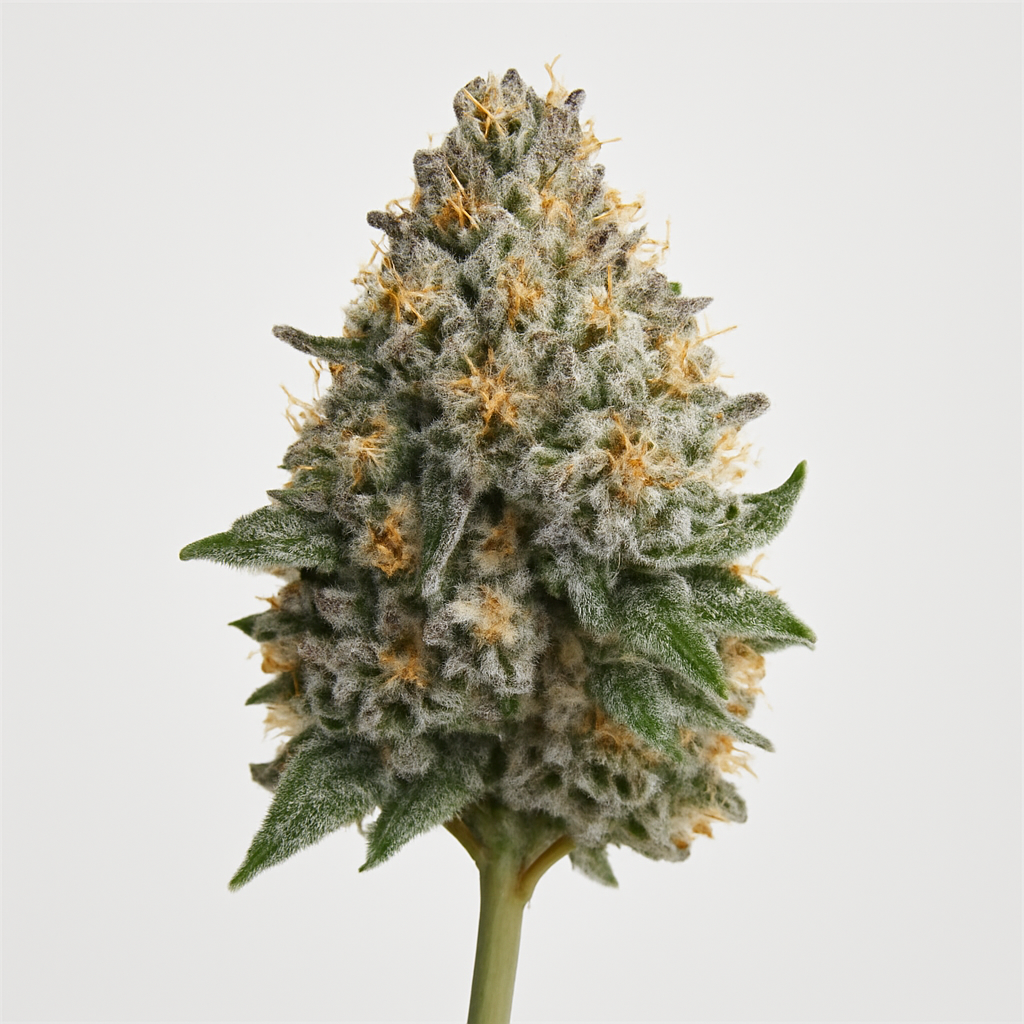
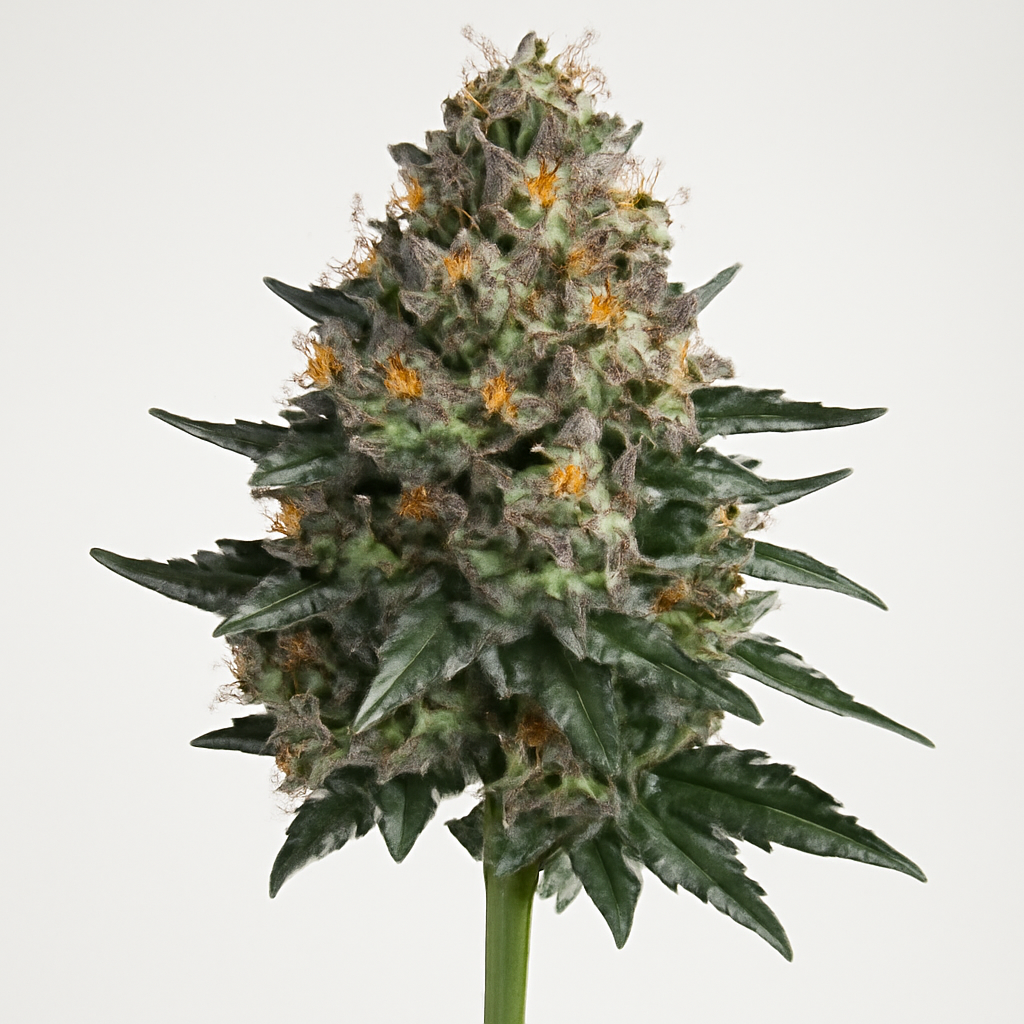
Triangle Kush usually forms tight, chunky colas with a classic indoor Kush silhouette. The buds are often forest green, sometimes deepening toward olive tones, and cooler nights can bring subtle purple shading into the bracts and sugar leaves.
A thick trichome layer gives the flowers a frosted, almost salt-dusted look, while orange pistils thread through the surface in short, wiry clusters. Phenotypes may vary in color intensity and calyx density, but the overall impression is consistently resinous and compact rather than loose or fluffy.
Effects & Use-Cases (Reported)
- Commonly reported effects: euphoria, mental quieting, body heaviness, relaxation, and a tendency toward sleepiness later in the session
- Use-case context: Often selected for evening wind-down, low-key social settings, or end-of-day sessions where a heavier finish is preferred
- Body character: Typically described as warm, settling, and gradually more couch-oriented as the dose rises
- Note: These observations are anecdotal and do not constitute medical claims.
Observational Note: Triangle Kush usually comes on with a familiar OG-style lift before sinking into a denser physical feel. Many consumers describe the transition as unhurried rather than abrupt, with the mental tone softening before the body effect becomes more obvious.
Potency Note: Samples can test fairly high, and the cultivar’s reputation is tied as much to its weighty finish as to its upfront aroma. Newer consumers often find that small amounts are enough to express the strain’s full character.
Aroma & Flavor Profile
- Aroma: fuel-forward, earthy, piney, lemon-peel sharpness, and a skunky hash note
- Flavor: diesel, citrus zest, spice, woodsy earth, and a lingering hash finish
- Aftertaste: dry, peppery, and slightly resinous with a persistent OG funk
- Terpene associations: commonly aligned with myrcene, limonene, and caryophyllene.
For searchers comparing Triangle Kush flavor and aroma, the clearest takeaway is its unapologetically old-school OG profile. It does not lean candy-sweet or fruit-dominant; instead, it delivers a pungent Kush character that stays close to fuel, earth, citrus rind, and hash.
Tested Cannabinoid & Terpene Ranges
| Compound | Typical Range* | Notes |
|---|---|---|
| Δ⁹-THC | ~18–24% | Often tested in a strong adult-use range, with some flower batches landing higher. |
| CBD | <0.5% | Typically very low and not a defining part of the profile. |
| Myrcene | ~0.20–0.60% | Often linked to the strain’s earthy depth and heavier finish. |
| Limonene | ~0.10–0.40% | Supports the citrus peel and bright fuel notes in the aroma. |
| Caryophyllene | ~0.08–0.30% | Can contribute spice, bite, and a peppery aftertaste. |
*Ranges are estimates and may vary by phenotype, harvest timing, and testing methods.
Cultivation Notes
- Light Cycle: 18/6 in vegetative growth; 12/12 for flowering
- Humidity: Moderate early, then lower humidity in late flower to protect dense colas
- Stretch: Moderate; usually shows a controlled burst in the first 2–3 weeks of bloom
- Training: Responds well to topping, LST, and canopy management
- Odor Control: Strong odor control is recommended once flowering intensifies
- Harvest Window: Approximately 9–10 weeks indoors
Triangle Kush is a cultivar where airflow and environmental discipline matter more than aggressive intervention. The dense flower structure can hold moisture late in bloom, so growers usually keep canopies open and avoid letting humidity drift upward near harvest. When handled well, the plant rewards patience with resin-rich flowers and a very classic OG expression.
Grower Notes (Week-by-Week Snapshot)
- Weeks 1–3: Expect a moderate stretch, fast root and branch establishment, and early terpene development that hints at fuel and lemon rind.
- Weeks 4–5: Bud sites stack tightly, pistils multiply, and the canopy begins to show the cultivar’s dense Kush architecture.
- Weeks 6–8: Resin production accelerates, aromas deepen into skunk and hash, and support or defoliation may help maintain airflow.
- Weeks 9–10: Flowers finish with a heavy trichome coat and fuller earth-fuel depth; careful timing can influence the final balance between sharpness and weight.
Genetic Lineage
Triangle Kush is generally traced to a Florida OG Kush selection, though the exact historical record is not fully consistent across the cannabis community. What is well established is its connection to the OG family, which explains the strain’s dense bud structure, fuel-heavy aroma, and strong late-flower resin production.
That lineage is important because OG Kush selections often pass on a specific combination of pungency, compact morphology, and strong hybrid utility. Triangle Kush has remained relevant by preserving those traits in a form that feels closer to the original Kush reference point than to sweeter, more modern descendants.
Research Insights
Triangle Kush matters in today’s market because it represents a legacy OG profile at a time when many consumers are searching for older-school fuel, earth, and hash notes rather than confectionery terpene sets. On dispensary menus and in search data, it often serves as a benchmark strain for users comparing classic Kush character against newer hybrids.
In the breeding scene, the cultivar continues to hold value as a resinous, aroma-dense parent or reference cut. Its staying power comes from a clear sensory identity: it is not trying to imitate dessert strains, and that makes it useful to breeders and consumers who want a direct link to the OG Kush tradition.
Frequently Asked Questions
Is Triangle Kush the same as OG Kush?
Not exactly. Triangle Kush is generally treated as a Florida OG Kush selection or closely related cut, but it is usually described as its own distinct phenotype or line within the broader OG family.
What does Triangle Kush smell like?
It is commonly described as fuel-forward with earth, pine, lemon peel, skunk, and hash notes. The aroma leans sharp and classic rather than sweet.
How strong is Triangle Kush usually?
It often tests in a fairly potent range, commonly around 18–24% THC depending on the batch. Small amounts can be enough for many users.
Is Triangle Kush hard to grow?
It is usually considered moderate in difficulty. The dense flower structure and strong odor mean airflow, humidity control, and canopy management are important.
What kind of effects do people report most often?
Users commonly report a euphoric start that settles into deep relaxation and heavier body effects. At higher doses, it is often described as sleepier and more couch-oriented.
Educational Disclaimer: This page is provided strictly for scientific and horticultural reference. Cannabis cultivation, possession, and use are regulated by local laws. This content does not promote illegal activity or constitute medical advice. Always comply with applicable regulations in your jurisdiction.
Rate and review this strain
Ratings and reviews are accepted only from signed-in Google accounts.
Sign in with Google to leave a rating and written review.
Latest Reviews
0 reviewsNo reviews yet. Be the first Google user to rate and review this strain.