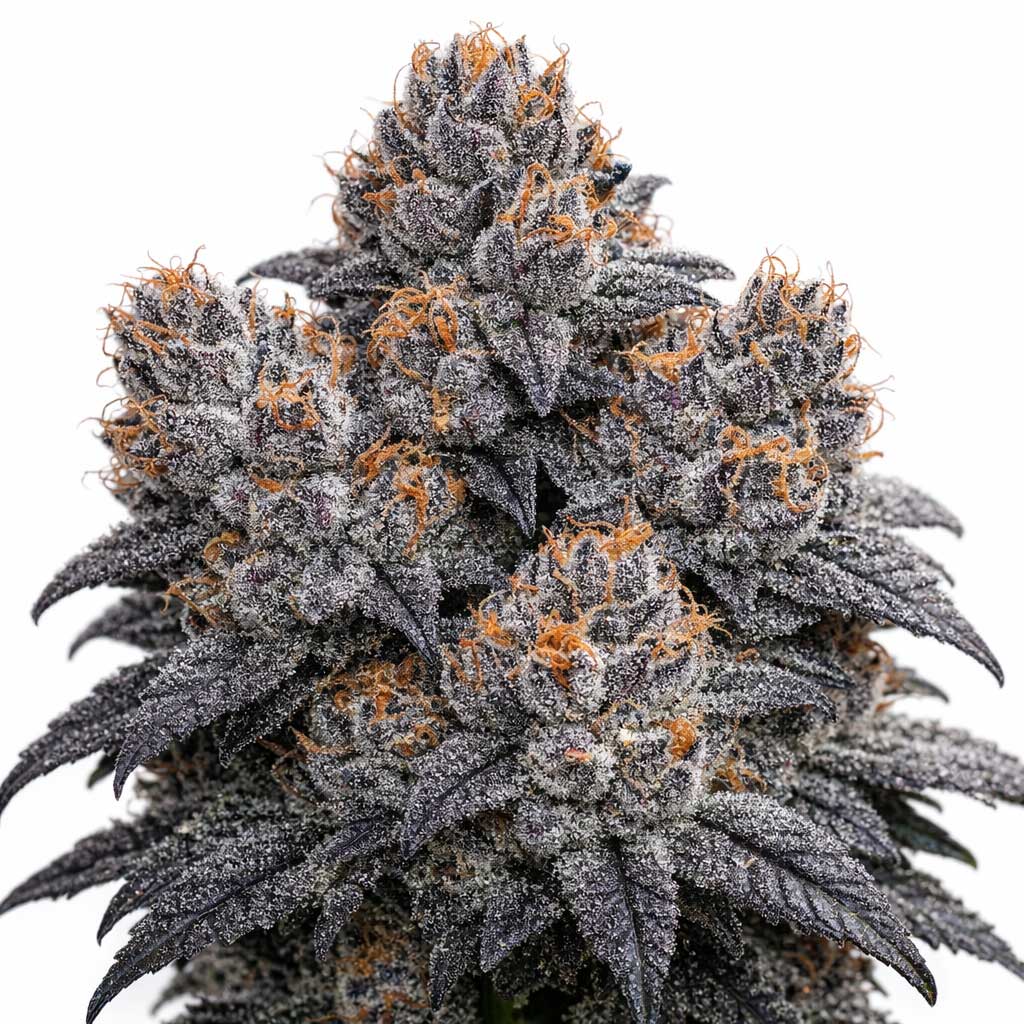
Black Maple (Cannabis Strain)
Black Maple is a standout indica-dominant hybrid cannabis cultivar widely recognized for its savory-sweet terpene profile, dark visual expression, and strong resin production. It is especially valued by live rosin enthusiasts and concentrate-focused growers because of its greasy trichome coverage, dense flower structure, and rich flavor translation in solventless extraction.
Often described as a cross between Dulce de Uva and Sherbanger, Black Maple has earned a reputation as a modern boutique cultivar that delivers heavy physical relaxation without relying on the standard candy-gas formula. The information below is provided strictly for scientific and botanical reference.
Quick Facts
| Feature | Details |
|---|---|
| Genetics | Dulce de Uva × Sherbanger |
| Variety | Indica-dominant hybrid |
| THC Range | 24%–28%+, depending on cut and environment |
| Flowering Time | 8–9 weeks (approximately 56–63 days indoors) |
| Yield Class | Moderate; often favored more for extraction quality than raw bulk output |
| Plant Structure | Sturdy medium-height frame with broad fan leaves, dense branching, and dark purple-leaning foliage in strong phenotypes |
| Canopy Behavior | Strong vertical stacking with tight node spacing; benefits from early defoliation and lower-canopy cleanup |
| Climate Preference | Temperate to cool finishing conditions; cooler nights may intensify darker coloration and terpene depth |
| Grower Difficulty | Intermediate; best results come from careful timing, canopy control, and attention to resin maturity |
Scientific & Botanical Overview
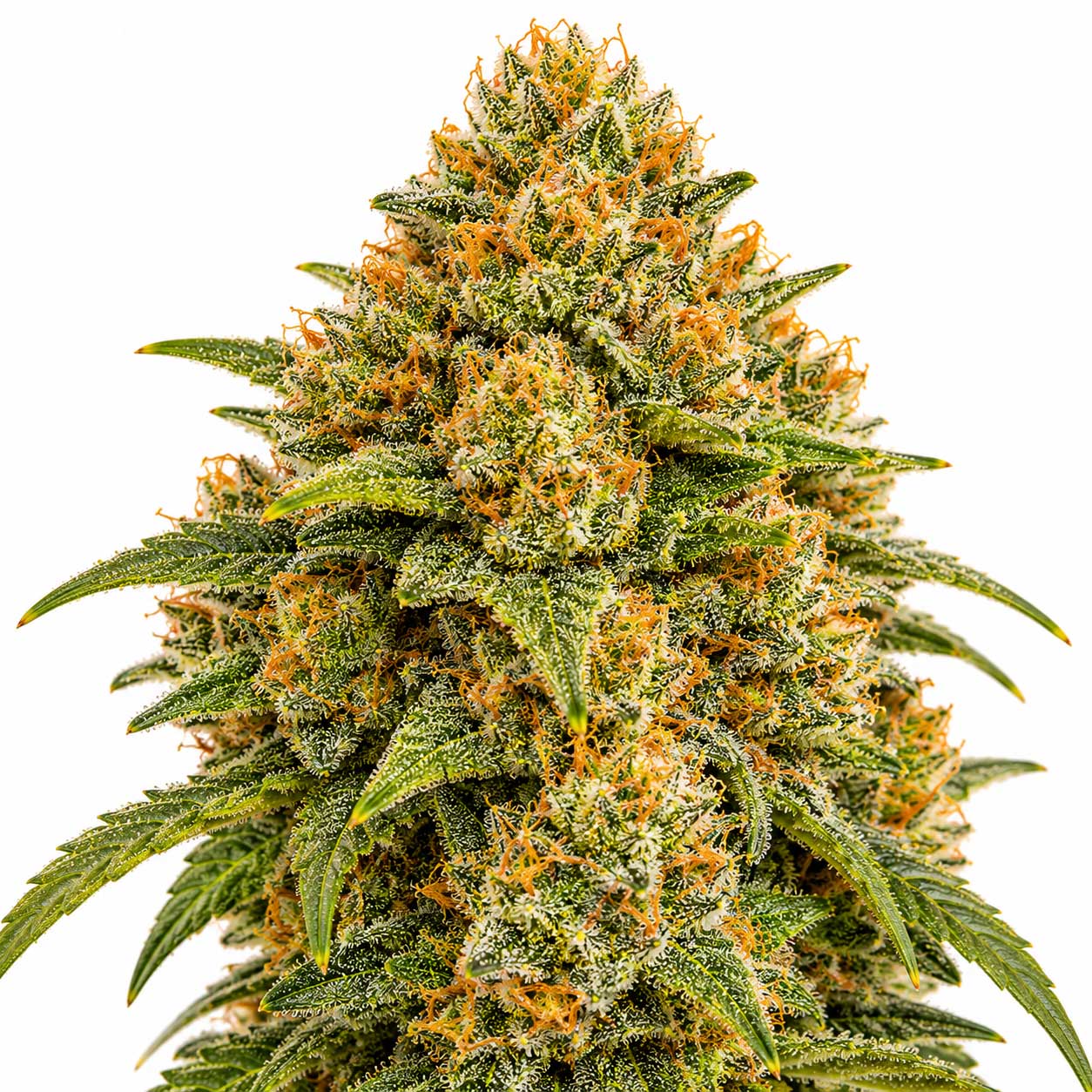
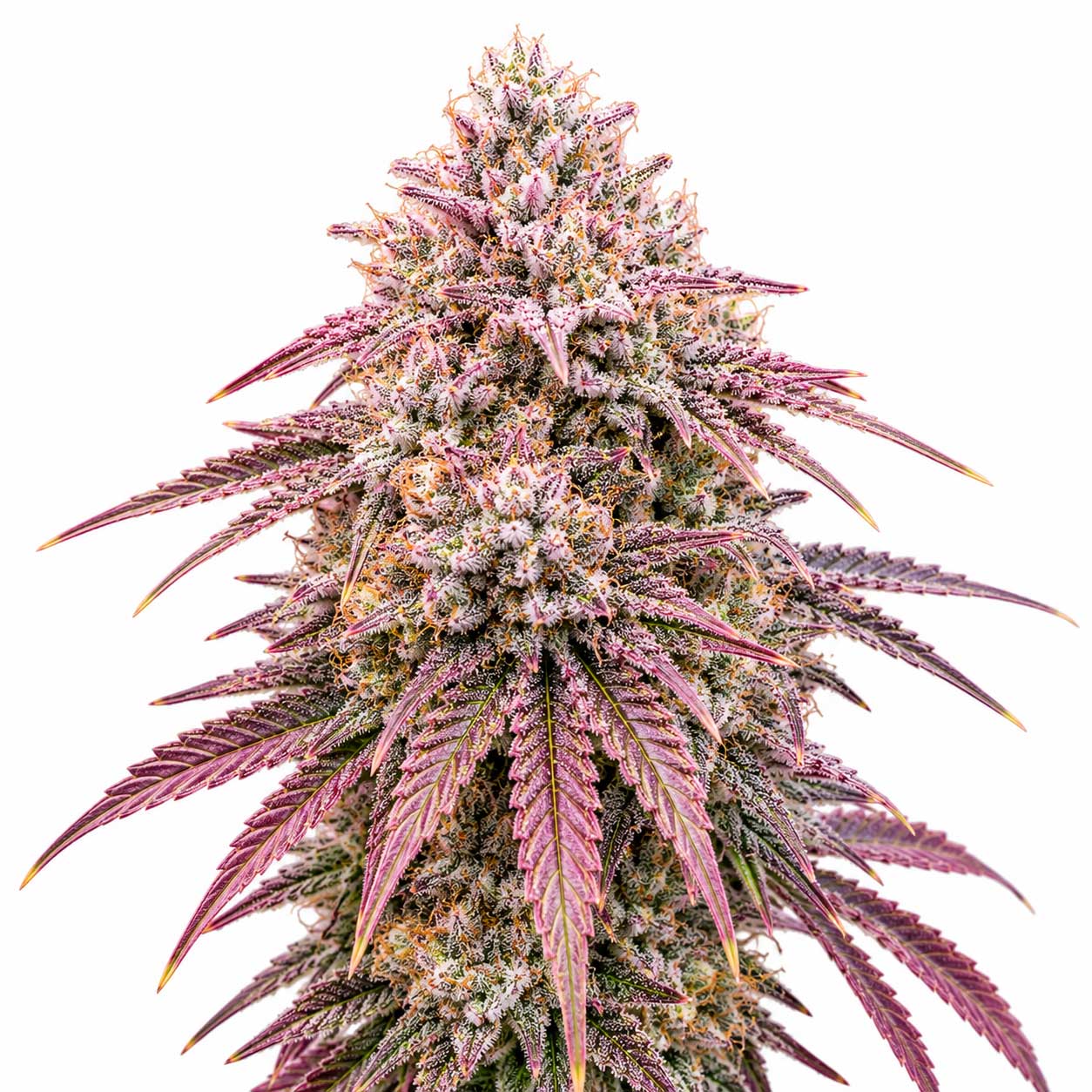
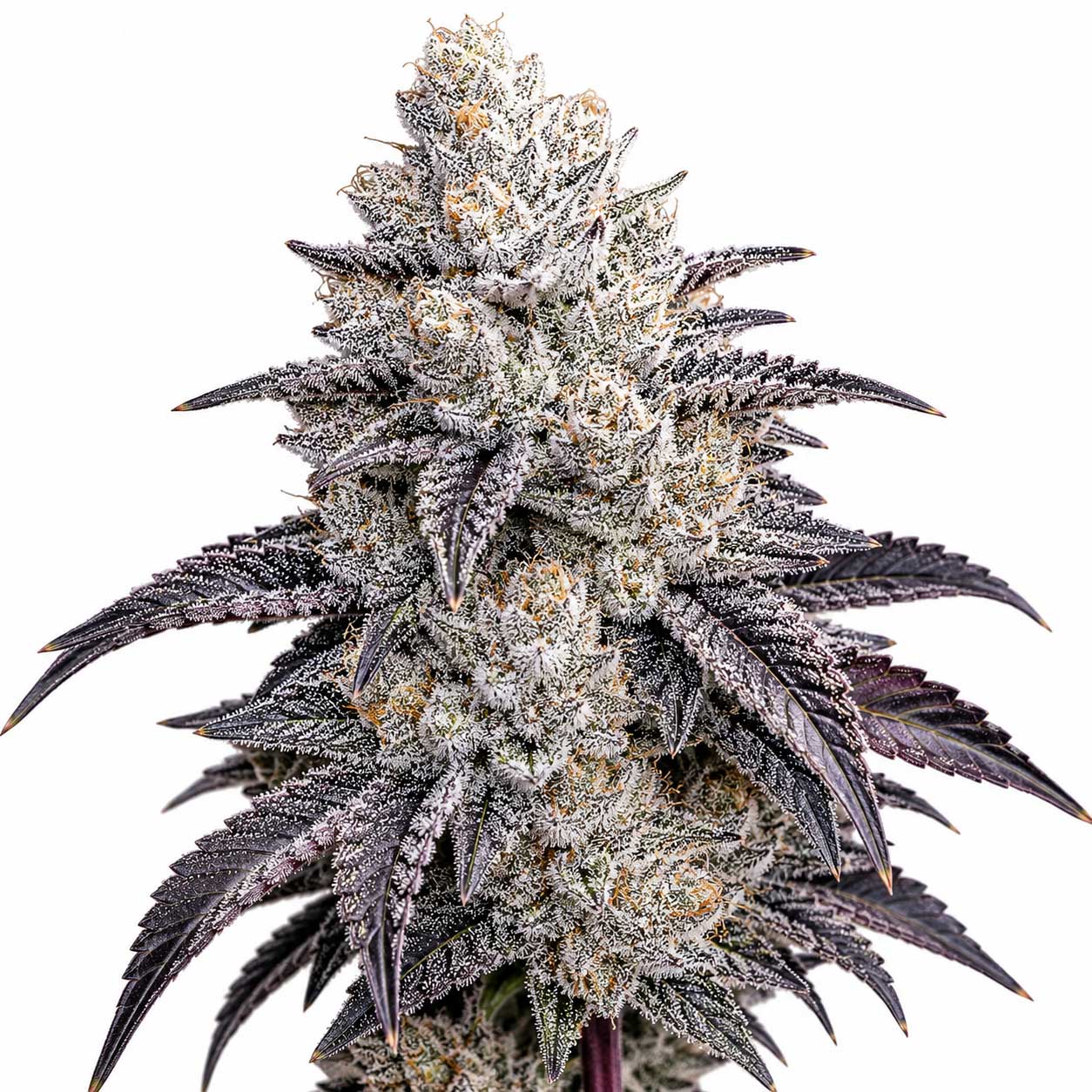
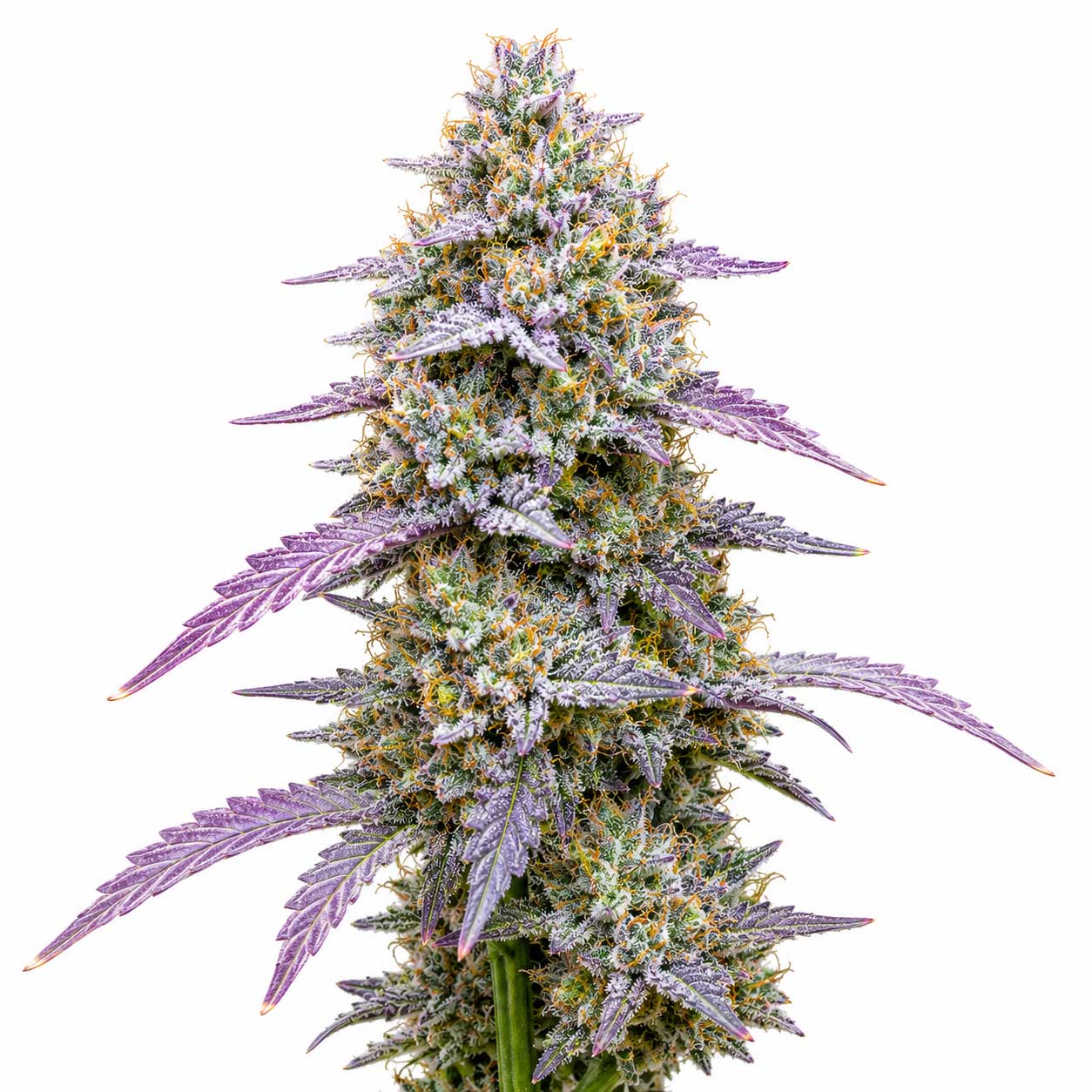
Black Maple is a visually distinctive cultivar that frequently develops deep purple to near-black coloration in the leaves and calyxes, especially when grown under cooler finishing conditions. The buds are typically dense, spade-shaped, and coated in large-headed trichomes that create a greasy, resin-rich surface rather than a dry, sandy finish.
From a botanical perspective, Black Maple expresses a structure that is both compact and efficient, with dense lateral growth and strong flower stacking. This makes it especially attractive to growers targeting solventless extraction, since resin density and trichome separation behavior are just as important as flower weight in that production style.
The cultivar’s terpene identity stands apart from louder candy hybrids by leaning into darker, more savory tones. That gives Black Maple a more mature aromatic profile, often described as syrupy, woody, earthy, and lightly funky rather than purely sweet or citrusy.
Effects & Use-Cases (Reported)
Commonly reported effects: a slow-building body warmth, mental ease, relaxed limbs, weighted physical calm, and a steady euphoric finish.
Use-case context: Black Maple is often associated with evening use, quiet social settings, post-work decompression, and sessions where body comfort and flavor quality are more important than sharp stimulation. Many users describe it as deeply relaxing without feeling aggressively racy or mentally chaotic.
Note: These observations are anecdotal reports and should not be interpreted as medical claims.
Aroma & Flavors
Aroma: Dark maple syrup, toasted oak, savory earth, dense sugar notes, and a faint grape-like funk.
Flavor: The inhale is often rich and savory with molasses-like sweetness, while the exhale becomes woodsy, syrupy, earthy, and heavy on the palate without turning sharply fruity.
Terpene associations: Caryophyllene, Myrcene, Limonene, and occasional earthy-sesquiterpene depth are commonly associated with this profile.
Tested Cannabinoid & Terpene Ranges
| Compound | Typical Range* | Grower-Oriented Interpretation |
|---|---|---|
| Δ9-THC | 24%–28% | Strong, reliable potency that supports the cultivar’s heavy physical profile and premium positioning |
| CBG | 1%–2% | Often cited as a meaningful secondary cannabinoid that may contribute to the cultivar’s body-driven appeal |
| Caryophyllene | Commonly prominent | Drives the savory, woodsy, peppered depth and gives structure to the flavor profile |
| Myrcene | Commonly prominent | Supports the darker earthy sweetness and the cultivar’s heavier physical landing |
| Humulene | Phenotype-dependent | Adds hoppy, dry-earth complexity that helps balance the syrup-like richness |
*Ranges vary by phenotype, cultivation method, harvest timing, and extraction style. Black Maple is especially valued for resin quality and terpene retention rather than for raw THC volume alone.
Cultivation Notes
- Vegetative Vigor: Moderate; plants usually grow thick, sturdy, and compact rather than lanky.
- Light Cycle: 18/6 vegetative and 12/12 flowering.
- Humidity Targets: Around 55%–60% RH in veg and 45%–50% in flower is a practical working range, even though the cultivar is often regarded as relatively stable.
- Nutrition: Usually responds well to a balanced feed program and does not require excessive late-flower nitrogen.
- EC / Feeding Sensitivity: Moderate to robust; many growers consider it more forgiving than fragile dessert hybrids, though overfeeding can still dull finish quality.
- Training: Defoliation in early flower, lower-site cleanup, topping, and canopy spacing are especially useful because of the broad fan leaves and tighter stacking.
- Support Needs: Moderate; trellis support is often used more for spacing and canopy organization than for severely floppy branches.
- Mold / Moisture Risk: Low to moderate when airflow is strong, though dense resinous flowers still reward disciplined environmental control.
- Harvest Strategy: Some extraction-focused growers prefer a slightly earlier harvest window when targeting brighter terpene expression and lighter rosin color.
- Harvest Window: Commonly around 56–63 days indoors, depending on phenotype and intended end use.
Grower Notes (Week-by-Week Snapshot)
- Weeks 1–2 (Foundation): Broad dark-green leaves appear early, and the plant generally holds a compact, bushy profile.
- Weeks 3–4 (Canopy Set): Stretch is manageable, usually making this the ideal window for defoliation, branch spacing, and final canopy shaping.
- Weeks 5–6 (Resin Build): Trichome production ramps up aggressively, and the room profile starts moving toward savory wood, dark sugar, and syrupy depth.
- Weeks 7–8 (Ripening): Purple tones become more obvious in stronger phenotypes, and the plant can appear nearly black under certain conditions.
- Weeks 8–9 (Finish Window): Final swelling usually brings the fullest syrup-funk character, dense calyx expression, and the greasy resin quality that makes the cultivar so desirable for solventless work.
- Post-Harvest: For rosin-focused production, many growers prefer fresh-frozen handling; for flower, a patient dry and cure help deepen the savory-sweet profile.
Genetic Lineage
Black Maple is commonly described as a cross between Dulce de Uva and Sherbanger. That pairing helps explain its unusual profile: Dulce de Uva contributes darker fruit influence, purple coloration, and dessert depth, while Sherbanger adds stronger structure, resin production, and a more forceful modern hybrid finish.
The result is a cultivar that feels more layered and more extraction-friendly than many simple sweet-flavor strains. It carries both depth and density, which is part of why it has developed such a strong reputation in concentrate circles.
Research Insights
Black Maple is especially notable in discussions around solventless extraction performance. Growers and hash makers often focus on its trichome head size, greasy resin texture, and wash potential, all of which make it attractive for live rosin production.
From a cultivation perspective, the strain highlights the growing market importance of resin behavior, not just flower appearance. In other words, Black Maple succeeds because it offers flavor depth, extraction utility, strong visual expression, and a calm body-led effect profile in one package.
Phenotype selection still matters. Some cuts may lean more toward dark syrup, oak, and savory funk, while others show more grape sweetness or a slightly brighter Sherbanger lift. That range is part of what keeps the cultivar interesting for breeders, growers, and concentrate specialists alike.
Frequently Asked Questions
Is Black Maple an indica or sativa strain?
Black Maple is generally described as an indica-dominant hybrid with a calm, body-led finish.
Why is Black Maple popular for live rosin?
It is prized for greasy resin, strong trichome production, and a terpene profile that translates especially well into solventless concentrates.
What does Black Maple taste like?
It is commonly described as maple syrup, oak, dark sugar, savory earth, and light grape-funk depth.
Is Black Maple a couch-lock strain?
Many users describe it as weighted and deeply relaxing rather than completely immobilizing, though stronger cuts can still feel quite heavy.
What makes Black Maple stand out?
Its standout traits include savory-sweet syrup aroma, dark resinous flower, strong wash potential, and a premium solventless-friendly profile.
Educational Disclaimer
This page is provided for scientific and horticultural reference only. Cannabis laws vary by jurisdiction; always ensure compliance with local regulations.
Rate and review this strain
Ratings and reviews are accepted only from signed-in Google accounts.
Sign in with Google to leave a rating and written review.
Latest Reviews
0 reviewsNo reviews yet. Be the first Google user to rate and review this strain.