The White (Cannabis Strain) — Strainpedia
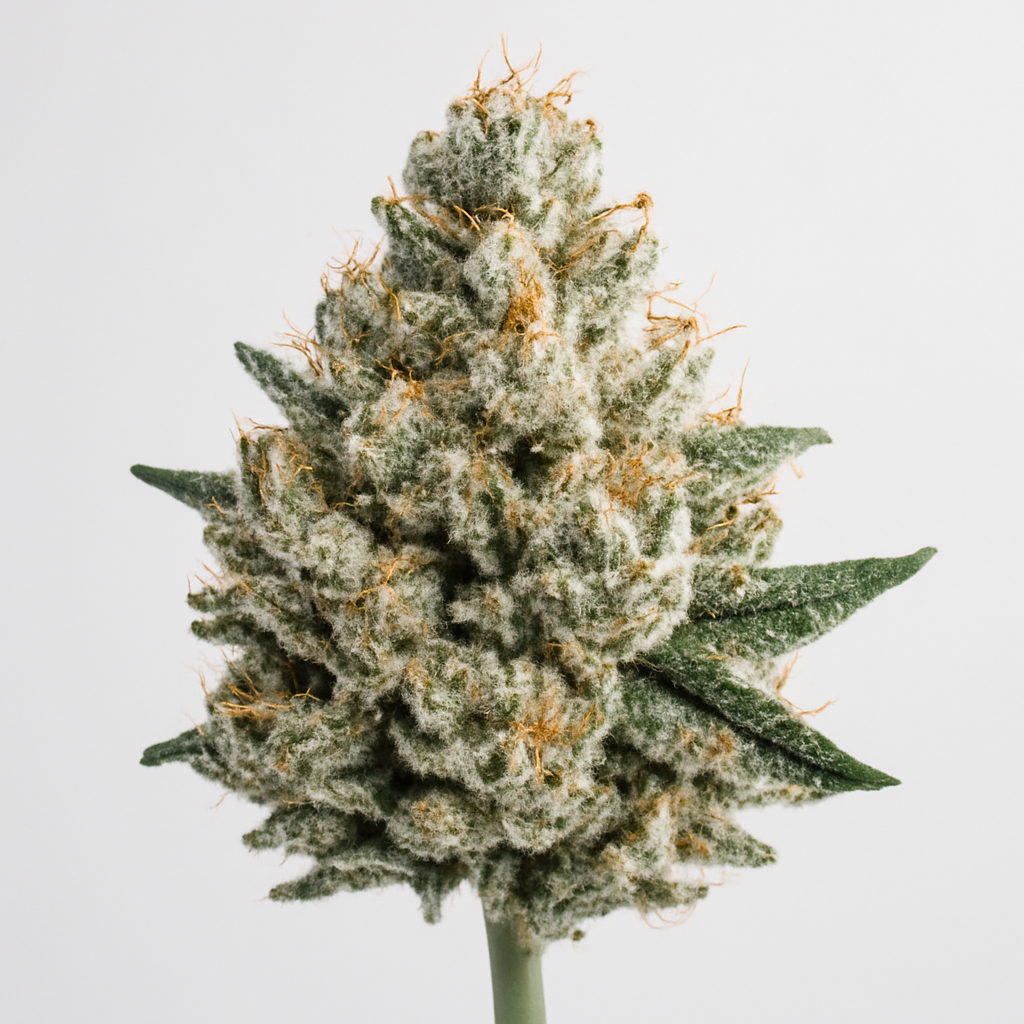
The White stands apart through sheer resin production: mature flowers are so heavily dusted in trichomes that the buds can appear almost chalked over. Its profile is typically earthy, pine-forward, and hashy, with an effect style that leans calm and physically settling rather than bright or energetic.
Although the exact pedigree is not consistently recorded, The White has long been treated as an elite clone with Kush-leaning influence and a distinctly frosted visual signature. Growers often note compact bud formation, strong odor during bloom, and a finish that suits users looking for a quieter, evening-oriented cultivar with classic old-school texture.
Quick Facts
| Genetics | Mostly unknown; commonly described as a Triangle Kush x unknown hybrid selection |
|---|---|
| Original Breeder | Not clearly documented |
| Variety | Indica-dominant Hybrid |
| Flowering Time | Approximately 8–9 weeks indoors |
| Yield Potential | Moderate to good, especially in stable indoor environments |
| Plant Height | Short to medium |
| Climate Preference | Dry, controlled indoor or warm Mediterranean-style conditions |
| Difficulty | Moderate |
Strain Classification
| Type | Indica-dominant Hybrid |
|---|---|
| Genetic Family | Kush-leaning resin-heavy hybrid with legacy clone-only origins |
| Primary Terpenes | Myrcene, Pinene, Caryophyllene* |
| Original Breeder | Not clearly documented |
| Breeding Lineage | Commonly attributed to Triangle Kush influence paired with an unconfirmed selection |
*Exact terpene dominance may vary by phenotype and cultivation method.
Scientific & Botanical Overview
Botanically, The White is best understood as a resin-forward hybrid selected for flower structure and trichome expression rather than for a fully transparent seed-line pedigree. Its reputation comes from a clone-only selection history, which often means the cultivar is discussed more through phenotype behavior and finished flower characteristics than through a fixed published cross.
In cultivation, the plant tends to express compact internodes, sturdy calyx stacking, and a bloom cycle that finishes in a practical indoor window. The chemistry is typically THC-forward with minimal CBD, and the aromatic profile often settles into terpenes associated with earthy Kush material, faint pine, and peppery spice.
Appearance
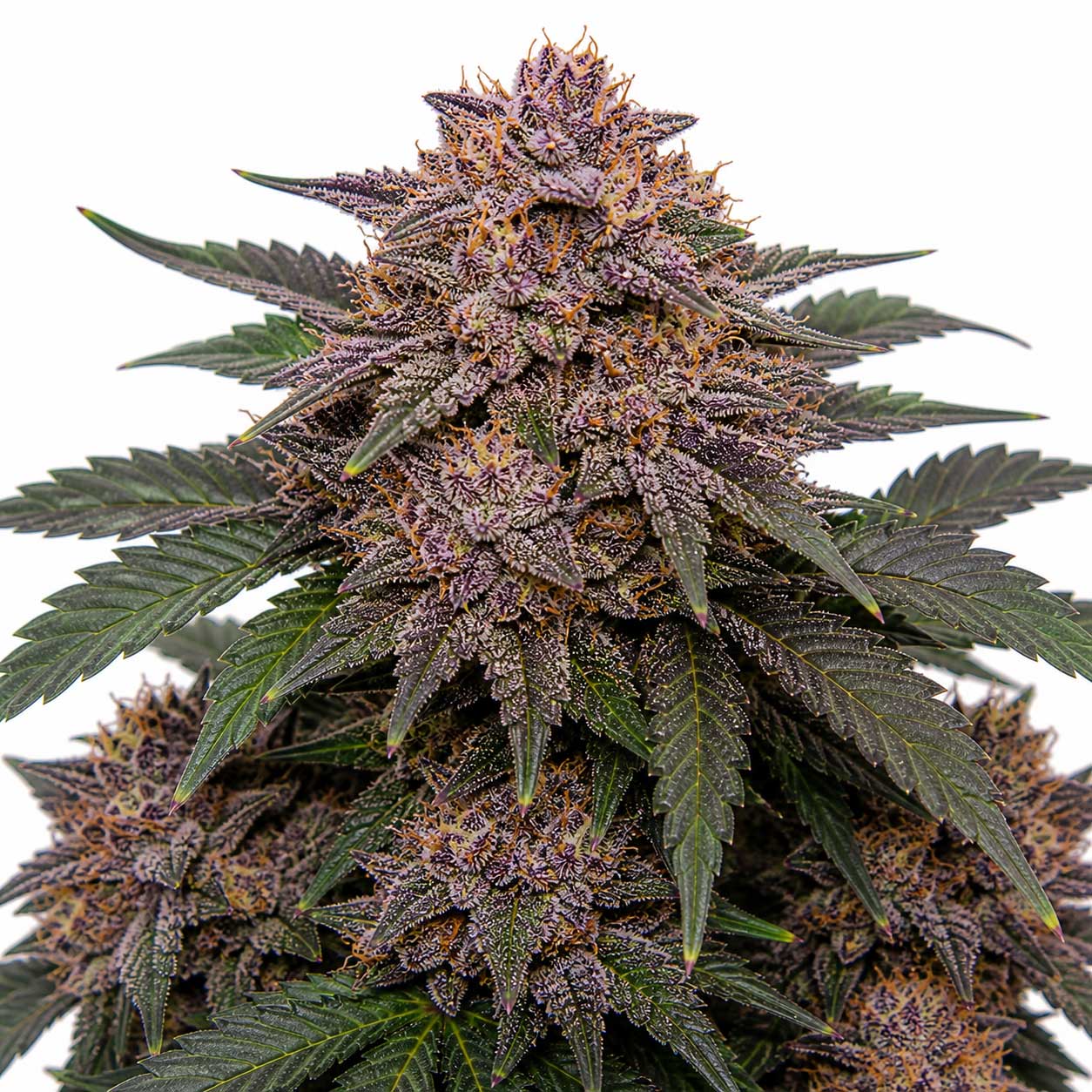
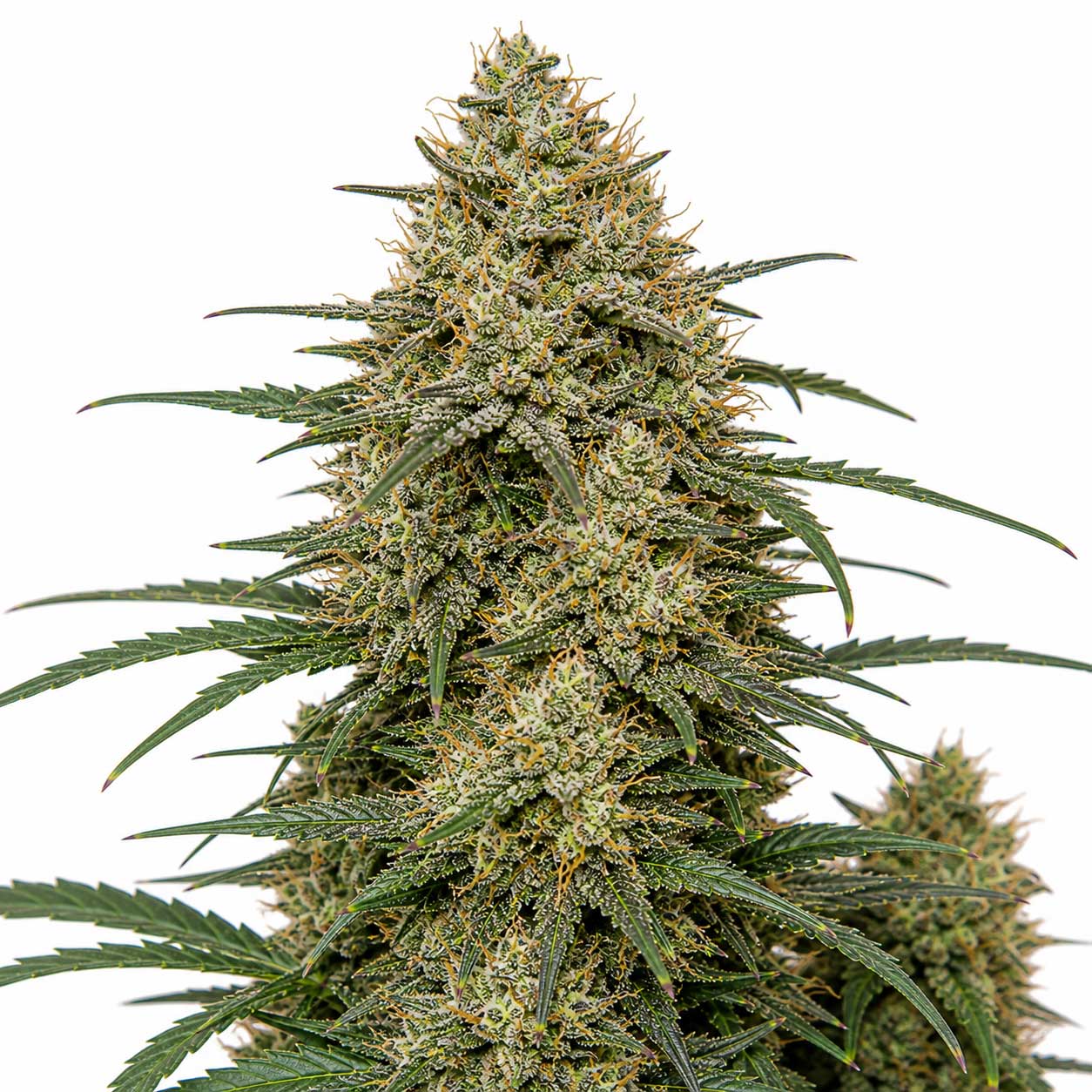
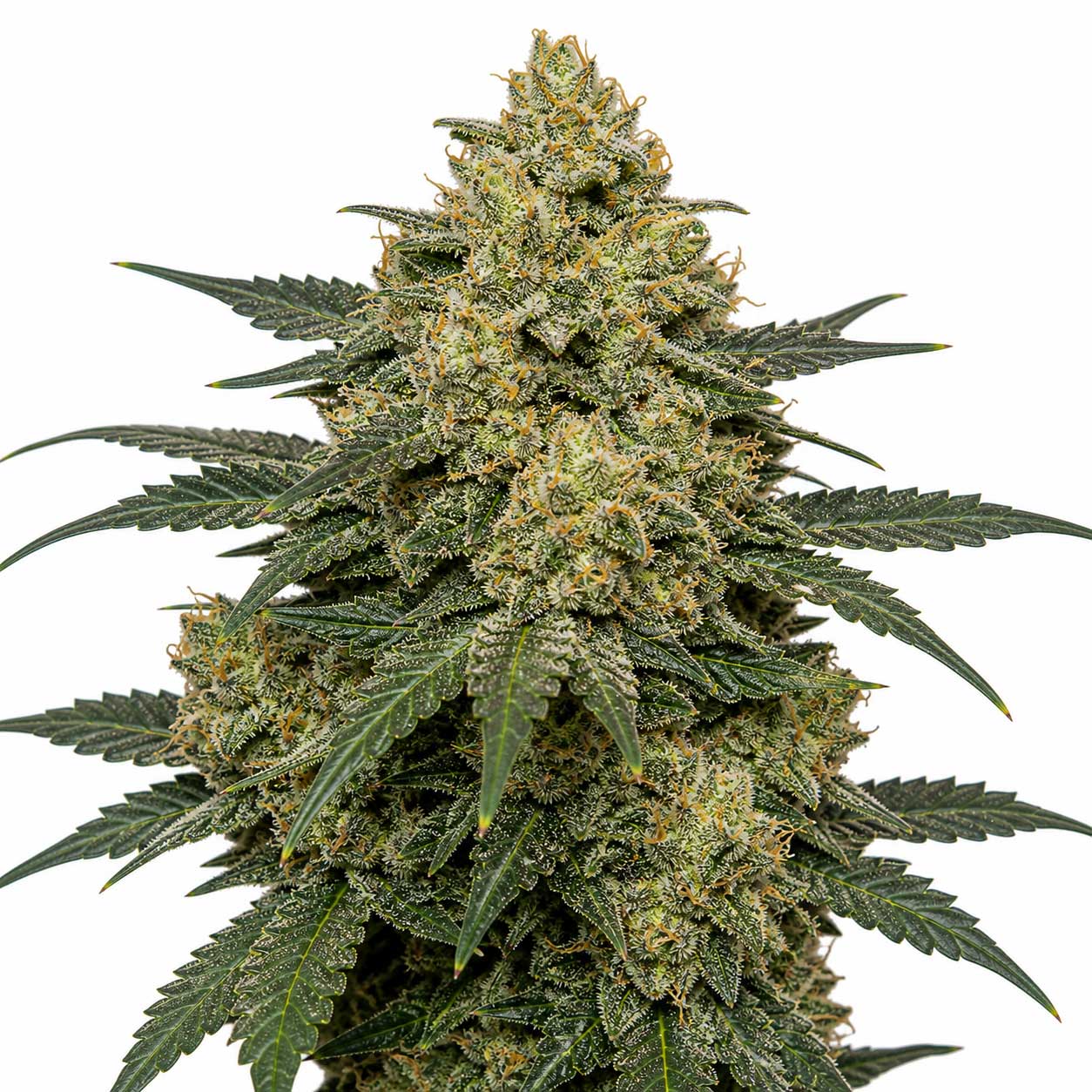
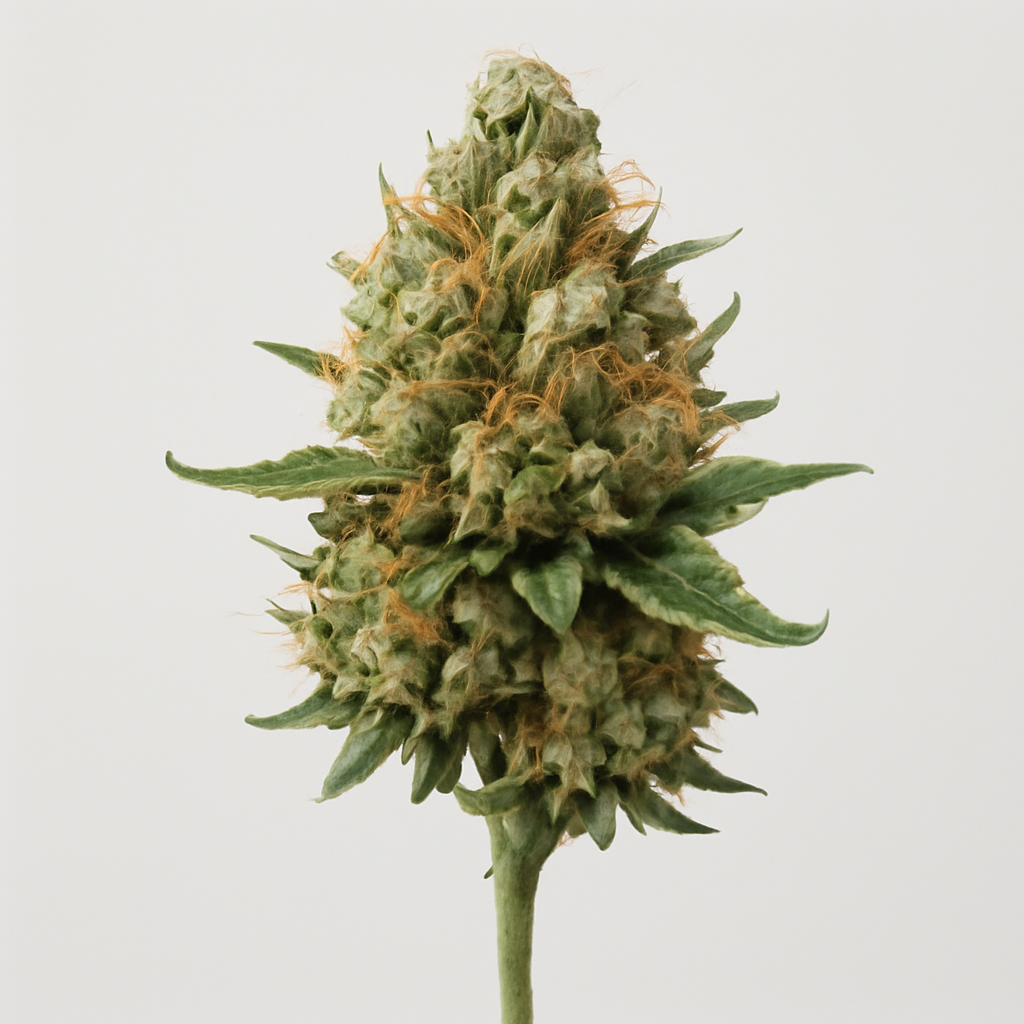
The buds are usually dense and rounded, with a tight floral structure that reflects its indica-leaning growth pattern. Color often ranges from medium green to deeper olive, while the surface can look unusually pale because of the thick trichome layer that coats bracts, sugar leaves, and small stem points.
Orange pistils are common, though they may sit beneath the resin rather than dominate the visual field. In some rooms, cooler nighttime temperatures can coax subtle lavender or plum tones, but the defining trait remains the heavy frost rather than dramatic coloration.
Effects & Use-Cases (Reported)
- Commonly reported effects: calming, body-heavy, mentally quieting, sedating at higher doses, evening-friendly
- Use-case context: often selected for late-day sessions, low-key downtime, and users who prefer a heavier finish without a bright sativa lift
- Body character: usually described as warm, weighty, and progressively settling rather than sharp or racy
- Note: These observations are anecdotal and do not constitute medical claims.
Observational Note: The White tends to come on with a steady, unhurried profile that makes it feel more like a downward shift than a sudden wave. Many consumers describe the experience as clear enough at first, then gradually more physically grounded as the session develops.
Potency Note: With THC commonly landing in the mid-to-high range, dose control matters. At lower amounts it may read as composed and relaxing, while larger portions can push the experience into a notably heavier lane.
Aroma & Flavor Profile
- Aroma: earthy, pungent, pine, spicy, diesel-leaning
- Flavor: earthy, peppery, hashy, woodsy, light citrus
- Aftertaste: lingering pine resin with a dry, herbal finish
- Terpene associations: commonly aligned with Myrcene, Pinene, and Caryophyllene.
Search interest around The White usually centers on its frosty appearance and old-school hashy flavor profile, and that is where it delivers most consistently. The aroma opens with soil, pine sap, and pepper, then settles into a resinous finish that feels closer to classic Kush material than to candy or fruit-heavy modern hybrids.
Tested Cannabinoid & Terpene Ranges
| Compound | Typical Range* | Notes |
|---|---|---|
| Δ⁹-THC | ~18–24% | Often tested as a strong THC-forward cultivar with little buffer from CBD |
| CBD | <0.5% | Typically minimal and not a defining part of the profile |
| Myrcene | ~0.20–0.60% | Commonly linked to the earthy, ripe, and settling aromatic layer |
| Pinene | ~0.10–0.35% | Supports the pine-resin note that shows up in both smell and finish |
| Caryophyllene | ~0.15–0.45% | Often associated with the peppery, hashy edge in the aroma |
*Ranges are estimates and may vary by phenotype, harvest timing, and testing methods.
Cultivation Notes
- Light Cycle: 12/12 during bloom indoors
- Humidity: Keep moderate to low in flower to protect dense, resinous buds
- Stretch: Usually modest, with a compact structure that is easier to manage than lankier hybrids
- Training: Responds well to topping, low-stress training, and canopy leveling
- Odor Control: Strong aroma can become noticeable quickly, so filtration is advisable
- Harvest Window: Approximately 8–9 weeks indoors
The White is not usually a difficult plant, but it does reward disciplined environmental control. Its dense flowers and heavy resin load make airflow, humidity management, and careful drying especially important if the goal is to preserve the cultivar’s signature frosty finish.
Grower Notes (Week-by-Week Snapshot)
- Weeks 1–3: Vegetative structure tightens quickly, with short internodes and sturdy lateral growth after topping or training.
- Weeks 4–5: Flower sites begin stacking into compact clusters, and odor becomes more pronounced as resin production starts to accelerate.
- Weeks 6–8: Buds pack on weight, trichomes thicken visibly, and the canopy benefits from steady airflow to keep inner flowers clean and dry.
- Weeks 9–10: Final ripening focuses on resin maturity and calyx swelling; finish timing may vary slightly depending on phenotype and desired effect profile.
Genetic Lineage
The White’s lineage is not fixed in the public record, which is part of its legacy appeal and part of the challenge in documenting it precisely. It is often discussed as a Triangle Kush-derived selection paired with an unidentified partner, and that general Kush influence helps explain the dense flower structure, heavy resin output, and earthy-spice character associated with the cultivar.
What matters most for identification is not a neat seed-bank pedigree but the repeatable expression of trichome coverage and compact, resinous buds. In modern breeding and pheno-hunting conversations, The White remains relevant as a reference point for frost, extraction value, and classic hybrid structure.
Research Insights
The White occupies an important place in cannabis search behavior because it is often used as a benchmark for trichome density and resin-rich flower. In breeding conversations, it also sits near the roots of several frost-forward lines that followed, making it useful as a reference cultivar when comparing modern selections that emphasize visual resin coverage and old-school Kush character.
Frequently Asked Questions
Is The White a clone-only strain?
It is most often discussed as a clone-only or elite-cut cultivar rather than a cleanly documented seed line. That history is one reason its exact parentage is still described cautiously.
What does The White taste like?
Its flavor is usually earthy and hash-forward, with pepper, pine, and woodsy notes on the finish. Some phenotypes may show a faint citrus edge, but the profile is generally more resinous than sweet.
How strong is The White?
Potency is commonly reported in the mid-to-high THC range. The experience can feel relatively calm at smaller doses and significantly heavier as intake increases.
Is The White hard to grow?
It is often considered moderate in difficulty. The main challenges are humidity control, odor management, and maintaining clean airflow around dense buds.
What makes The White visually distinctive?
Its trademark feature is the thick trichome coating that gives mature buds a pale, frosted appearance. Dense structure, orange pistils, and subtle green-to-olive coloration complete the look.
Educational Disclaimer: This page is provided strictly for scientific and horticultural reference. Cannabis cultivation, possession, and use are regulated by local laws. This content does not promote illegal activity or constitute medical advice. Always comply with applicable regulations in your jurisdiction.
Rate and review this strain
Ratings and reviews are accepted only from signed-in Google accounts.
Sign in with Google to leave a rating and written review.
Latest Reviews
0 reviewsNo reviews yet. Be the first Google user to rate and review this strain.