Blueberry Caviar (Cannabis Strain) — Strainpedia
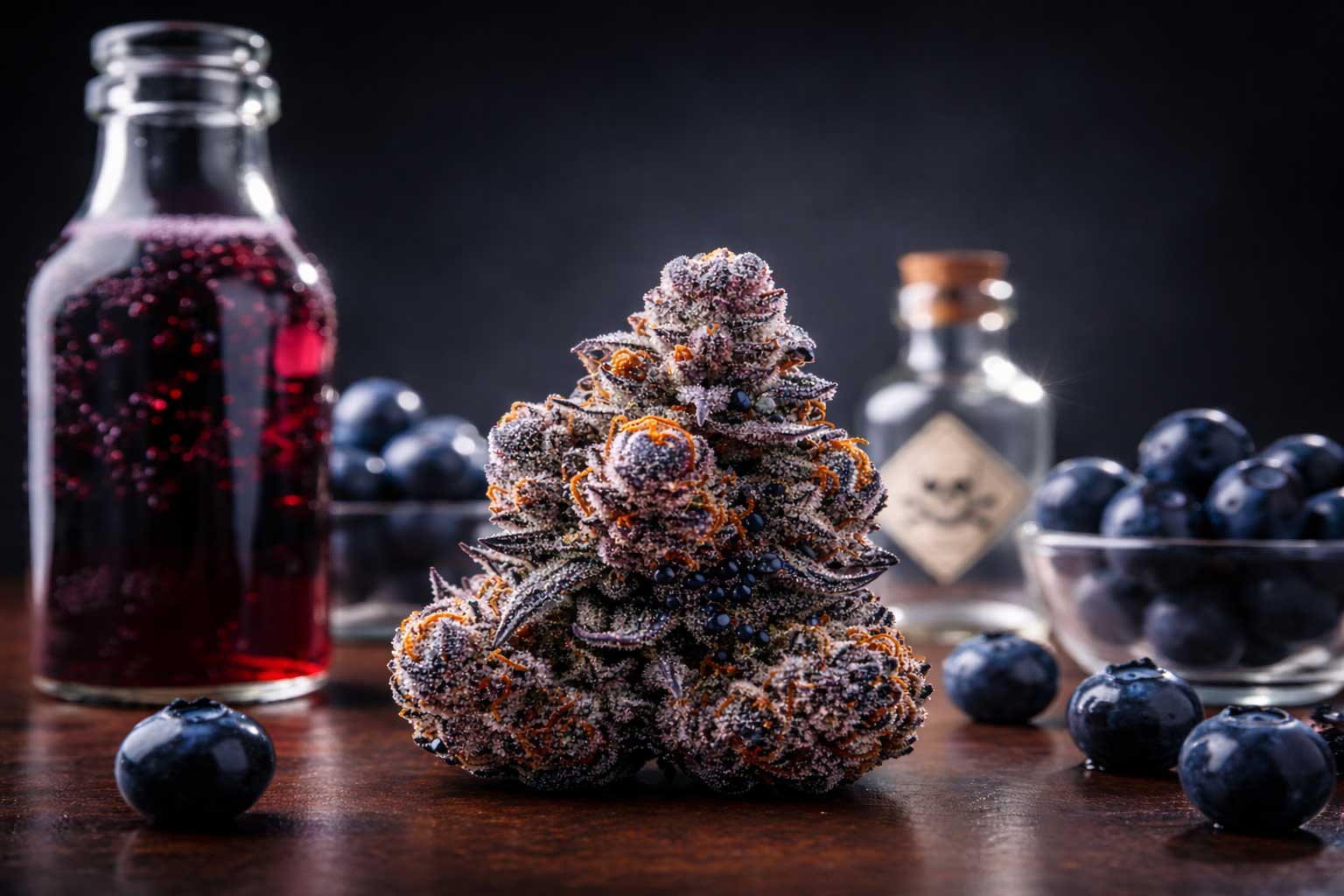
Blueberry Caviar is a premium Sativa-Dominant Hybrid cultivar developed by the award-winning Ridgeline Farms in Humboldt County (in collaboration with Cookies). Emerging as one of the most sensory-focused releases of 2026, this strain has become a flagship of the modern “Caviar” trend—prioritizing loud aromatics, complex fruit terpenes, and elite bag appeal over potency alone (though it still tests extremely high). Blueberry Caviar is frequently referenced in horticultural and terpene education for its blueberry-cream sweetness, tart gas finish, and frosty purple flower expression. The information below is intended strictly for scientific and botanical reference.
Quick Facts
| Genetics | Grape Gas x Lantz (selected Blueberry-forward phenotype) |
|---|---|
| Breeder | Ridgeline Farms (Humboldt County) x Cookies (collaboration) |
| Variety | Sativa-Dominant Hybrid |
| Flowering Time | 8–9 weeks (approx. 55–65 days indoors) |
| Yield Potential | High (up to ~500 g/m² indoors) |
| Plant Height | Medium to Tall; responsive to training |
| Climate Preference | Controlled Indoor / Temperate Outdoor (prefers stable humidity) |
| Difficulty | Intermediate (dense canopy requires airflow management) |
Scientific & Botanical Overview
Blueberry Caviar is a specific sativa-leaning selection from the Grape Gas x Lantz genetic family tree. Plants are known for producing spade-shaped, resin-heavy colas with a dense structure and extremely sticky trichome coverage. The buds often display “blueberry-purple” tones beneath a creamy white frost, especially when late-flower temperatures are reduced. This cultivar is frequently described as “loud,” meaning its aroma can permeate sealed packaging due to the intensity of its terpene expression. It is considered a top-tier boutique flower and also a strong candidate for premium extraction due to its oily resin output and terpene retention.
Effects & Use-Cases (Reported)
- Commonly reported effects: rapid mood lift, euphoric mental energy, creativity, sociability, and an introspective cerebral “rev-up.”
- Mid-to-late experience: transitions into a warm body glow that feels cozy and heavy without immediate couch-lock.
- Use-case context: creative sessions, social gatherings, late-night conversations, and “flavor-chasing” sessions where taste is prioritized.
- Note: These are observational reports, not medical claims; outcomes are not guaranteed.
Aroma & Flavors
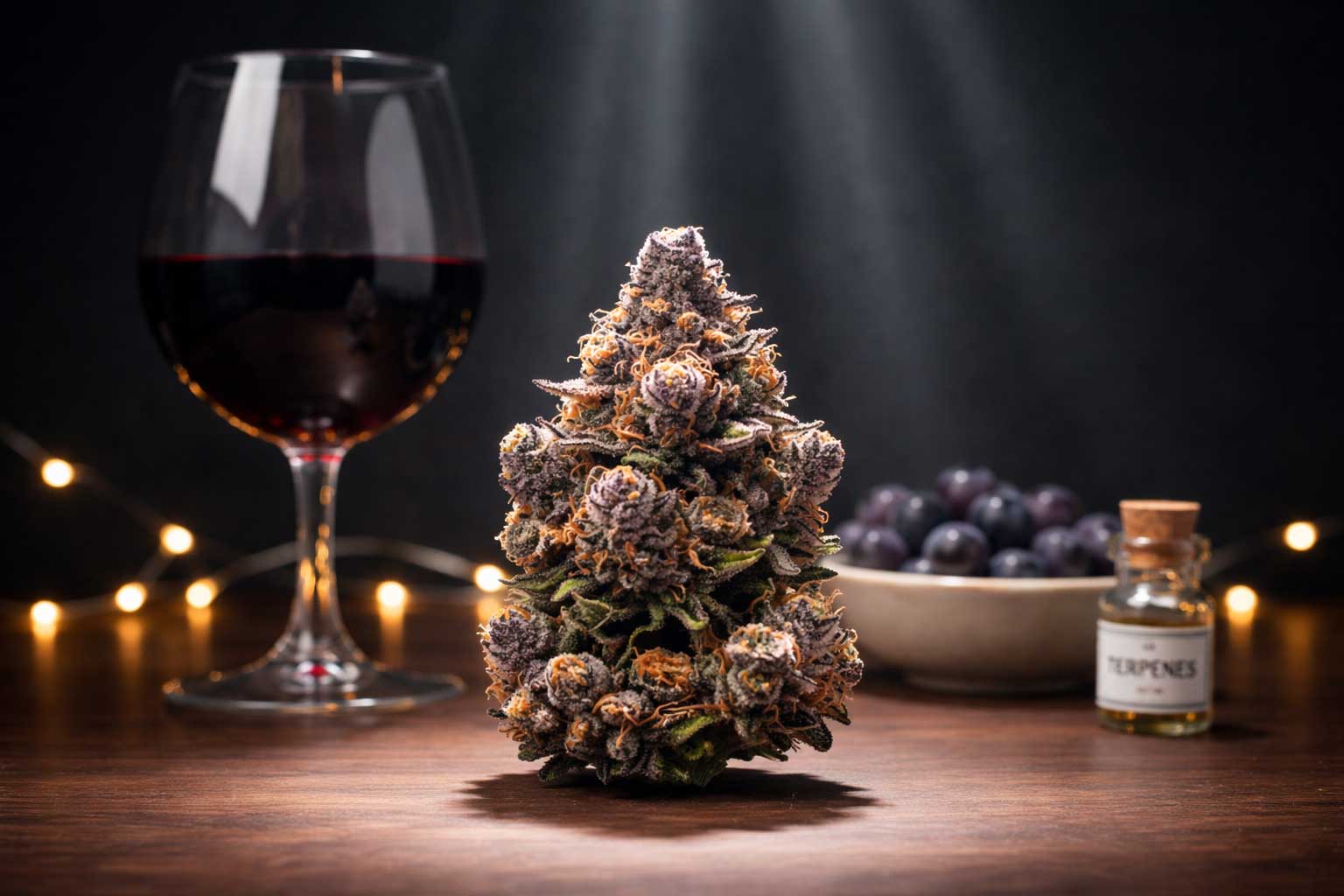
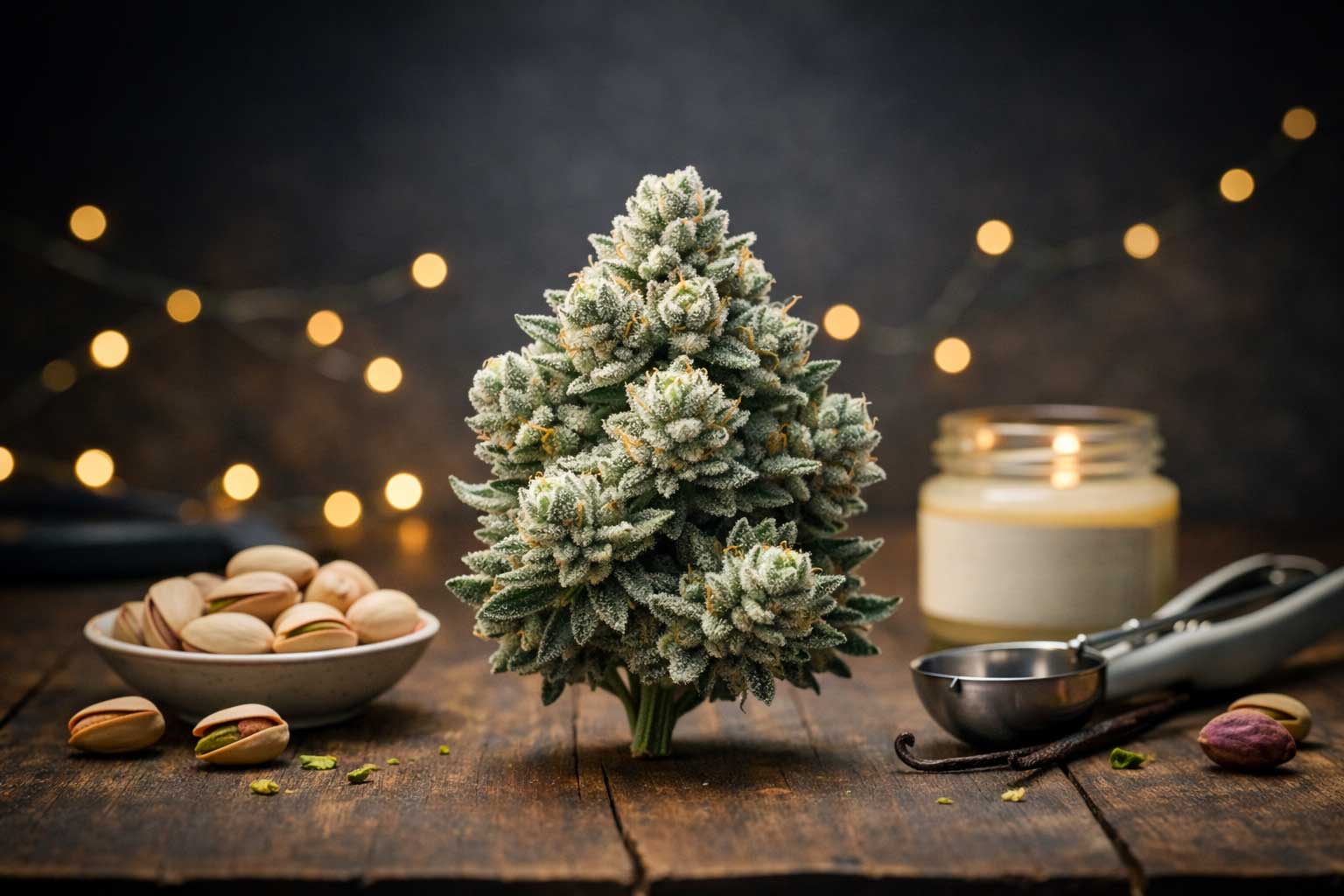
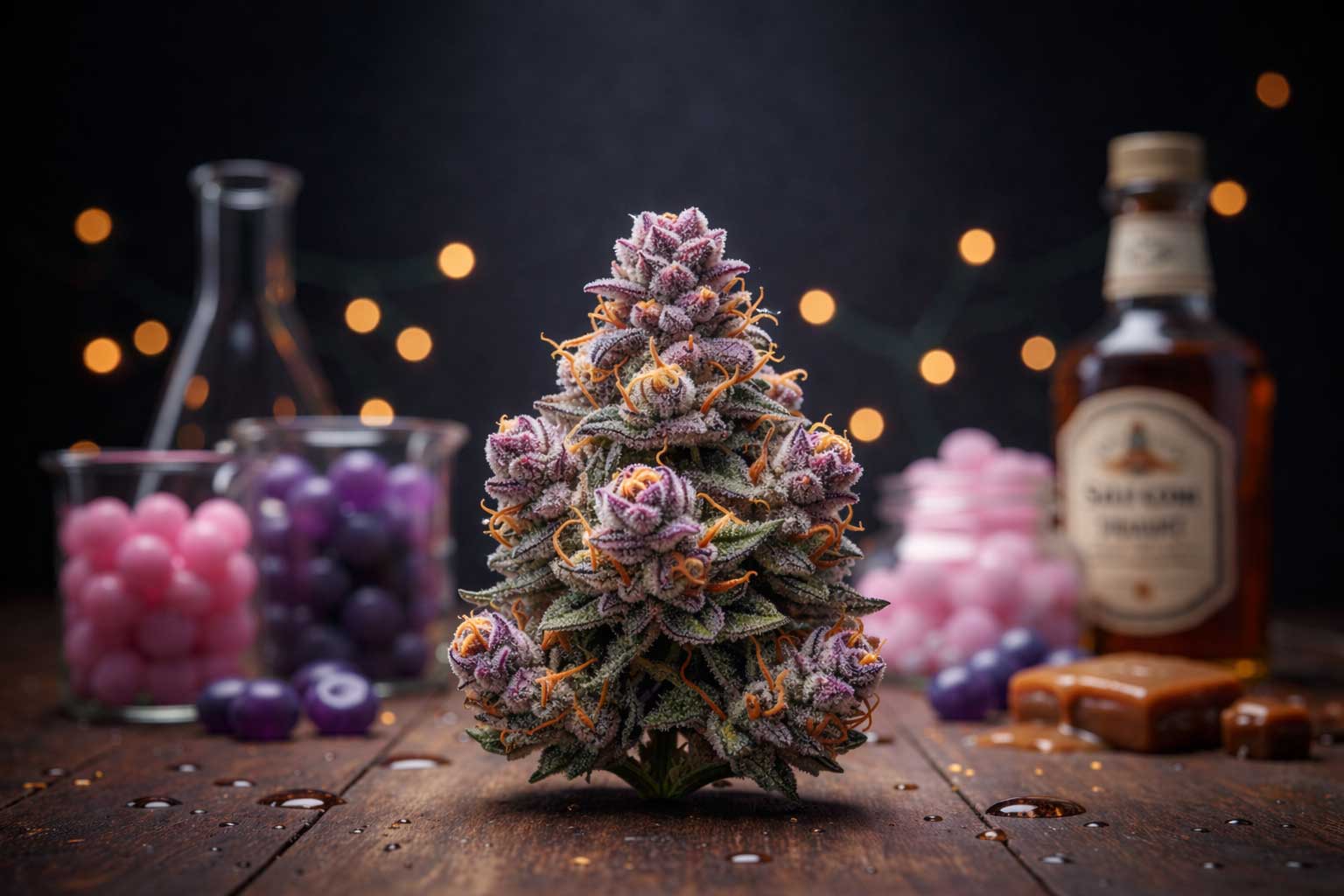
- Aroma: extremely loud blueberry cream and sweet lime upfront, followed by a sharp tart gas finish.
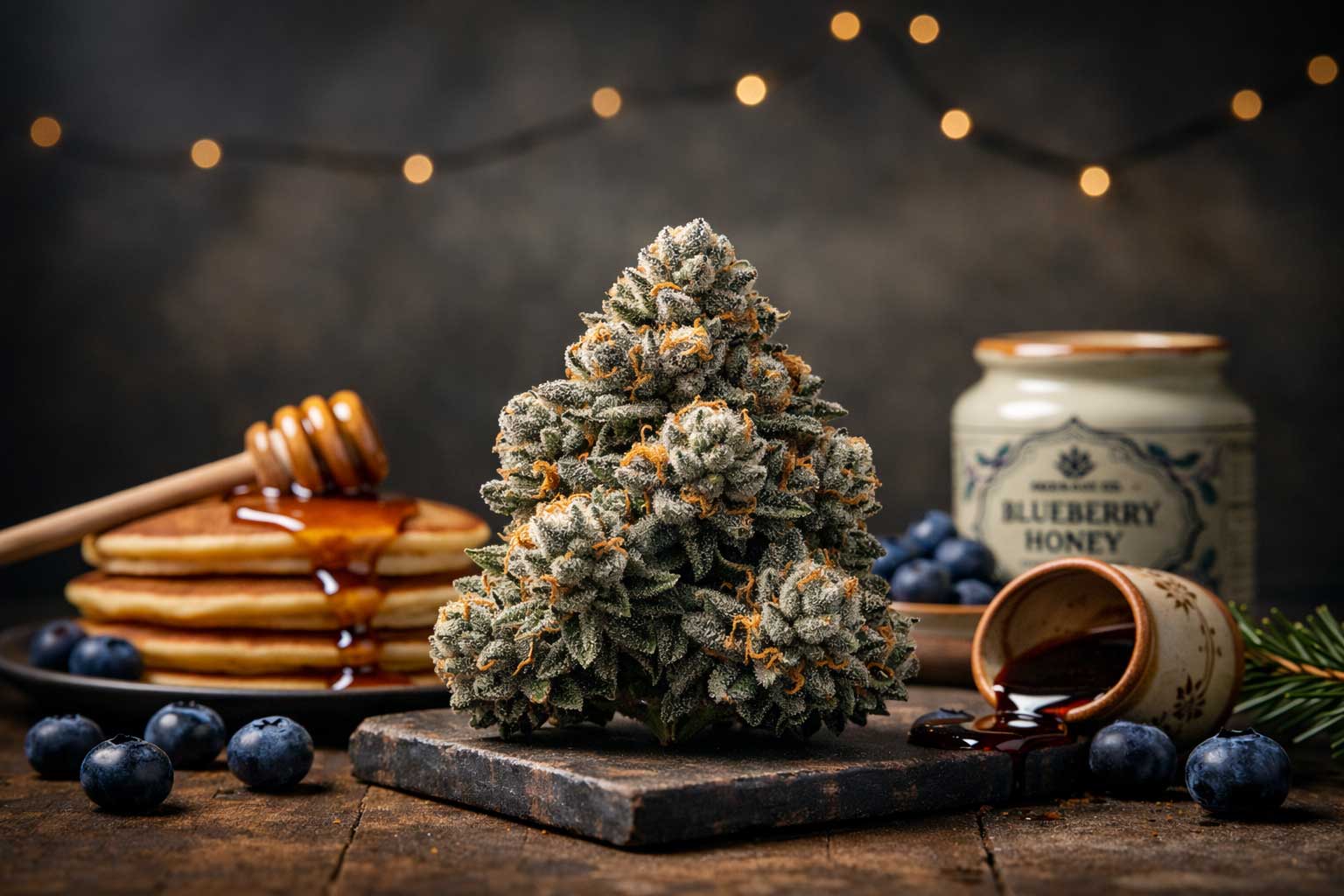
- Secondary notes: fresh-baked blueberry muffins, oatmeal cookies, and grape-fuel undertones.
- Flavor: inhale delivers a rich “blueberry molasses” sweetness, while the exhale leaves a velvety creamy fuel coating with sweet grape undertones.
- Terpene associations: limonene, myrcene, caryophyllene, with notable terpinolene presence.
Tested Cannabinoid & Terpene Ranges
| Compound | Typical Range* | Notes |
|---|---|---|
| Δ⁹-THC | ~30–32% (34% reported) | High potency; frequently selected by experienced consumers. |
| CBD | ~0–1% | Typically present only in trace levels. |
| Limonene | High | Associated with sweet citrus brightness and mood lift. |
| Myrcene | Moderate | Associated with body relaxation and sweet “bakery” depth. |
| Caryophyllene | Moderate | Associated with spicy fuel edge and grounding effects. |
| Terpinolene | Notable | Associated with cerebral clarity and “daytime sativa” character. |
| Terpene Profile | Blueberry Cream / Tart Gas | Blueberry muffin sweetness with creamy fuel and sharp grape-gas finish. |
*Ranges are literature- and lab-report-informed references and can differ with environment, harvest timing, cultivation conditions, post-harvest handling, and analytical methods.
Cultivation Notes
- Light Cycle: 18/6 vegetative; 12/12 flowering
- Flowering Time: typically 55–65 days indoors
- Humidity Targets: 40–50% during late flower due to heavy resin density
- Airflow: essential; sticky buds and dense canopy require strong circulation to prevent moisture issues
- Training: responds exceptionally well to LST and topping to control canopy and increase cola count
- Color Expression Tip: late-flower temperature drops (weeks 7–8) can enhance the signature blue/purple coloration
- Harvest Window: late September to early October outdoors (Northern Hemisphere)
Grower Notes (Week-by-Week Snapshot)
- Weeks 1–2 (Transition/Stretch): moderate stretch; begin canopy shaping early to prevent uneven tops.
- Weeks 3–4: heavy flower set begins; remove lower weak growth; aroma becomes sweet-fruity and increasingly loud.
- Weeks 5–6: resin output increases aggressively; buds thicken and trichomes become oily and sticky.
- Weeks 7–8: peak terpene expression; implement slight temperature drop to maximize purple/blue hues and preserve volatile aromatics.
- Weeks 8–9: ripening phase; monitor humidity closely; harvest based on trichome maturity for balanced energy and body glow.
- Post-Harvest: Dry 18–20 °C, 55–60% RH for maximum terpene retention and smooth blueberry-gas finish.
Timelines shift with phenotype and environment; prioritize trichome maturity and plant health markers over calendar counts.
Genetic Lineage
Blueberry Caviar is a sativa-leaning phenotype selected from the Grape Gas x Lantz genetic family. Grape Gas contributes high-octane fuel intensity and medicinal grape undertones, while Lantz (Ridgeline’s award-winning Green Lantern x Ridgeline Runtz cross) adds candy sweetness, extreme trichome density, and the modern boutique “dessert-gas” structure. Unlike its sibling Blackberry Caviar, which leans into deeper sedation, the Blueberry cut was chosen specifically for brighter terpene clarity and energetic cerebral expression.
Research Insights
Blueberry Caviar is frequently cited as a 2026 benchmark cultivar for terpene-driven sensory breeding. The strain’s reputation for “loudness” suggests high volatile terpene retention, with limonene contributing sweet citrus lift and a bright aromatic top-note. Terpinolene is commonly associated with clarity and energetic sativa effects, helping explain the cultivar’s rapid mental uplift even at high THC levels. Meanwhile, myrcene and caryophyllene likely provide the creamy fuel depth and body warmth that appears later in the experience. This cultivar provides a strong example of the entourage effect, where flavor intensity and psychoactive character are shaped by terpene synergy rather than cannabinoid percentage alone.
Frequently Asked Questions
Is Blueberry Caviar an Indica or Sativa?
Blueberry Caviar is classified as a Sativa-Dominant Hybrid, valued for its cerebral energy and creative uplift paired with a smooth body glow.
What does Blueberry Caviar smell and taste like?
It is known for loud blueberry cream and sweet lime aroma, followed by a tart gas finish. The flavor resembles blueberry molasses with creamy grape-fuel on the exhale.
How strong is Blueberry Caviar?
Blueberry Caviar commonly tests around 30–32% THC, with some premium batches reported up to 34% in 2026.
How long does Blueberry Caviar take to flower?
It typically finishes in 8–9 weeks indoors (about 55–65 days).
Is Blueberry Caviar good for cultivation?
Yes. It is considered an Intermediate cultivar due to its dense canopy and resin-heavy buds, but it rewards proper airflow and training with strong yields and exceptional bag appeal.
Educational Disclaimer: This page is provided for scientific and horticultural reference only and does not constitute medical or promotional advice. Cannabis cultivation, possession, and use are regulated by local laws. Always comply with applicable legislation in your region.