VV OG (Cannabis Strain)
VV OG, often associated with Valley OG or select V-Cut OG expressions, is an elite indica-dominant hybrid cannabis cultivar representing a refined, high-potency branch of the OG Kush family. It is best known for its sharp fuel-forward aroma, heavy resin production, and dense, hard-finished flowers that deliver a classic “Ocean Grown” profile of gas, citrus, and deep earthy pine.
While its exact parentage is sometimes debated among growers, VV OG is widely described as a stabilized OG selection connected to SFV OG, Face Off OG, or a similar Kush-heavy breeding direction. The cultivar is valued for preserving the raw power and terpene weight of older OG lines while offering a somewhat sturdier and more commercially workable plant structure. The information below is provided strictly for scientific and botanical reference.
Quick Facts
| Feature | Details |
|---|---|
| Genetics | Often cited as a select SFV OG phenotype or an OG Kush-derived stabilized cut |
| Variety | Indica-dominant hybrid |
| THC Range | 24%–27%+, with stronger elite cuts occasionally testing higher |
| Flowering Time | 8–9 weeks (approximately 56–63 days indoors) |
| Yield Class | Moderate to high; often heavier than older lankier OG cuts when properly managed |
| Plant Structure | Medium-height Kush frame with tighter node spacing than some classic OGs and dense spade-shaped colas |
| Canopy Behavior | Vigorous vertical growth with strong stretch response; performs well under topping and multi-tier trellis support |
| Climate Preference | Warm, dry environments with strict late-flower humidity control |
| Grower Difficulty | Intermediate; requires disciplined airflow, nutrition, and canopy management |
Scientific & Botanical Overview
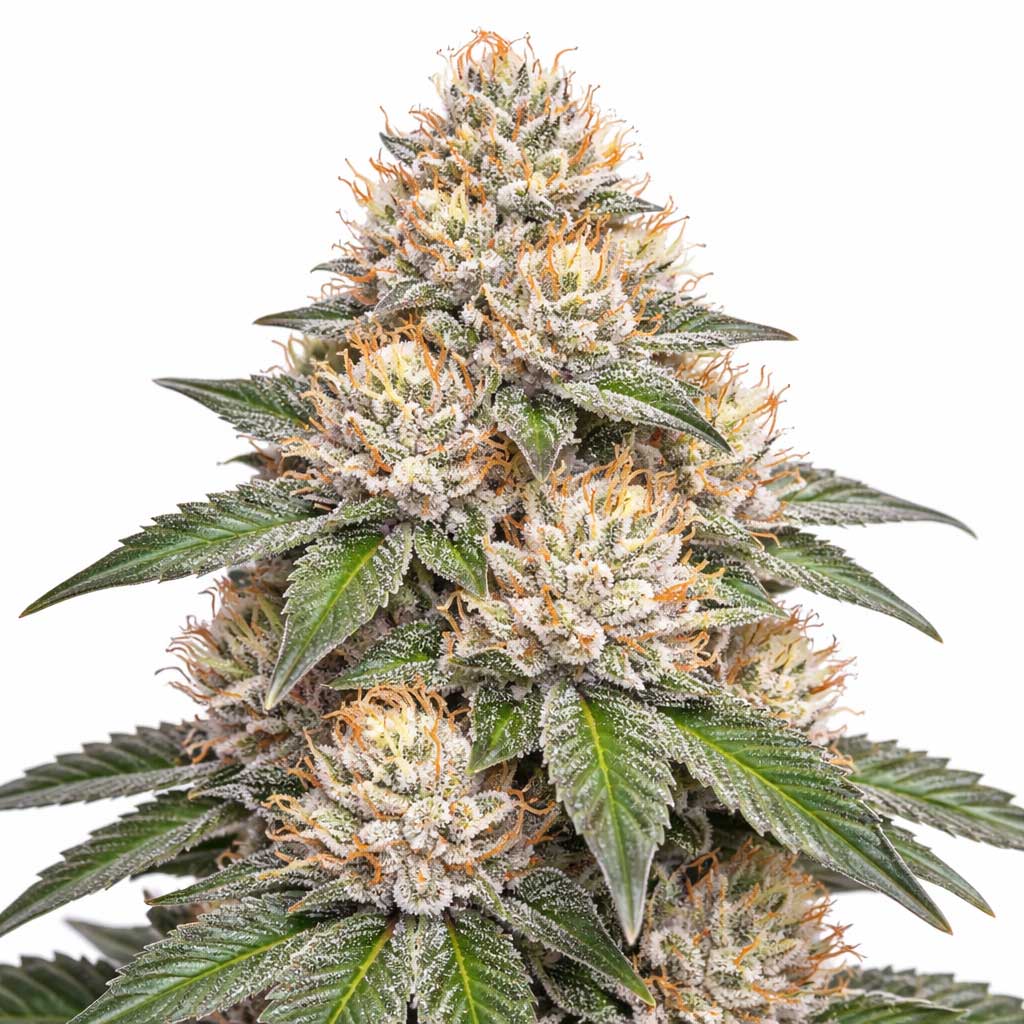
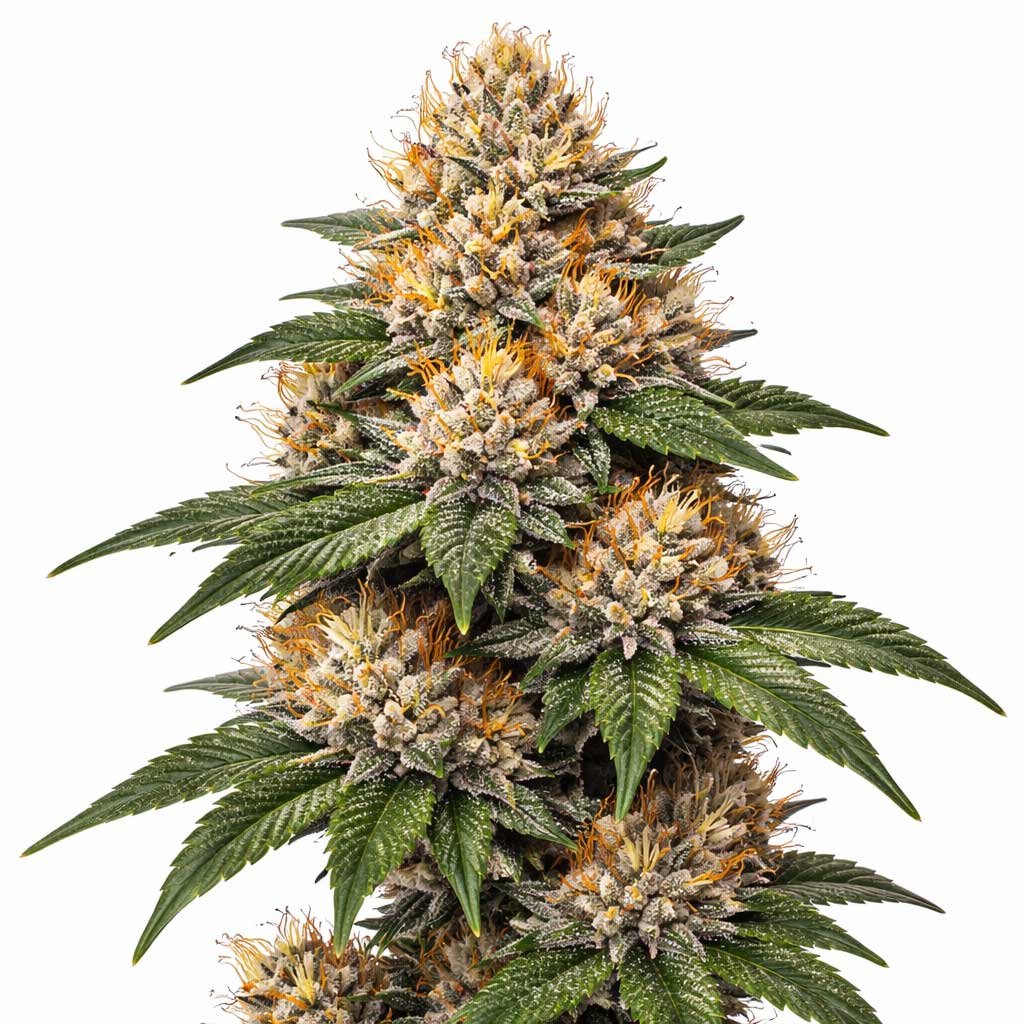
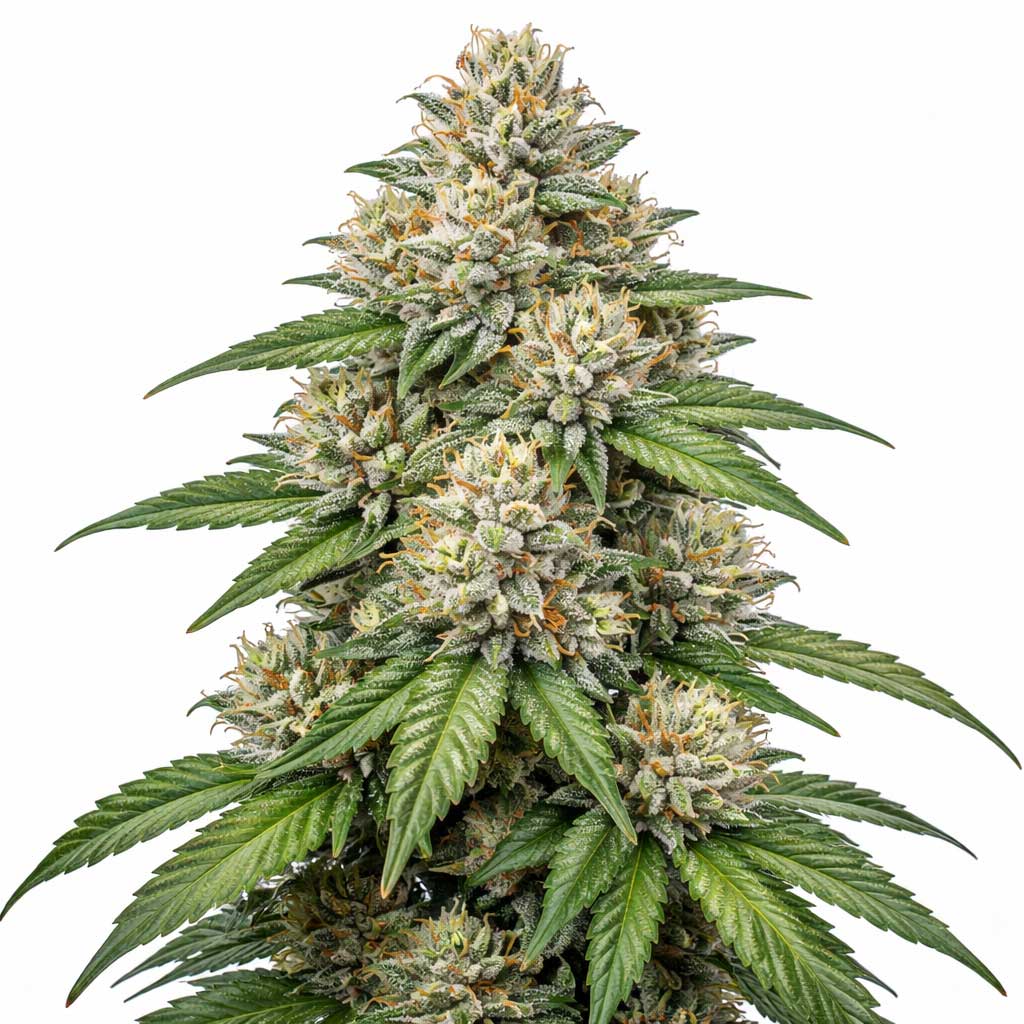
VV OG expresses a classic Kush morphology, producing dark waxy fan leaves, dense resin-rich flowers, and a heavily frosted finish that often extends well onto the sugar leaves. The buds are usually mid-sized but tightly packed, with lime-green flower tissue, bright orange pistils, and a sticky, greasy surface that signals a terpene-rich OG expression rather than a dry, sandy finish.
From a structural standpoint, VV OG is more manageable than some older lankier OG cuts while still preserving the vigorous verticality associated with the family. Plants generally offer better light penetration than fully bushy indica types, though they still benefit from lower-canopy cleanup and strong internal airflow once flowers begin hardening.

Botanically, VV OG is notable for its strong terpene production and classic Kush balance of gas, citrus, spice, and earth. It is often favored by growers and extractors looking for a cultivar that holds true to the traditional OG sensory profile while delivering improved density and room performance.
Effects & Use-Cases (Reported)
Commonly reported effects: a sharp euphoric head rush followed by heavy body relaxation, physical grounding, and an increasingly sedative nighttime finish.
Use-case context: VV OG is most commonly associated with evening or nighttime use, physical decompression, stress-heavy days, and sessions where deep body relaxation is the main goal. Many users describe it as potent enough to feel overwhelming for inexperienced consumers, while regular OG users often value it for its direct, forceful effect profile.
Note: These observations are anecdotal reports and should not be interpreted as medical claims.
Aroma & Flavors
Aroma: Pungent diesel gas, wet earth, sharp pine, lemon zest, and a lingering spicy Kush finish.
Flavor: The inhale is thick and fuel-heavy with a distinct lemon-citrus bite, while the exhale leans earthy, woody, peppery, and deeply resinous.
Terpene associations: Myrcene, Limonene, and Caryophyllene are commonly associated with its classic gas-pine-citrus profile.
Tested Cannabinoid & Terpene Ranges
| Compound | Typical Range* | Grower-Oriented Interpretation |
|---|---|---|
| Δ9-THC | 24%–27% | Consistently strong potency that supports premium market positioning and a heavy nighttime profile |
| CBG | 0.5%–1.2% | Adds minor-cannabinoid depth and may contribute to the cultivar’s fuller body-oriented effect |
| Myrcene | Often dominant | Helps drive the heavy earthy base and the cultivar’s stronger couch-settling physical feel |
| Limonene | Commonly significant | Provides the lemon-fuel lift and helps sharpen the early cerebral onset |
| Caryophyllene | Commonly significant | Reinforces the peppery gas structure and gives the profile its spicy Kush backbone |
*Ranges vary by phenotype, cultivation environment, harvest timing, and cure protocol. VV OG is best understood as a potent, terpene-rich OG hybrid that rewards environmental precision and proper finishing.

Cultivation Notes
- Vegetative Vigor: High; plants tend to reach upward quickly and respond well to early topping and lateral shaping.
- Light Cycle: 18/6 vegetative and 12/12 flowering.
- Humidity Targets: Around 60% RH in veg and 45%–50% in flower; dense OG flowers benefit from disciplined late-bloom moisture control.
- Nutrition: Often performs well on a moderately strong feed program, with reliable calcium and magnesium support during active flower development.
- EC / Feeding Sensitivity: Moderate; stronger bloom feeding can be tolerated, but late excess can reduce finish quality and smoke cleanliness.
- Training: SCROG, topping, super-cropping, and lower-canopy cleanup are all effective for controlling stretch and improving room efficiency.
- Support Needs: High; dense resin-heavy colas commonly need trellis support or stakes to prevent branch collapse late in flower.
- Mold / Moisture Risk: Moderate; like many dense OGs, stagnant air and humidity spikes can create internal moisture issues.
- Finish Timing: Many growers prefer allowing a full finish to build the heaviest VV OG physical profile, especially when aiming for stronger nighttime character.
- Harvest Window: Commonly around day 60–63 indoors, depending on phenotype and target effect.
Grower Notes (Week-by-Week Snapshot)
- Weeks 1–2 (Foundation): Strong root expansion and early vertical momentum are common. LST or topping helps widen the footprint before stretch accelerates.
- Weeks 3–4 (Canopy Set): The main stretch phase begins, and plants can rapidly gain height. Lower-canopy cleanup improves airflow and keeps the structure more efficient.
- Weeks 5–6 (Resin Build): Trichomes appear early and heavily, and the classic gas-forward OG aroma starts becoming dominant in the room.
- Weeks 7–8 (Density & Frost): Buds harden noticeably, resin turns increasingly milky, and support needs become more obvious as flowers gain mass.
- Weeks 8–9 (Finish Window): Final ripening brings stronger pine-gas depth, heavier body effect expression, and the fully developed dense Kush finish VV OG is known for.
- Post-Harvest: A slow cool dry and patient cure help preserve the lemon-pine top notes while allowing the deeper earth and fuel layers to settle in properly.
Genetic Lineage
VV OG is generally regarded as a master selection within the broader OG Kush family and is most often linked to SFV OG, Face Off OG, or a similar Kush-dominant stabilization path. While exact lineage details can vary by source and cut, the cultivar consistently presents as a gas-driven OG expression refined for stronger performance and denser flower structure.
This heritage helps explain its combination of sharp citrus fuel, vigorous stretch, resin-rich buds, and heavy physical effects. It feels unmistakably OG, but often with slightly more polish and grow-room stability than older less predictable cuts.
Research Insights
VV OG remains relevant because it represents a clear example of how classic Kush genetics continue to evolve without abandoning their original identity. Rather than shifting into candy-driven modernity, it preserves the traditional gas-pine-earth profile that made OG cultivars so influential in the first place.
From a grower’s perspective, VV OG is especially attractive because it combines heritage-terpene authenticity with improved density, stronger resin output, and better commercial flower presentation than many older OG expressions. That makes it useful both as a finished product and as a potential building block in gas-focused breeding work.
Phenotype variation still matters. Some cuts may lean harder into lemon-fuel sharpness, while others present more earthy pine, pepper, or raw greasy gas. That range is part of what keeps VV OG highly regarded among serious OG enthusiasts.
Frequently Asked Questions
Is VV OG an indica or sativa strain?
VV OG is generally described as an indica-dominant hybrid with strong body-heavy nighttime effects.
What does VV OG stand for?
It is often associated with Valley OG or specific V-Cut-style selections, though usage can vary depending on the source or cut.
Is VV OG beginner-friendly to grow?
It is usually better suited to intermediate growers because its stretch, density, and humidity sensitivity require more disciplined control in flower.
What does VV OG smell like?
It is commonly described as diesel fuel, wet earth, sharp pine, lemon zest, and peppery Kush spice.
What makes VV OG stand out?
Its standout traits include classic OG gas, dense resin-heavy buds, strong lemon-pine depth, and a heavier more polished Kush finish than many older cuts.
Educational Disclaimer
This page is provided for scientific and horticultural reference only. Cannabis laws vary by jurisdiction; always ensure compliance with local regulations.
Rate and review this strain
Ratings and reviews are accepted only from signed-in Google accounts.
Sign in with Google to leave a rating and written review.
Latest Reviews
0 reviewsNo reviews yet. Be the first Google user to rate and review this strain.