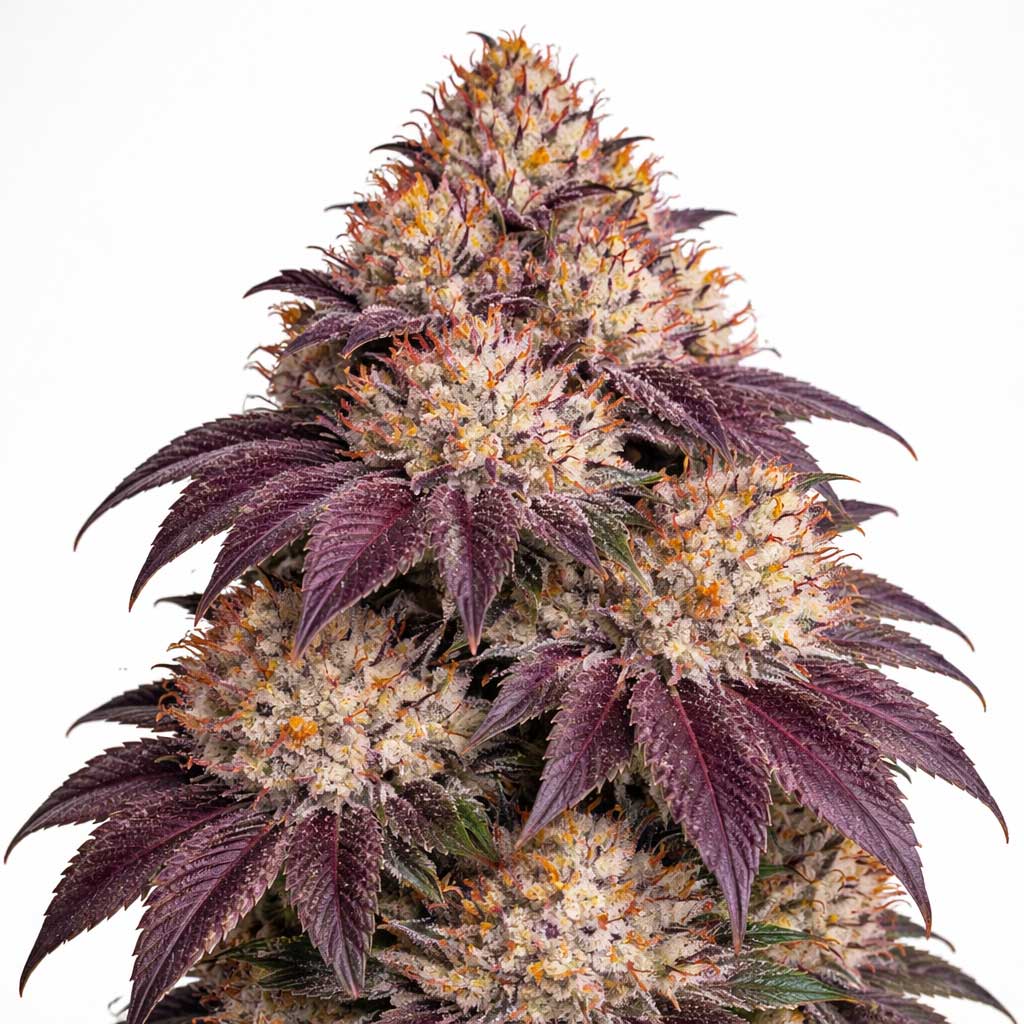
Cherry P (Cannabis Strain)
Cherry P is a high-potency, modern hybrid cannabis cultivar often cited as an indica-dominant hybrid with an approximate 60% indica / 40% sativa balance. Commonly described as a cross between Cherry Pie and P-Star, it has become a staple within the broader Cherry family of genetics for its dense flowers, syrupy resin, and deeply relaxing but still functional effect profile.
Recognized for its deep red sensory identity, tart cherry sweetness, and heavy earthy-skunky undertones, Cherry P is frequently associated with “heavy-duty” relaxation that stops short of full sedation. The information below is provided strictly for scientific and botanical reference.
Quick Facts
| Feature | Details |
|---|---|
| Genetics | Cherry Pie × P-Star |
| Variety | Indica-dominant hybrid |
| THC Range | 22%–26% |
| Flowering Time | 8–9 weeks (56–63 days indoors) |
| Yield Potential | 450–500 g/m² (Moderate) |
| Primary Terpenes | Myrcene, Caryophyllene, Limonene |
| Vibe | Comfortingly potent relaxation with a cushioned mental ease |
Scientific & Botanical Overview
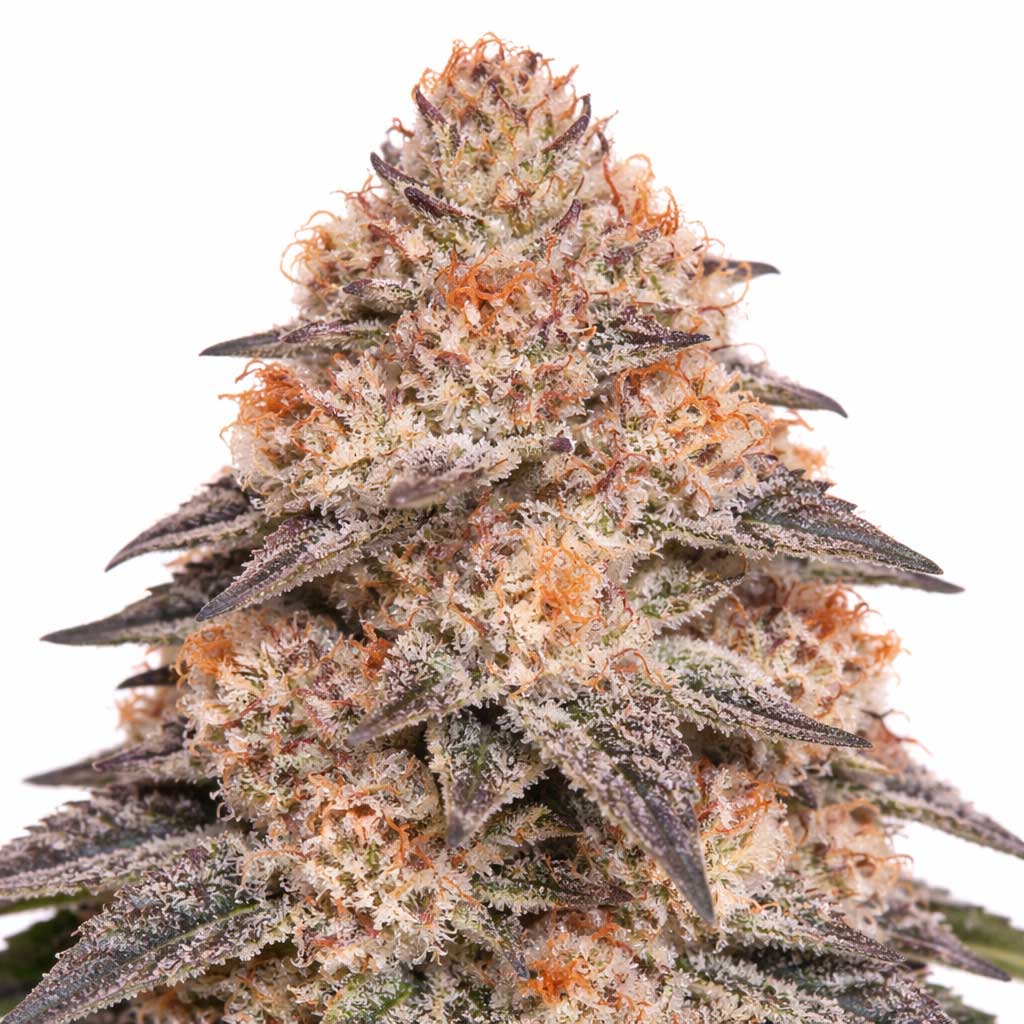
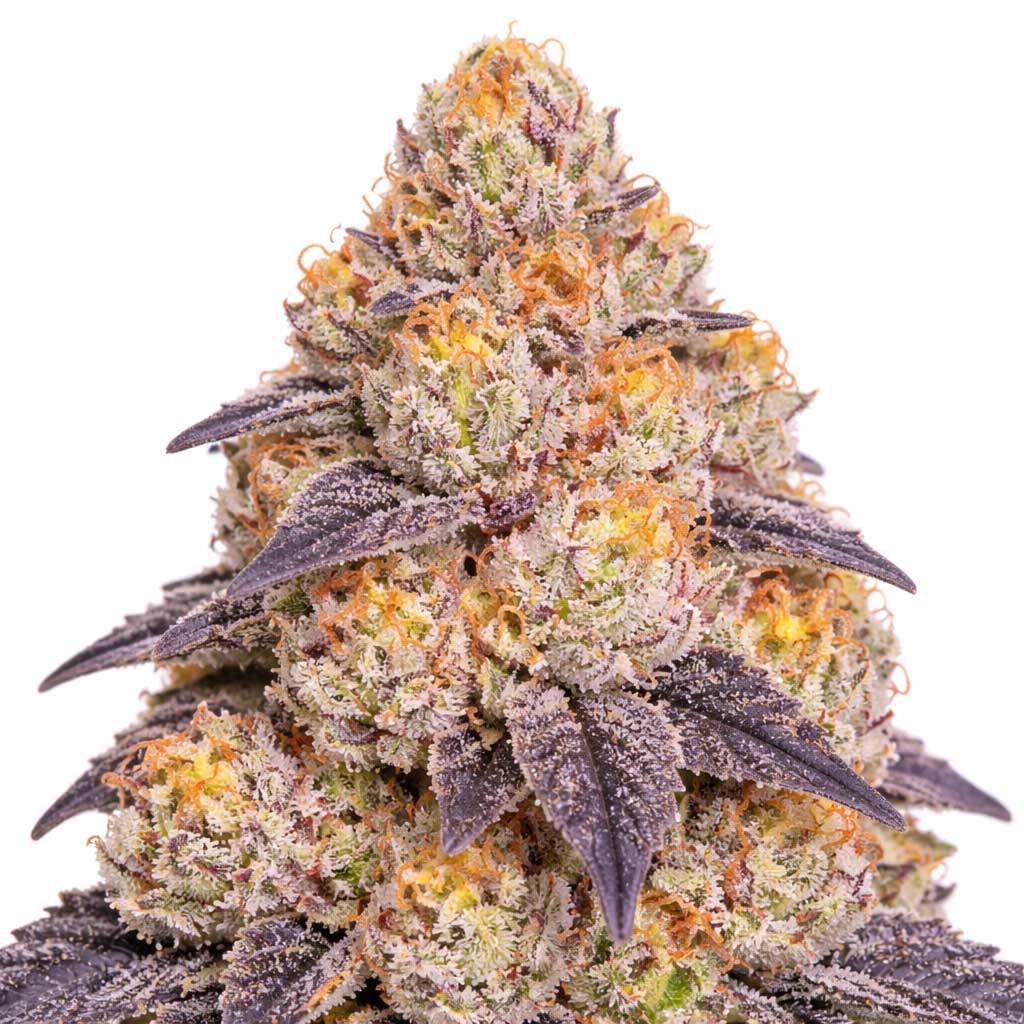
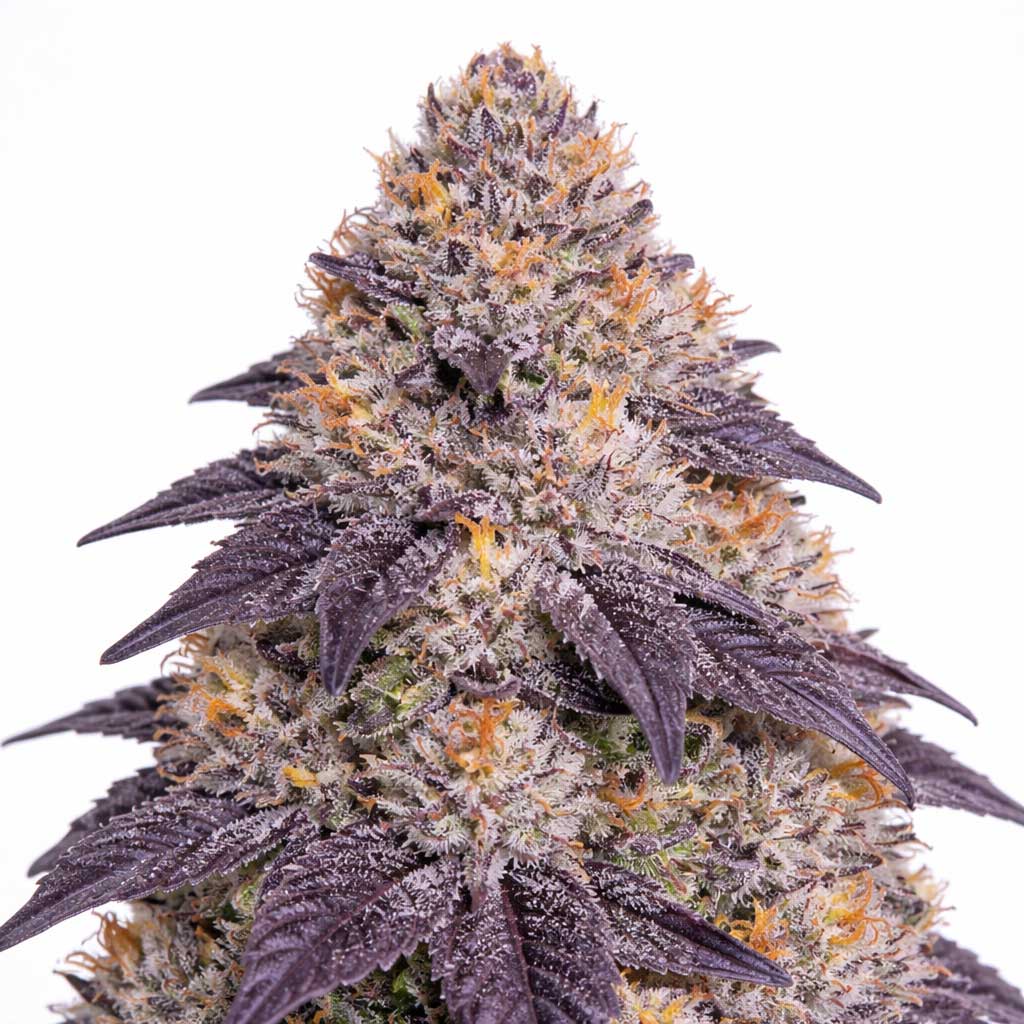
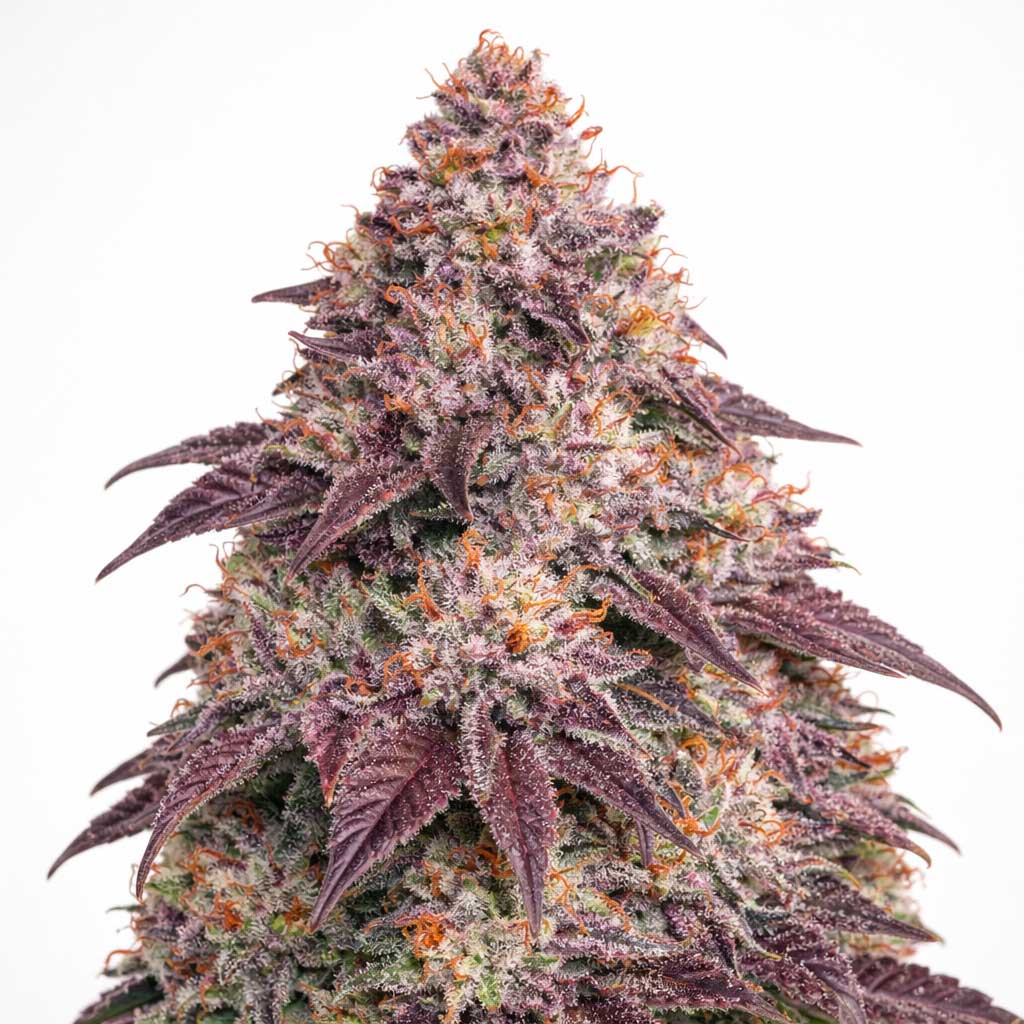
Cherry P develops a classic stocky hybrid structure with broad fan leaves, dense internodes, and a bushy lateral growth pattern. Late in flower, the foliage may shift toward deep mahogany or purple tones, adding to its visual appeal. The flowers are typically conical, extremely dense, and often described by growers as rock-hard, with a thick resin coat that can appear almost syrupy under close inspection.
Botanically, the cultivar stands out for combining the tart fruit signature of Cherry Pie with the heavier skunky-earth expression attributed to the P-Star side. The result is a cultivar with strong boutique appeal, particularly for those seeking dense flower formation, high pistil coverage, and a terpene profile that feels both rich and grounded.
Cherry P is especially notable because it appears designed not for outright sedation, but for a physically weighted, emotionally softened hybrid experience that remains manageable for many experienced users.
Effects & Use-Cases (Reported)
Commonly reported effects: a smooth wave of physical relief, a lifted mood, and a cushioned mental state that feels calming, substantial, and comfortingly potent without becoming completely immobilizing.
Use-case context: Cherry P is frequently associated with late-afternoon or early-evening use, especially after physical activity, long workdays, or low-key social situations. Many users describe it as well suited for unwinding while still remaining present enough for conversation or relaxed companionship.
Note: These observations are anecdotal reports and should not be interpreted as medical claims.
Aroma & Flavors
Aroma: A pungent blend of maraschino cherry syrup, damp earth, and lingering skunky funk.
Flavor: The inhale is commonly described as sugary, tart, and cherry-forward, while the exhale becomes nuttier, woodier, and slightly spicy.
Terpene associations: Myrcene, Caryophyllene, and Limonene.
Tested Cannabinoid & Terpene Ranges
| Compound | Typical Range* | Notes |
|---|---|---|
| Δ9-THC | 22.0%–26.0% | Potent but balanced range often associated with daily hybrid users seeking body comfort |
| Myrcene | ~0.6%–1.0% | Supports the syrupy cherry sweetness and calm physical tone |
| Caryophyllene | ~0.4%–0.8% | Adds spicy-skunky depth and helps anchor the body-focused component |
| Limonene | ~0.3%–0.6% | Provides subtle citrus lift and a gentler mood-brightening edge |
*Ranges are literature-informed references and may vary by phenotype, harvest timing, and cultivation environment.
Cultivation Notes
- Structure: Bushy medium-height plants with strong lateral branching and dense node spacing
- Flower Formation: Conical, compact, resin-heavy buds known for exceptional firmness
- Humidity Response: Slight late-flower humidity reduction may help preserve density and reduce moisture risk
- Nutrition: Moderate feeder that responds well to stable vegetative nutrition and a phosphorus-forward bloom schedule
- Training: Topping and low-stress training are commonly used to improve canopy spread and increase primary flower sites
Grower Notes (Week-by-Week Snapshot)
- Weeks 1–2 (Transition): Low-to-moderate stretch is typical as the plant strengthens its lateral branching and begins setting its flowering structure.
- Weeks 3–4: Flower development intensifies early, and the cultivar’s cherry-syrup aroma often becomes noticeable sooner than expected.
- Weeks 5–6: Resin production accelerates, buds begin to look visibly wet with trichomes, and cooler nights may encourage deeper color expression.
- Weeks 7–9: Final ripening phase, with dense flowers hardening further and aromatic depth becoming more pronounced.
- Post-Harvest: A slow dry around 18 °C and 55%–60% RH followed by a cure of at least four weeks is often recommended to preserve the syrupy cherry profile.
Genetic Lineage
Cherry P is commonly described as a cross between Cherry Pie and P-Star. Cherry Pie contributes tart fruit character, recognizable flower density, and part of the cultivar’s colorful visual identity. The P-Star side is typically linked to a higher-powered phenotype with deeper skunky undertones, stronger body weight, and more assertive resin output.
This pairing helps explain why Cherry P feels heavier and more physically grounding than a standard Cherry Pie expression while still retaining the tart, fruit-forward core that defines the Cherry line.
Research Insights
Cherry P is especially interesting in discussions around Myrcene-Caryophyllene synergy. This terpene pairing is often associated with grounding body effects, sensory softness, and a more anchored experience overall. In Cherry P, that deeper physical profile appears to be softened by a lighter limonene presence, which may help preserve mood lift and prevent the experience from becoming too lethargic.
From a breeding and market standpoint, Cherry P illustrates how modern cherry-based cultivars are increasingly selected not only for dessert-fruit flavor, but also for physically reassuring effects, dense bag appeal, and a more mature hybrid character.
Frequently Asked Questions
Is Cherry P an indica or sativa?
Cherry P is generally described as an indica-dominant hybrid, often cited around a 60/40 indica-to-sativa balance.
What does the “P” stand for in Cherry P?
It refers to the P-Star parent, a proprietary or selectively named high-potency line often associated with power, skunky depth, and stronger body effects.
How does Cherry P smell?
It is commonly described as a mix of maraschino cherry syrup, damp earth, and pungent skunky funk.
What makes Cherry P stand out?
Its standout traits include dense conical buds, syrupy resin, deep cherry aroma, and a comfortingly potent hybrid effect that leans physically relaxing without full couch-lock.
Educational Disclaimer
This page is provided for scientific and horticultural reference only. Cannabis laws vary by jurisdiction; always ensure compliance with local regulations.