Cherry Extreme (Cannabis Strain) — Strainpedia
Cherry Extreme is a high-performance Indica-dominant hybrid cannabis cultivar commonly described as approximately 70% Indica and 30% Sativa. It is bred to maximize resin production, potency, and the distinctive “cherry-fuel” terpene profile associated with modern Cherry-line hybrids.
The strain is frequently linked to Cherry Pie backcrosses or powerful hybrid lines related to Pure Michigan. Breeding efforts focused on amplifying the density, trichome production, and THC levels of classic Cherry genetics. The information below is intended strictly for scientific and horticultural reference.
Quick Facts
| Genetics | Cherry Pie x (Cherry Pie backcross or high-THC male) / Pure Michigan lineage |
|---|---|
| Variety | Indica-Dominant Hybrid (Approx. 70% Indica / 30% Sativa) |
| Flowering Time | 8–9 weeks (56–63 days indoors) |
| Yield Potential | 500–600 g/m² (High) |
| Plant Height | 120–160 cm; vigorous with heavy terminal colas |
| Climate Preference | Mediterranean / Arid climates |
| Difficulty | Intermediate to Advanced |
Strain Classification
| Type | Indica-Dominant Hybrid |
|---|---|
| Genetic Family | Cherry / Gas Hybrid Lineage |
| Primary Terpenes | Myrcene, Caryophyllene, Limonene, Linalool |
| Breeding Lineage | Cherry Pie Backcross / Pure Michigan Lineage |
Scientific & Botanical Overview
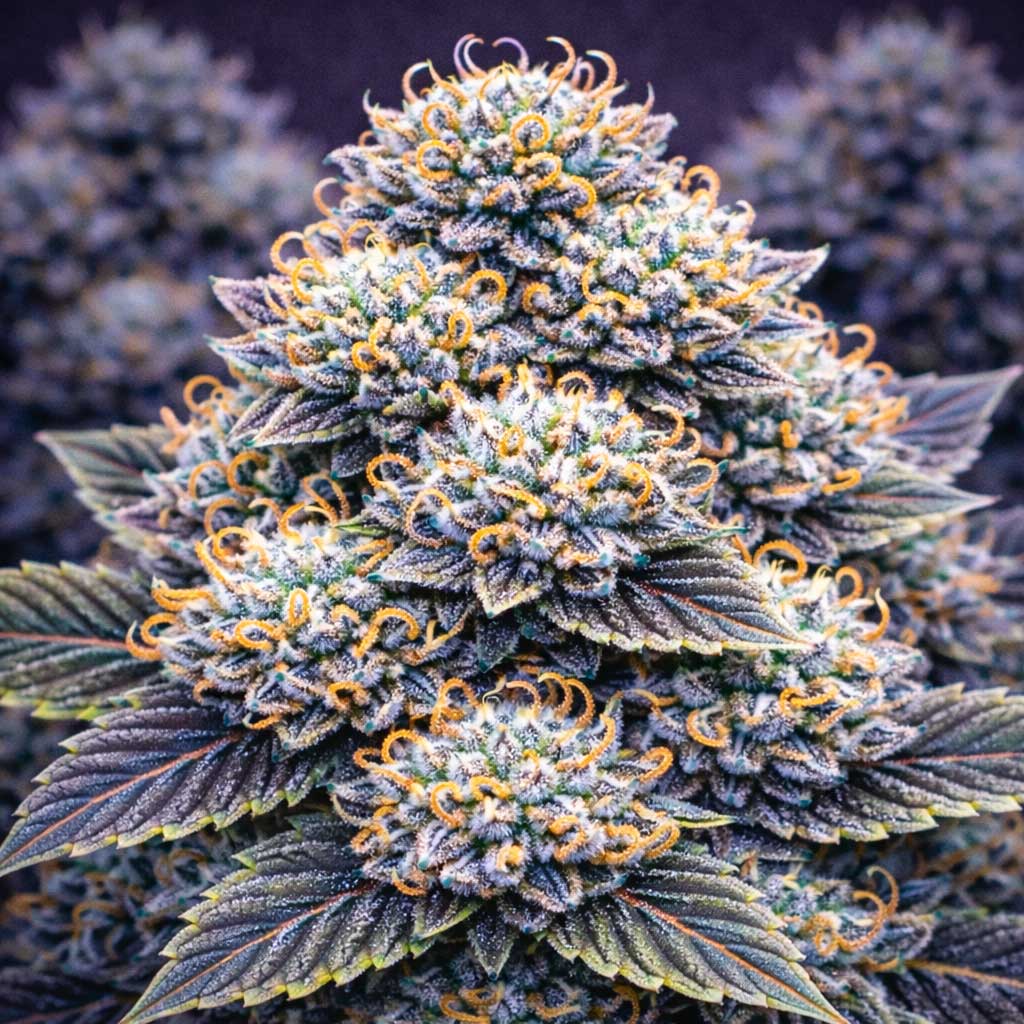
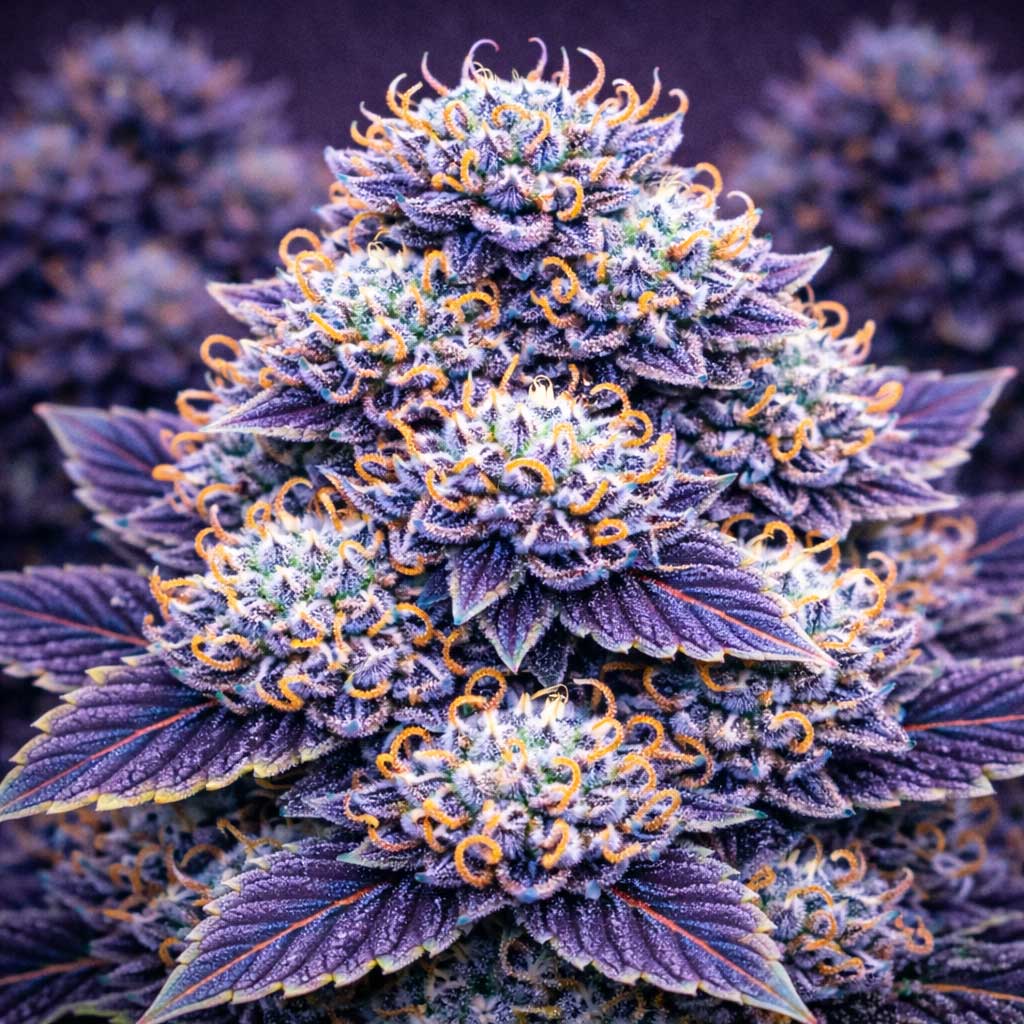
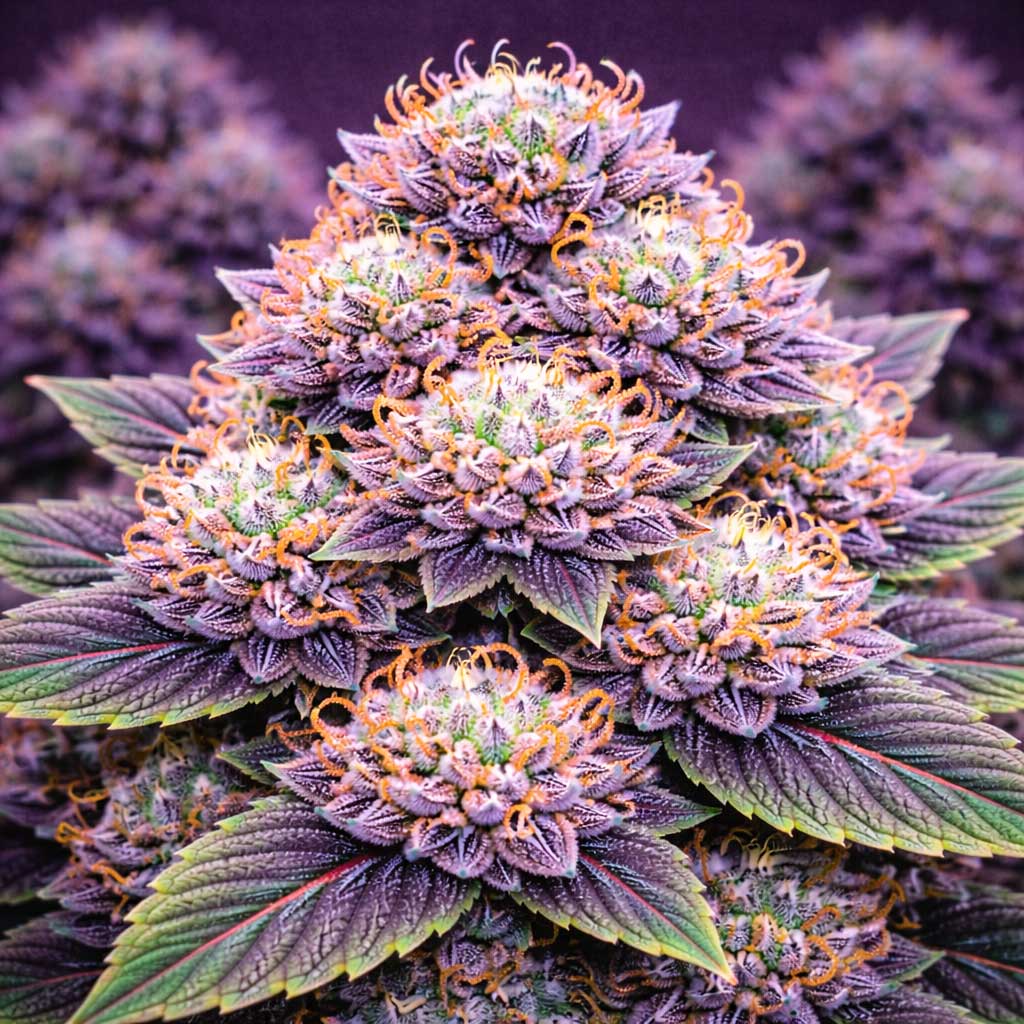
Cherry Extreme plants develop large terminal colas supported by thick stems and strong branching structure. The plant often displays dark green foliage that can shift toward deep crimson or near-black hues when exposed to cooler temperatures during late flowering stages.
One of the defining botanical characteristics of this cultivar is its exceptionally large glandular trichomes. The flowers develop a dense layer of resin that creates a velvety surface texture. Due to this heavy trichome density, Cherry Extreme is frequently referenced in commercial cultivation for its high biomass-to-resin ratio.
Appearance
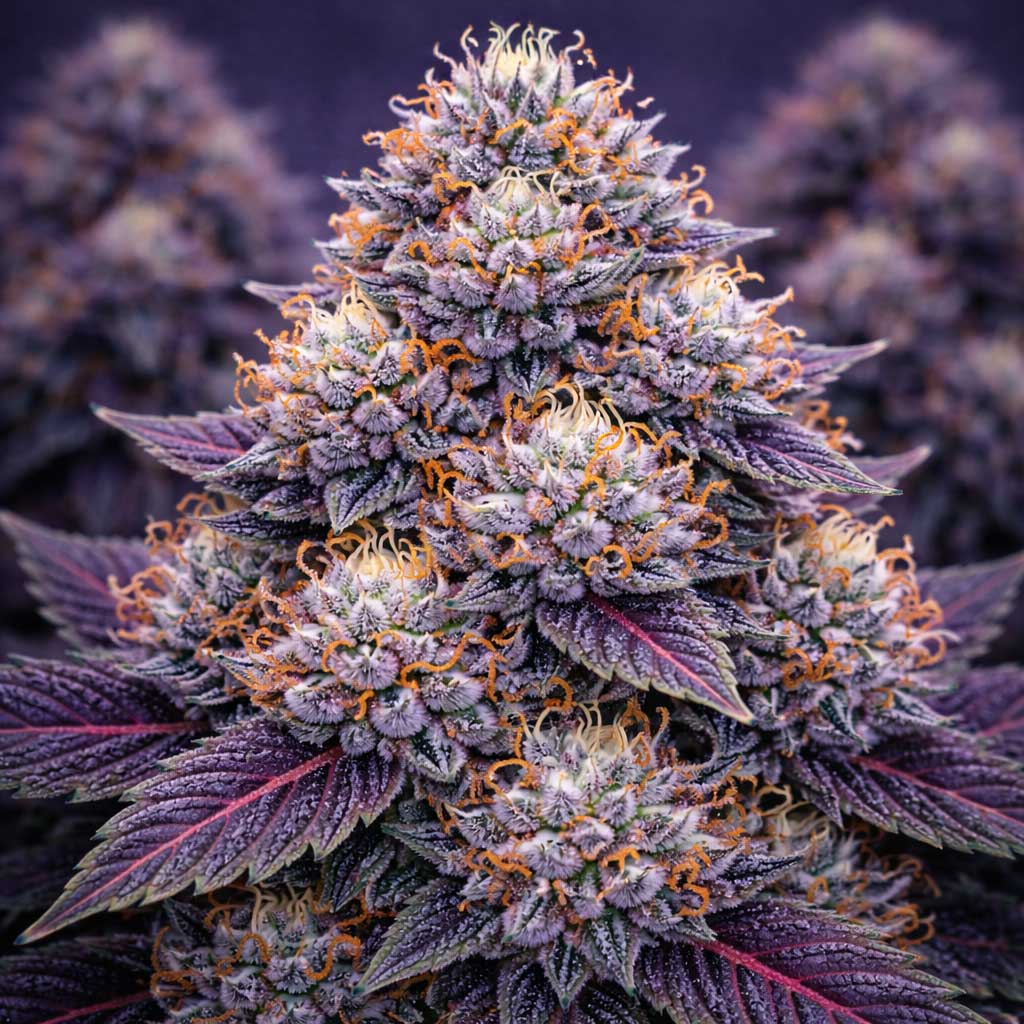
Cherry Extreme buds are dense, elongated, and heavily frosted with resin. Dark forest-green flowers are often highlighted by bright orange pistils and occasional purple or crimson hues that develop late in the flowering stage.
Effects & Use-Cases (Reported)
- Commonly reported effects: strong cerebral pressure followed by deep physical relaxation.
- Use-case context: often selected for evening relaxation, physical recovery, or unwinding after intense activity.
- Note: These observations are anecdotal and do not represent medical claims.
Aroma & Flavor Profile
- Aroma: medicinal cherry, diesel fuel, earthy musk, and skunky spice.
- Flavor: charred cherry wood, dark chocolate, and herbal gas notes.
- Terpene associations: Myrcene (dominant), Caryophyllene, Limonene, Linalool.
Tested Cannabinoid & Terpene Ranges
| Compound | Typical Range* | Notes |
|---|---|---|
| Δ⁹-THC | ~25–31% | Extremely high potency relative to many hybrids. |
| CBD | ~0.1–0.3% | Trace levels typical of high-THC cultivars. |
| Myrcene | ~0.8–1.5% | Provides strong sedative and earthy aroma characteristics. |
| Caryophyllene | ~0.5–0.9% | Adds spicy fuel-like complexity. |
| Limonene | ~0.3–0.6% | Introduces subtle citrus brightness. |
| Linalool | ~0.1–0.4% | Contributes floral aromatic softness. |
*Ranges represent literature-informed estimates and may vary based on cultivation conditions and laboratory analysis.
Cultivation Notes
- Light Cycle: 18/6 vegetative; 12/12 flowering.
- Humidity Targets: ~50% during vegetative growth and 35–40% during late flowering.
- Nutrition: Heavy feeder requiring strong calcium, magnesium, and potassium supplementation.
- Training Techniques: Topping and double trellis systems are recommended to support large colas.
- Harvest Window: Mid-October outdoors in Northern Hemisphere climates.
Grower Notes (Week-by-Week Snapshot)
- Weeks 1–3: Rapid vertical growth and canopy expansion.
- Weeks 4–5: Flower clusters stack into elongated spear-like structures.
- Weeks 6–7: Resin production intensifies and sugar leaves become frosted.
- Weeks 8–9: Buds reach peak density and terpene expression.
- Post-Harvest: Slow drying and curing help balance fuel and cherry flavors.
Genetic Lineage
Cherry Extreme is considered a supercharged descendant of the Cherry Pie genetic family. Through backcrossing Cherry Pie with high-potency gas-forward cultivars such as Pure Michigan or related hybrids, breeders selected phenotypes exhibiting increased resin production, higher THC levels, and dense floral structures.
Research Insights
The terpene interaction between Myrcene and Caryophyllene is often studied in high-potency cultivars. When combined with elevated THC levels, these terpenes may contribute to stronger physical relaxation and perceived sedative qualities compared to strains dominated by citrus or pinene-based terpene profiles.
Frequently Asked Questions
How strong is Cherry Extreme?
Laboratory results commonly report THC levels exceeding 25%, making it one of the more potent Cherry-line hybrids.
What does Cherry Extreme smell like?
The aroma is typically described as medicinal cherry blended with diesel fuel and earthy musk.
Is it difficult to grow?
The strain is considered intermediate to advanced due to its high nutrient demand and dense buds.
What makes it “extreme”?
The cultivar was bred to maximize resin production, potency, and the heavy terpene expression of Cherry genetics.
Educational Disclaimer: This page is provided strictly for scientific and horticultural reference. Cannabis cultivation, possession, and use are regulated by local laws. This content does not promote illegal activity or constitute medical advice. Always comply with regulations in your jurisdiction.